
 Apple Podcasts

 Spotify

 Amazon Music

 iHeartRadio

 Pandora

 Castro

 RSS Feed

 Audible
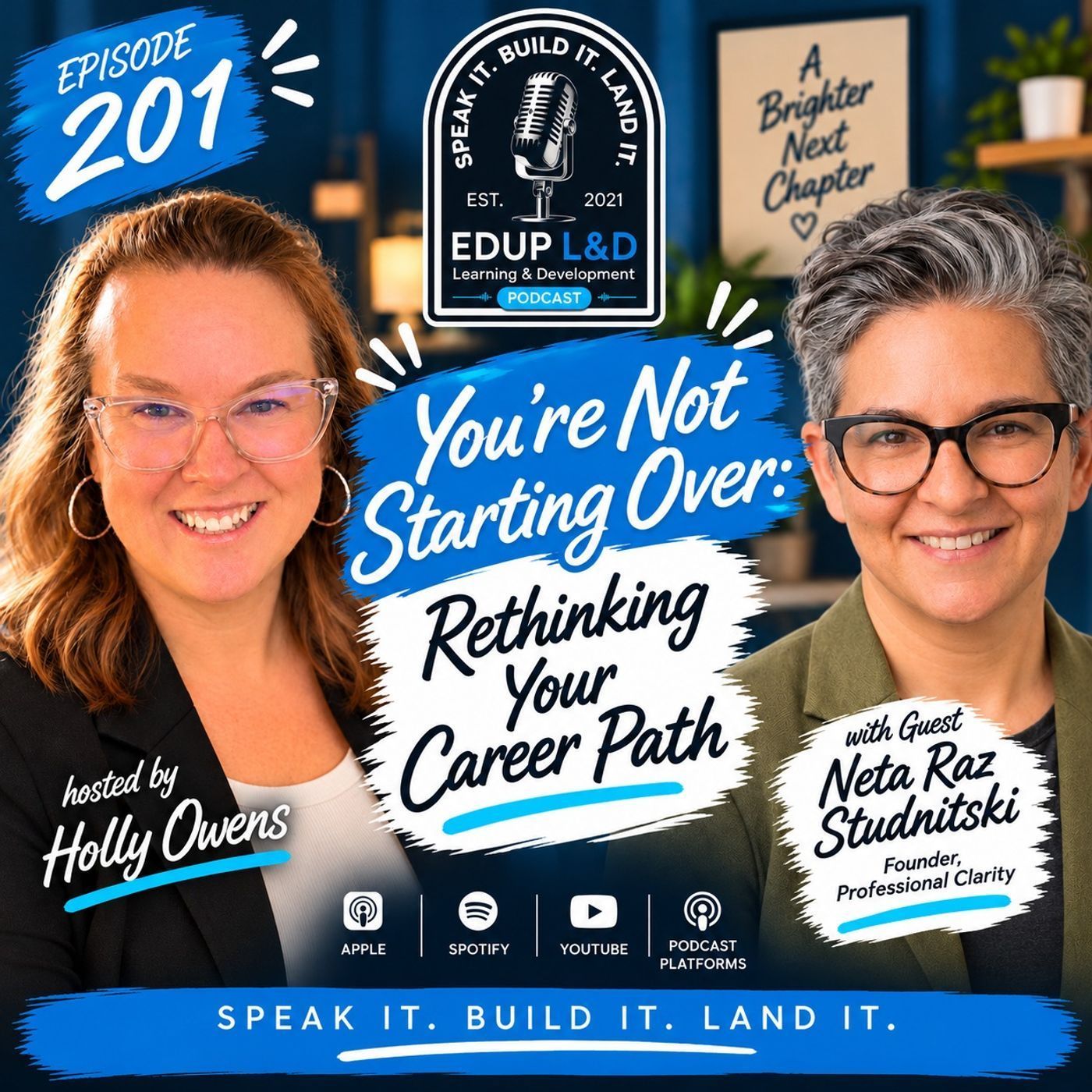
What if your next career move isn't about starting over, but recognizing the value of everything you've already done?
In this episode of EdUp L&D, Holly Owens talks with Neta Raz Studnitski, founder of Professional Clarity, about career transitions, transferable skills, and finding direction in an increasingly unpredictable job market.
Neta shares her own winding career journey, from the classroom to edtech and customer experience, and explains how those experiences led her to help other professionals navigate career pivots. Together, Holly and Neta discuss the challenges educators face when moving into new industries, the importance of recognizing your cumulative experience, and why your next opportunity doesn't have to be your final destination.
In this episode, we explore:
- Why career journeys rarely follow a straight line and how to recognize the value in every experience.
- How educators can identify and communicate their transferable skills when exploring new industries.
- Why a career pivot doesn't necessarily mean starting over or leaving your current organization.
- How to find your professional compass by identifying your strengths, interests, and the value you bring.
- Why generalists and professionals with diverse experiences have an important role in the future of work.
- How internal mobility and professional development can create opportunities for growth within an organization.
- Why career transitions should be treated as a process rather than a series of job applications.
- How bridge jobs and smaller steps can help you move toward your long-term career goals.
Learn More About Professional Clarity
Subscribe to Neta's Newsletter: The Professional Pivot Strategist
Connect With Us
Follow Holly on LinkedIn: https://www.linkedin.com/in/hollyowens/
Watch EdUp L&D on YouTube: https://www.youtube.com/@EdUPLND
Subscribe to the newsletter: It’s Not Just One Thing in L&D
Follow on TikTok: @ihollyo https://www.tiktok.com/@ihollyo
Connect with Holly: Schedule a conversation https://calendly.com/holly_owens
Thanks for subscribing, listening, and supporting EdUp L&D!
Thanks for tuning in! 🎧
Holly Owens: Hello everyone, and welcome to the EdUp Learning and Development Podcast. My name is Holly Owens, and I'm the host of this show, but I'm also a higher education professor, instructional designer, entrepreneur, and a proud helper of humans. I've worked in the L&D space for almost 20 years, and I'm here to share what I know, what I'm learning, and what's happening in our industry. We'll talk about instructional design, L&D AI, technology, careers, and the humans behind it all. Along the way, I'll bring in some friends to share their stories, experiences, and expertise too. Because at the end of the day, L&D is all about humans helping other humans. This is EdUp L&D. Hello, everyone, and welcome to another amazing episode of Ed Up L D. My name is Holly Owens, and I'm your host. And I'm super excited today because I've talked to this person via LinkedIn. They are positive, they are supportive, they are so uplifting and a breath of fresh air out on LinkedIn World where there's a lot of noise. I have my friend, Neta Raz Studnitski who is the founder of Professional Clarity here to join us on the show today. Neta welcome.
Neta Raz Studnitski: Thank you, Holly. I'm so excited to join you today.
Holly Owens: I I am super pumped because I have a lot of questions for you about your business and what you do. But before we get into all that, tell us about you. Tell us about your journey. How did you get here? Where did you start? And how did you get to the spot you are today?
Neta Raz Studnitski: my gosh. I'm gonna try to keep it short because I can talk about myself for days. but
Holly Owens: Ha ha ha
Neta Raz Studnitski: I guess you know everybody starts with I'm I'm 48 years old, so not a youngin' anymore. I live in Los Angeles, California. And if there's one thing that my career story demonstrates is that a professional journey is very rarely a straight line. Right. And mine certainly wasn't at any point in time. So my story really begins, you know, in my young adulthood, early twenties. I went to college. I dropped out after just one semester.
Holly Owens: wow.
Neta Raz Studnitski: College dropout. I had undiagnosed ADHD learning differences. At the time, I had no idea what to do with that. I I I I didn't know how to study, basically. I
Holly Owens: Yeah.
Neta Raz Studnitski: Cruised through high school by merit of just good memory, right? And that's about it. so I stepped away from college and then I spent several years working in the service industry. I was waiting tables, I were working in clothing stores, you know, stuff like that, and trying to figure out the strategies that I needed to manage the way that I learn and work. And
Holly Owens: Yeah.
Neta Raz Studnitski: then when I was 28 years old, I went back to college. by then I decided to pursue education. and while I was finishing my four-year degree, another opportunity came along. And I moved into project management in nonprofits, but in nonprofits that are adjacent to education. So I still stayed somewhere in that area connected to the field, but my work was no longer directly in the classroom. And then I had an opportunity to move internationally. To the US and moving to a new country as an adult meant basically rebuilding a lot of things all over
Holly Owens: Yeah.
Neta Raz Studnitski: again, right? Including my career and teaching culture shock completely.
Holly Owens: Culture shock.
Neta Raz Studnitski: but with that move, you know, teaching was a profession that I could take with me, right? It it it transfers between countries to a certain extent. So that's what I did. I went back to the classroom. It was the quickest, easiest, and most practical way, I guess, to to get established. And I knew from the beginning that I didn't want to stay there f forever, right? So over like the first five or si or six years, I became a lead teacher. I took additional courses and eventually I became a California mentor teacher. I worked with
Holly Owens: You did all the things.
Neta Raz Studnitski: the all the things. I worked with student teachers, I mentored colleagues within my school, and I was developing a lot of experience in adult learning, right? and professional development, obviously along the way, which definitely became very, very important later down the line. and then in 2019, shortly after having my youngest child, I decided it was time for another pivot. So I initially looked at nonprofit opportunities again. I really wanted to go back to that world. and I researched a lot of organizations where I could use my experience you know, in child development and early childhood education and and mentoring adults. And I accidentally stumbled upon a job listing for an early stage ed tech startup serving the early childhood education market. And
Holly Owens: nice.
Neta Raz Studnitski: They were looking for someone to mentor in home child care providers about high quality education and learning environments. So I read the requirements and I remember, looking at the requirements, looking at all the nice to have, and saying, okay, I literally check every single box. Like the 100%. Yes, exactly. So,
Holly Owens: All the boxes. And probably then some.
Neta Raz Studnitski: hey, why not give it a try? Right. And I applied.
Holly Owens: Right.
Neta Raz Studnitski: I went through several interview rounds. That was like long journey, but I ended up getting the job. And that was my foot in the door into ed tech. who would have funk, right? it really did turn out to be a great move because I was doing something very similar to what I was already doing in education, right? I was mentoring adults, but
Holly Owens: Yeah.
Neta Raz Studnitski: it was a completely different environment. so again, culture shock. But because it was a startup my Original job description didn't really stay the same for very long. I I think I took on more responsibilities, I became a regional lead, I I participated in sales and and and I started working across customer success and customer support and customer experience in general, and was really helping to build that function as the company grew. And then COVID hit.
Holly Owens: Yeah. Yeah.
Neta Raz Studnitski: And the company got a hit with it. and I was laid off along with several colleagues and and
Holly Owens: A lot yeah.
Neta Raz Studnitski: yeah, that was that was a real blow, right? Because when I first moved into ed tech, I told myself, you know, hey, if it doesn't work out, I can always go back to teaching. Little did I know that that would happen in the midst of a world pandemic. So Schools, early childhood education programs were just closing or or facing enormous disruption. And my fallback plan just,
Holly Owens: I can't imagine.
Neta Raz Studnitski: it wasn't much of a fallback anymore.
Holly Owens: Yeah.
Neta Raz Studnitski: so for about a year there, during COVID, I pieced together part-time jobs, contract work, just to make ends meet. and I co-founded a decentralized preschool with a couple of friends. We provided the preschool and childcare pods for toddlers. and preschool age children. Right? It was like it was a huge
Holly Owens: my goodness. God bless you. Working with toddler.
Neta Raz Studnitski: gap. It was a huge gap in the market.
Holly Owens: Yeah.
Neta Raz Studnitski: and then in twenty twenty one, as COVID was kind of starting to die out of that, you know, the the the the the big blowout back then, I took a recruiting administrator contract at another ed tech startup. it was formative and it was growing rapidly.
Holly Owens: I had friend that worked there, Matt. I don't remember his last name. Yes!
Neta Raz Studnitski: Matt Wheeland, still there, still with us. Yes, yes. Best bud.
Holly Owens: Have to reach back out to him. Yeah, he's wonderful. We've talked, we've been on LinkedIn friends for a while. Shout out to Matt Whelan.
Neta Raz Studnitski: Absolutely shout out to Matt Wheeland. He's he's he's my dude. He's my friend.
Holly Owens: Yeah, yeah.
Neta Raz Studnitski: yeah, so I spent about seven months doing really heavy recruiting across the entire organization. I was interviewing, I was hiring for a really wide array of positions, because the company was tripling in size,
Holly Owens: Right.
Neta Raz Studnitski: literally. And recruiting wasn't entirely new to me because I hired staff in pretty much all of my previous work settings as well. so you know, looking back, hiring and interviewing had been a you know kind of a recurring thread throughout my career. even when I was still in the service industry, I was managing a store. I needed to hire staff, right? so that was something that I was doing for many, many years and and Finally now I had the title for it. and you know, along the way, picked up a few more. recruiting and placement jobs. And when my contract ended, I was offered a full-time job there in customer
Holly Owens: Awesome.
Neta Raz Studnitski: experience, going back to my ed tech roots.
Holly Owens: Yeah.
Neta Raz Studnitski: And I was focusing a lot of quality, customer support, project management. And basically I've been with a company ever since, including through its acquisition later on by Nuzella. So I'm still there. And along the way I noticed gaps in how things operated within my department, across the organization. So I started taking on more responsibilities. And that kind of laid the ground for me to do what I refer to as an internal pivot. And I
Holly Owens: Yeah.
Neta Raz Studnitski: built my own niche, created my own role in the company to really fit my size and my interests and my passion, which was great.
Holly Owens: I told you they come in.
Neta Raz Studnitski: yeah, absolutely. And I love it. My cats will probably be walking around here too at some point. Yeah.
Holly Owens: Yeah. We welcome all pets.
Neta Raz Studnitski: so yeah, so that was, you know, that that's the experience that really reinforced something that I've been seeing throughout my entire career, right? That's sometimes
Holly Owens: Yeah, identifying gaps and supporting people, enablement, that kind of stuff. Yeah, yeah.
Neta Raz Studnitski: Exactly. And and and also that sometimes your next move is not necessarily about leaving the place that you're in, or starting from scratch. It's more about,
Holly Owens: I love that approach.
Neta Raz Studnitski: yeah, it's about a need, right? And understanding what it is that you bring to the table and finding a way to create value. and then, you know, the other part of my story, which is how you and I got connected, is that in 2020, as I was looking for work, I I became much more active on LinkedIn. And I started networking and educators
Holly Owens: Mm-hmm. Same.
Neta Raz Studnitski: just started reaching out to me all
Holly Owens: Yeah.
Neta Raz Studnitski: the time to ask, how did I move outside of the classroom? How did I get into
Holly Owens: Right.
Neta Raz Studnitski: a tech? They wanted to understand. and for a couple of years I helped a lot of teachers and administrators and other education professionals kind of navigate their career pivots. And I did that completely free of charge back in the day. I worked with people from different stages, helping them just think through, right, what their options are, figure out their next steps. And eventually I realized that, what I was doing needed a bit more structure. So I turned those conversations into a methodology that now
Holly Owens: Yeah.
Neta Raz Studnitski: I lead with in my career called career coaching business. And that's how I started
Holly Owens: I love it.
Neta Raz Studnitski: professional clarity, right? so today I help professionals really understand the value, right, of of their cumulative experience and and recognize the capabilities that they developed and use that to understand how to make more informed and intentional career decisions, bottom lines. I work with
Holly Owens: Obviously this is so needed right now because there's so many different transitions going on. I know Canva recently had layoffs and things are happening that people can't control. So and you know what it it also does too, and I know I'm sure you see this a lot with your clients, is it kind of kinda knocks you down a few notches and your confidence. I I'm I'm speaking, I'm projecting right now. It kind of knocks
Neta Raz Studnitski: Yeah.
Holly Owens: you down a few like y you've spent this entire like twenty year journey like building something and I'm like you I started I started as a high school teacher and transitioned into L and D before it was the cool thing to do. and now I'm finding myself like I'm I'm forty-three and I'm finding myself like, what the heck am I doing? Like what am I gonna be when I grow up?
Neta Raz Studnitski: Yeah. But I think I I really do believe that it's never too late to to readjust your course, right? It's not
Holly Owens: Yeah.
Neta Raz Studnitski: about reinventing yourself from the ground up. You're not scratching
Holly Owens: Right.
Neta Raz Studnitski: everything that you've done up until now. If you need a course correction and and you want to do a pivot, right? And a pivot is a is is a word that encompasses so many different professional crossroads. It doesn't
Holly Owens: Absolutely.
Neta Raz Studnitski: Necessarily mean, you know what, that's it, I'm done. I'm not doing anything remotely related to learning and development. I'm going to be, I don't know what, a finance person all of a sudden, right? It doesn't necessarily mean that. And and as long as we keep in mind that what we've accumulated throughout our careers, and not just in a professional capacity. but also in our lives and what happens to us. And we start putting all of these things together. We stack them, right? And there are interceptions in there. we can probably identify the the through line and the I call it like the compass, right? Or or or or the lighthouse. What
Holly Owens: Yeah.
Neta Raz Studnitski: what what makes me tick? What am I passionate about? what what value do I enjoy bringing and then where would make most sense to bring that value in, right? So
Holly Owens: Yeah.
Neta Raz Studnitski: sometimes it's small adjustments that can just give you a f a a breath of fresh air, right? And it feels like a restart, but it's not really a restart. It's just it is.
Holly Owens: Yeah, it's scary. It's scary. People it does 'cause it feels it feels brand new. And I'm feel my gosh, because things like AI are now impacting the things that we do, everybody and everywhere. And like you definitely have to be able to assimilate to an a new environment. Like the things that used to take us really a really long time. Like I always mention I would put together trainings for faculty and staff and it would take me like a couple days just to come up with the session descriptions because I and the titles. And now it does chat does it in two seconds and I can just edit it how I see fit. And I'm like, whoa, so w it frees up your time, but it also and maybe I'm getting into a little bit of an of an AI question. Like, what are you seeing like talking to people through your coaching business? How how are they how are they navigating this job market? Like how What's going on? I I know I'm speaking to the person listening and that it they're just confused and they're they're probably like myself. They've put out a lot of applications and haven't got one interview, haven't got a even a bite. so what are you seeing when you're you're coaching people?
Neta Raz Studnitski: That what really catches my attention is how difficult it is for people in general, but particularly people who come from our background, right? From the education background, to
Holly Owens: Yeah. Mm-hmm.
Neta Raz Studnitski: really move into other industries.
Holly Owens: Yeah.
Neta Raz Studnitski: and I'm I'm saying it's particularly in education, but I don't think the underlying issue is exclusive to educators necessarily.
Holly Owens: Right.
Neta Raz Studnitski: It's just that education really operates in its own ecosystem and ed tech is also a its own little sphere or bubble within the tech world, right? but you know the terminology we're different. Yes, exactly.
Holly Owens: Absolutely. Yeah. We're different. We we speak different. Yeah. We s yeah.
Neta Raz Studnitski: Exactly. We have our own language. The roles are a little bit different, right? Even the way that organizations operate can be very different from what people encounter elsewhere in the business world. So when when educators in particular, but other people as well, try to pivot, they're dealing with several things at once, right? They're discovering job titles that they've never heard of before. They're trying to understand. Like industries that they don't know. And they're trying to figure out how their experience might be relevant there. And
Holly Owens: Yes.
Neta Raz Studnitski: on top of all of that, they're also dealing with a lot of misconceptions about what they can and can't do outside of where they've already been. Right. So along
Holly Owens: Yeah. And then you're competing with people who check all the marks on top of that. Yeah, you're figuring out how
Neta Raz Studnitski: Exactly. Exactly.
Holly Owens: to trans translate those transferable skills, but make your cause I know when a lot of teachers transition out, they're they're like, Well, I have to start all over and you were mentioning that at the top of the episode. But I'm like, No, you've been in education for ten, fifteen, twenty years. You you're not starting over. You just have to figure out a way to translate it in a way that It shows that you have experience in blank. You have experience in project management, lesson planning, you know, that kind of thing. yeah, yeah.
Neta Raz Studnitski: Exactly. Yeah. But but the problem that I see with most most people and again specifically the transitioning educators, but not just, is that outside of all of those things, there's also the fear of giving up the job security that they have that really doesn't
Holly Owens: Mm-hmm.
Neta Raz Studnitski: exist in many like In many places outside of education, there isn't
Holly Owens: Yeah.
Neta Raz Studnitski: a lot of jobs that job security, at least in the US. And also giving up the familiarity right that they've
Holly Owens: Yes.
Neta Raz Studnitski: grown. there's just a lot of overwhelm. And and there's
Holly Owens: Mm-hmm.
Neta Raz Studnitski: certainly how shall we put it, no shortage of advice out there.
Holly Owens: I said there when we talked before this, I said there's a lot of noise. And I read a newsletter article recently about the noise. It's really, really challenging figuring out what to trust, what to do, what to invest your money in. who has the experience, who doesn't. You know what I mean? It's like it's very scary. And the other thing too, Neta, is I am getting, and this is something that hasn't happened before AI. Constant spam. Like saying I I
Neta Raz Studnitski: yes.
Holly Owens: landed an interview or and I need to download this thing or i I haven't experienced that before.
Neta Raz Studnitski: Yes. And and and it's happening to everyone, whether you're looking for a job or not.
Holly Owens: Yes, it's so crazy. And it sounds so legit.
Neta Raz Studnitski: You just get it all the time.
Holly Owens: Yeah. I always put it in the chat. I'm like, is this legit? And I look at the email, make sure it's like with the company, that kind of stuff. So, but beyond like having to transition and stuff, like there's this whole added extra layer of things that we have to overcome to actually be the one person out of the twelve hundred that gets the job.
Neta Raz Studnitski: Yes. And I think that really speaks a lot to one of the biggest problems that I see with, you know, the the the the overabundance of advice that that we see out there. Because you know, we know that more advice doesn't necessarily mean better guidance. but one of the biggest challenges I notice is the echo chamber, right? People naturally gravitate towards others who understand what they're going through, right? so
Holly Owens: Right.
Neta Raz Studnitski: for transitioning teachers, that creates, wonderful support community, right? We all understand you can talk to people who understand your frustrations and where you're coming from and your fears and your experiences without having to explain everything from scratch. But that same community can become very, very limiting.
Holly Owens: Yes.
Neta Raz Studnitski: If everyone is looking at the problem through the same lens, right? And it causes a situation where a lot of people are ending up repeating the same advice, following the same thought patterns, sometimes making the same mistakes. Right.
Holly Owens: Mm-hmm.
Neta Raz Studnitski: And stepping outside of that familiar circle, learning how to Or or how the broader world of work operates can be one of the hardest parts of the pivot, right?
Holly Owens: Yeah.
Neta Raz Studnitski: Stepping away from what feels so familiar and so supposedly supportive.
Holly Owens: Yeah.
Neta Raz Studnitski: and and I don't mean by that that people shouldn't have that support system of the familiarity, but allowing themselves to open up to more. That is
Holly Owens: Yes, one hundred percent. And I feel like as the boomers are going out and the Gen Xers and the elder millennials I'll say remain and we're getting to this point now where we're like, is a career shift worth it? Am I just gonna stay and do because we got we were told, you know, in our culture in the in the States that this is less least how I grow up. You do well in school, you play s play sports, you do clubs, all that stuff, you get into college and then you get a good job. And that and you stay in that job. And then things completely the shit hit the fans.
Neta Raz Studnitski: yes. yes. And it's also a generational thing. You and I are close in age, That's
Holly Owens: Yes, yeah.
Neta Raz Studnitski: the way our parents did it. That's the way we were brought up. But if you look at the younger folks today, they don't think that way. Right. They're,
Holly Owens: No.
Neta Raz Studnitski: job hopping is not a bad word. You do it because that's the way to, you know, to progress. But overcoming the fear and trying to read the market. To understand when is it a good time to make a move? And what would be a smart move to make in this market that is not just brutal right now because the job market is difficult, but also in the world of work that is ever evolving. As you said earlier, with AI coming into the mix, with different professions that are literally losing their value, right? It's it's not easy to do that shift. And when you've built something for a really long period of time, even if you've done pivots before, but you have that through line and that you're going down a specific path. And you are open to multiple directions, but they're all in the same like ecosystem. And all of a sudden you realize that that specific ecosystem might not serve you so well anymore.
Holly Owens: Yeah. It is. It is. Yeah.
Neta Raz Studnitski: It can be very overwhelming and very confusing. Yeah. Yeah.
Holly Owens: Absolutely. So I want to know from you. We talked a lot about like things that are challenging, things that might need to change. What about the future of work? What is what gives you hope when it comes to the future of work
Neta Raz Studnitski: Mm.
Holly Owens: based off of the what you've experienced in your career and also through your coaching business?
Neta Raz Studnitski: Yeah, that's a really, really good question. And I have to say that I thought a lot about it when when you shared some of the questions with me in advance because I know it's not easy for people to find hope, in in in that day. Yep. Yep.
Holly Owens: In the not in this job market. No offense, everybody. I'm trying to be positive, but
Neta Raz Studnitski: Yeah. It's not easy and you know, b the sentiment I hear it all the time. I really, really do hear it all the time. even from people, you know, with years upon years of experience. It's just
Holly Owens: Yeah.
Neta Raz Studnitski: It's really difficult. but when I really sat down to think about it, what does give me hope is that I think as a society, we're starting to see more recognition of the value of the generalist.
Holly Owens: Yeah.
Neta Raz Studnitski: and that is something that for a very, very long time, it felt like you needed to have like a very specific specialization to even be considered valuable, right, in the job market.
Holly Owens: Yeah, and education's set up that way. We used to have clusters in high
Neta Raz Studnitski: Exactly.
Holly Owens: school that you went into. it it's set up that way.
Neta Raz Studnitski: Exactly. And if you didn't have a clearly defined lane, it could be very, very difficult to explain where it is that you fit. But people who have, you know, worked across different like functions and industries
Holly Owens: Mm-hmm.
Neta Raz Studnitski: and and environments, very, very often they bring something incredibly valuable to the table, right? They they know how to wear multiple hats. They know how to connect the dots between different teams, to understand different perspectives and adapt to changing needs, which is exactly what is happening now across all industries and across
Holly Owens: Right.
Neta Raz Studnitski: all fields, right? So the value comes from the combination of the experiences and not necessarily from one narrow area of expertise.
Holly Owens: Well, I love that 'cause then people can they can put themselves in an area where they may not be specific to it, but they have an understanding. for example, there's enablement jobs. Like there's on jobs where people focus on onboarding. I'm like, well, I could do that job because I've had a variety of onboarding experiences and I've even helped with some onboarding experiences, even though it's not clear just being an instructional designer that I did that, but I've helped or on board instructional design interns or educators. I've helped on board new teachers or I've trained people. there's there's stuff that it's it's there, like what you're saying.
Neta Raz Studnitski: It's problems that you've solved just in a different setting.
Holly Owens: Yeah.
Neta Raz Studnitski: So when when you realize that something that a specific role requires is the ability to solve problems that you've basically already solved before, just in different context, different settings,
Holly Owens: Right.
Neta Raz Studnitski: but the same underlying problem, it starts making much more sense, right? And the problem is learning to speak that narrative, right?
Holly Owens: Yes.
Neta Raz Studnitski: To step outside of that comfort zone and being able to speak to our experience in terms that are a little bit more broad and can encompass different contexts, right? And I think that recognizing that can open doors for like a much more diverse workforce, right? In including people whose careers haven't followed that light. one traditional path, climbing up the ladder and all.
Holly Owens: Path, yeah. I'm really impressed when I meet somebody that's been in a job for twenty, thirty years. I'm super impressed. I'm like, you've you've done great. Like you've you hopefully that they've rewarded you along the way. You're not just staying there, but I'm really impressed when I see people that have have done that. Yeah.
Neta Raz Studnitski: Yeah. I am too. I am too, and I think that it takes also a special environment to be able to do that in. that's definitely not something yes.
Holly Owens: Yeah. p supporting professional development and letting people continuously learn and giving them that runway.
Neta Raz Studnitski: And evolve and involve inside and involve inside. internal mobility companies that really encourage that. I think have a much more loyal employee base, right? because if
Holly Owens: Right.
Neta Raz Studnitski: you know that you're not locked into your position, it's not a Catholic marriage, you could.
Holly Owens: We can
Neta Raz Studnitski: Right. You could pivot inside, right? You you
Holly Owens: Right.
Neta Raz Studnitski: you could learn and pick up skills on the job and create that networking and the support system where you already are. a lot of times that's a pivot that's easier to accomplish, right? As long as you're in an environment in a company and an organization that encourages that and supports you in doing that. a lot of places
Holly Owens: Yes.
Neta Raz Studnitski: are like that. so if if there's one tip that I give people as they're exploring, the different companies that they want to work at is ask about that, right? Don't ask just about the benefits. Don't ask just about the day to day. Also ask, how often do people
Holly Owens: Right.
Neta Raz Studnitski: transition from one department to another? what kind of professional development, right, are you getting?
Holly Owens: That's a great question. Yeah. Yeah. my gosh. That's a great question. I I haven't even thought of that. Speaking of advice, we're coming up on the end of the episode. I told you this would go by fast because we have so much to talk about. that
Neta Raz Studnitski: Of course.
Holly Owens: that just means you're gonna have to come back for a follow up episode and we do those the where are they now? so
Neta Raz Studnitski: You got it.
Holly Owens: two final questions I want you to answer. You're already kind of answering the last question. Is there Anything else you'd like to share? Is there anything else you like to share about professional clarity, about you? Obviously, everything about you and where to find you and work with you is going to be in the show notes for the audience. And then for our listeners, I like to leave them with three pieces of advice or resources
Neta Raz Studnitski: Yes.
Holly Owens: that will help them navigate in their careers. So anything else you want to share? And then that three pieces of advice.
Neta Raz Studnitski: Yes. Well, first thing I would love to share is for people to subscribe to my newsletter, The Professional Pivot Strategist. Yay!
Holly Owens: I did today.
Neta Raz Studnitski: It's really a newsletter that I created to share practical guidance on navigating career pivots. You know, it's whether you're moving from one industry to another or changing roles or looking to make a change within the company you're already working for. a pivot, as I said earlier, it doesn't automatically mean that you need to leave your job and start somewhere else. So
Holly Owens: Mario.
Neta Raz Studnitski: I I just regularly include, you know, free workbooks in there, practical exercises just to help the readers put the ideas into action and not just, you know, read another article.
Holly Owens: Right.
Neta Raz Studnitski: so, you know, if you're navigating a career crossroads, it's a great resource to have in your corner, even if I do say so myself, please subscribe.
Holly Owens: Yeah, no, I read it I'd like I was like disappointed myself. I was like, I thought I already subscribed to this. But I saw and I hit subscribe because I read them and I was like I might as well subscribe.
Neta Raz Studnitski: I love it. Well, I've been subscribed to yours, so that's good. I'm learning
Holly Owens: Thank you.
Neta Raz Studnitski: for you from you all the time. I have to say that today's edition
Holly Owens: Tira.
Neta Raz Studnitski: actually took a lot of inspiration from things that you share, Holly, because today's edition was
Holly Owens: Well
Neta Raz Studnitski: specific to learning and development roles and kind of unpacking the different types. And I myself learn a lot from everything that you share. So thank you for that.
Holly Owens: thank you. Of course.
Neta Raz Studnitski: All right. And then two pieces of advice. one is if you are in the midst of a career pivot or a job search, please treat it as a process and not a single job application. And what I mean by that is there is a temptation to kind of jump straight into looking for job listings and updating your
Holly Owens: Yeah.
Neta Raz Studnitski: SMA and applying to anything that sounds remotely interesting.
Holly Owens: Yeah.
Neta Raz Studnitski: But Before you do any of that, you have to find your focus. And I know
Holly Owens: Right.
Neta Raz Studnitski: people say that all the time. I cannot stress it enough. Start by identifying, you know, what you
Holly Owens: That'll be cut out.
Neta Raz Studnitski: want to even explore. No, no worries. start by identifying. What it is that you actually want to explore, right? Whether it's role, industries, fields, then research those roles and research the industries that they're part of and the companies operating within them. And take time to really understand the business models, the problems that they're solving, what they actually need, right, from people that they hire. And then look at all of the intersections between those, you know, opportunities and your cumulative experience. And including the capabilities right that you've developed across your careers. And I think that that combination really helps people build a career professional profile is
Holly Owens: Yes.
Neta Raz Studnitski: what I like to call it, right? Think of it as your compass, as I said before. It it just helps you determine where you could bring the most value, where you have a realistic opportunity to succeed, and also what you might need to learn before you make that move. Right. So the order really matters. You need to know where you're going before you can figure out how to get there. Atlas in Wonderland, Cheshar Cat, very very solid advice, right? Yes.
Holly Owens: Yes. Yes. One hundred percent.
Neta Raz Studnitski: So if you don't know where you're going, and then the second advice that I that I have to give is honestly just give yourself permission to take smaller steps. Especially if you're pivoting out of education, outside of education and and maybe the military too. A job is not a Catholic marriage. I said this before, and I'm gonna say it over and over again. You don't have to stay in one role forever. so your next job doesn't have to be your final destination. And sometimes the best move is to take a job that doesn't just get your foot in the door, right? Even if it isn't exactly, exactly same,
Holly Owens: Yeah. I call that a I call that bridge job, my friend Chelsea Malt Aver it's a bridge job.
Neta Raz Studnitski: same, same. So even if it's not exactly where you ultimately want to be, because it it it helps you gain industry specific experience. It helps you learn how that environment works, right? Build relationships.
Holly Owens: Right.
Neta Raz Studnitski: Create opportunities to move laterally or vertically from
Holly Owens: Exactly.
Neta Raz Studnitski: there, right? So I like to think about a career pivot as the distance between point A and point B, right? The distance you need to cover and the amount of preparation that is required along the way, those two will determine how long it will take you to get to where you are targeting, right? So if your target role is relatively close. to where your, experience and where your experience comes from or where you're currently are. And it requires very little additional preparation, then you might be able to make that move in one step. But if you're making a much bigger leap and you know you might need to break it down to smaller moves, right? And
Holly Owens: Yeah, one hundred percent.
Neta Raz Studnitski: building experience and skills along the way. and it's not that one approach is better than the other. It really isn't. It what matters is just understanding that your starting point, knowing your destination, and developing a realistic plan, right, to get there. so you don't have to figure out every single step of your career today. You you just need to understand what your next step is going to be and what you need to accomplish to get there. And then from there you figure out. the next move. So
Holly Owens: I love this advice. Yes.
Neta Raz Studnitski: baby steps.
Holly Owens: baby steps for sure. Cause we all just I know educators and talking to you, I know so many people just want out. But maybe
Neta Raz Studnitski: Mm-hmm.
Holly Owens: not out in the sense that they they want to leave the classroom, but they might want to do something with still within education or when I say out, maybe they want to transition completely into L and D. You know, those different things you really gotta think about. And I tell people too, you gotta think about where you're going. I gotta tell myself this because it just 'cause I don't know right now. I don't know.
Neta Raz Studnitski: Look, there's some there's something that I think people don't often talk about publicly, which is How much realistically can you afford to wait for the perfect opportunity?
Holly Owens: Right.
Neta Raz Studnitski: If you're me, you can't afford to wait long. I need to keep a roof over my head, I need to feed my kids, I have bills to pay, and I don't have a very, you know, comfortable cushion to allow myself to wait
Holly Owens: Yeah. Same.
Neta Raz Studnitski: long. Some people do. And if you do and you can afford it and you want to, carefully jot out and do the all of the preparation and all of the coursework and all of the whatever it is that you need to to to to you know beef up your experience and your knowledge and all of that and then try to make the move from point A to point B in one leap, that's wonderful. And and and I'll cheer for you, you know, that's great, but a
Holly Owens: Yes, absolutely.
Neta Raz Studnitski: lot of us are not. In that situation. So if you have a financial burden and you need to find a job, sometimes the best move is to take whatever is available to make sure that you have some kind of an income coming in. And that relieves a lot of the stress, right? It's much easier to look for a job when you're employed than when you're not employed. Even if you think that you're Cool as a cucumber. When you're unemployed,
Holly Owens: Ha ha ha.
Neta Raz Studnitski: the stress seeps in and it shows, right? You
Holly Owens: Yes, it does. Yes.
Neta Raz Studnitski: carry yourself differently. So that's another element that goes in there when when people think about that move, right? It's it's okay to have aspirations. You should have aspirations to reach far, right? but that target, if it's not an immediate one step over, it's okay to build towards it over time.
Holly Owens: This is a great episode. I can't thank you enough for coming on the show, sharing your experiences, what you're seeing, what you've learned. I know the audience is definitely gonna appreciate the advice that you gave. So thank you so much for coming on the show and sharing.
Neta Raz Studnitski: My absolute pleasure. Thank you for inviting me. Thank you for having me. This was this was fun. Should do it again.
Holly Owens: Yep. We should we are gonna do it again, I promise. I have Callendly set up every six months
Neta Raz Studnitski: Okay.
Holly Owens: it sends you a message to to sign up again. So everything about Neta and where to connect with her and her coaching business is gonna be in the show notes. So thank you again and we'll talk soon.
Neta Raz Studnitski: We will. Thanks, Holly.
Holly Owens: Well, that's a wrap on this episode of EdUp Learning and Development. A huge thank you to our guests for joining me and sharing their experiences, insights, and expertise. Be sure to check out more great episodes at eduplnd.com Until next time, keep learning, keep sharing, and keep helping other humans. Speak it, build it, land it. See you next episode.
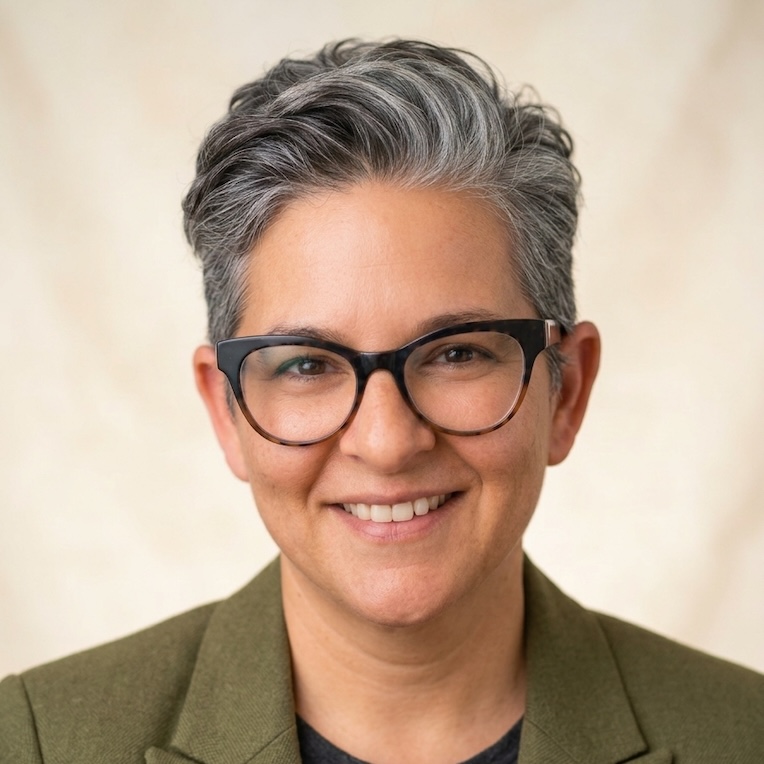
Career Pivot Strategist
Neta Raz Studnitski is a Career Pivot Strategist and EdTech professional who helps experienced professionals recognize the value of their skills, trust their expertise, and navigate their next career move with confidence. Her career spans education, recruiting, operations, customer experience, and knowledge management, giving her a unique perspective on how people develop skills, demonstrate their value, and find new ways to apply what they know. Having navigated multiple career pivots herself, Neta brings personal insight and practical strategy to helping others turn their professional backgrounds into new possibilities.