
 Apple Podcasts

 Spotify

 Amazon Music

 iHeartRadio

 Pandora

 Castro

 RSS Feed

 Audible
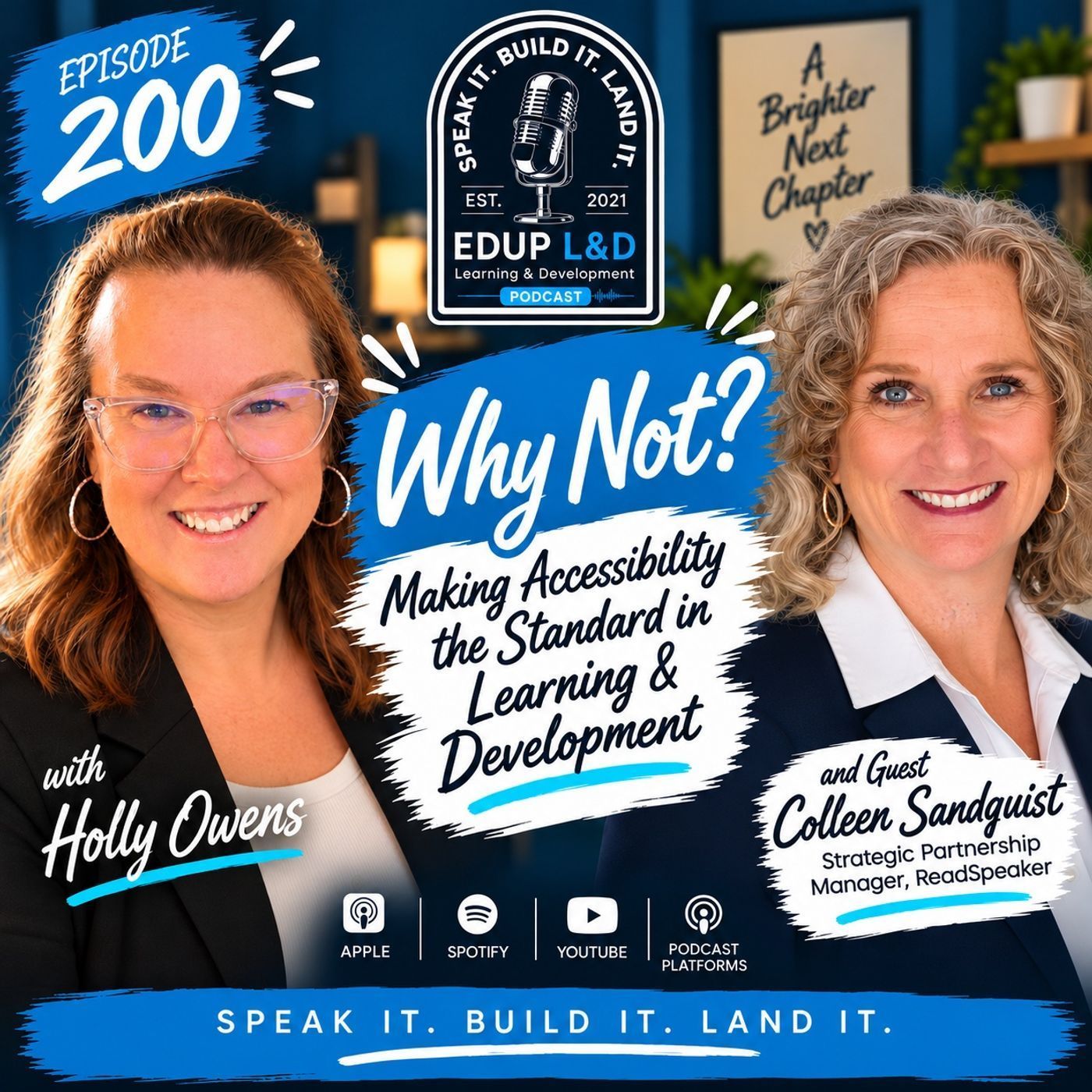
What happens when we stop treating accessibility as an accommodation and start making it a standard part of every learning experience?
In this milestone 200th episode of EdUp L&D, Holly Owens talks with Colleen Sandquist, Strategic Partner Manager at ReadSpeaker, about accessibility, Universal Design for Learning (UDL), and creating more inclusive learning experiences.
From voice technology and learner agency to belonging, choice, and the future of education, Colleen shares why accessibility needs to be proactive rather than reactive and why it's time to shift our mindset from "Why?" to "Why not?"
In this episode, we explore:
- Why accessibility should be built into learning experiences from the beginning.
- How voice technology can improve access to digital learning content.
- The connection between Universal Design for Learning, learner choice, and agency.
- Why belonging and community are essential to learner success.
- How instructional designers and L&D professionals can rethink traditional approaches to learning.
- Why organizations need to make accessibility the norm rather than an afterthought.
Connect with Colleen on LinkedIn
Learn More About ReadSpeaker: https://www.readspeaker.com/
Connect With Us
💼 Follow Holly on LinkedIn: Connect with Holly
📹 Watch EdUp L&D on YouTube: Subscribe here
📰 Subscribe to the Newsletter: It's Not Just One Thing in L&D
💃 Follow on TikTok: @ihollyo
💌 Connect with Holly: Schedule a conversation
💙 Thanks for subscribing, listening, and supporting EdUp L&D! Here's to 200 episodes!
Thanks for tuning in! 🎧
Holly Owens: Hello everyone and welcome to another fabulous episode of Ed Up LND. My name is Holly Owens and I'm your host. And I am super excited today because I have a very special, fabulous guest with me. Her name is Colleen Sanquist, and she's the strategic partner manager at Read Speaker. Colleen, welcome to the show.
Colleen Sandquist: Holly, thank you so much for having me. I am super excited to be here with you today and just share a little bit more about my journey.
Holly Owens: Yes. So let's get into it. So tell us a little bit, tell the audience who you are, what you do, tell us about your journey. How did you get into ReadSpeaker?
Colleen Sandquist: Okay, perfect. So my role is strategic partner manager. And so I manage the partners. I work with integrated partners, LMS partners, reselling partners, and so I kind of manage that whole ecosystem. how I got here, that is a loaded question. I
Holly Owens: Ha ha ha ha.
Colleen Sandquist: started in education about 22 years ago. And I was working for a local school district in reading intervention, and I loved working with the students. I had a caseload of about 25 kids from K through six. and it was wonderful. It was wonderful to see the light in their eyes when they were understanding and learning and reading independently, but also the expression on their face when. They were struggling and how hard it was for them. just broke my heart. So I had an opportunity after being in the school district for about 10 years to move to Don Johnston Incorporated. They are the makers of Co Writer and Snap and Read. We had a wonderful run together. And what I loved about that. Was my role transitioned from that one on one or small group support to Helping school districts, faculties, teachers understand how to use the products that our sales team sold. So I was the on the implementation team. I was the implementation team. I was the only
Holly Owens: Mm-hmm.
Colleen Sandquist: one. And then over the course of time, our team grew. We had great impact on learners, and I felt like my wingspan was stretching. So that was fantastic. And then There was a merger between Don Johnston and TextHelp. And I was presented with an opportunity to join ReadSpeaker. And in this role of strategic partner manager, I feel like where I as stepping back a little bit from the end user and really having that hands-on experience with the end user, my wingspan has gotten even larger.
Holly Owens: That
Colleen Sandquist: So a greater impact on learners as a whole from where I was back in 2004.
Holly Owens: Wow. What a story. We have a lot of transition transitioning or transition teachers in the audience. I think that's my biggest audience on the pod and also out on LinkedIn World. So it's great to hear your story and your passion really does come through. I know we had a little bit of a conversation before this and we talked before about helping the learners. And I think that's one of the things that we really connect on is like I am number one anytime I'm designing some sort of learning experience, whether that's through my teaching or helping another institution design something. My goal is always to think about what is the learner going to experience in this situation and how is it going to impact them and is it going to be positive and and all those different things.
Colleen Sandquist: Yeah.
Holly Owens: you know I really want to I really want to say like I just your passion is truly coming through right now with you know about like literacy and with the students and all that stuff. But one question I want to ask you is people might not know l about ReadSpeaker, so I'm kind of skipping ahead a little bit because I want the audience to know what that is. So tell us a little bit about ReadSpeaker and what that tool does.
Colleen Sandquist: Okay, so what I love about working for ReadSpeaker is that we provide voice. Okay, so we are a voice company first. And we make platforms, games, wearables,
Holly Owens: Wow.
Colleen Sandquist: and so we embed our voices inside other platforms. So, like when you're at a train station and you hear train arriving on platform 14,
Holly Owens: Mm-hmm.
Colleen Sandquist: there is a voice that could be a read speaker voice. Okay, so all the different verticals. I focus on education. North America, we focus on education as well as gaming, publishing. And things of that nature. When it comes to the realm of education, we offer products that bring voice and accessibility solutions to learners through other platforms. So we integrate our technology directly inside. Learning management systems inside curriculum content that is delivered electronically, purchased from the school district with a publisher. If there is a text-to-speech voice, it could be read speaker. So a lot of times we're behind the scenes, we're under the hood, and you don't even know that you're embracing a read speaker voice. So when we talk about education and specifically Inside the learning management system, we are providing access to learners to engage in content in a meaningful way across their ecosystem.
Holly Owens: Mm-hmm.
Colleen Sandquist: So whether we're in content or we're doing an assignment or I'm interacting with a PDF or I have to take a quiz, that read speaker solution is going to be present for learners regardless of where they are. Across the ecosystem. So, what I love about that is that consistency, right?
Holly Owens: Yeah.
Colleen Sandquist: Learners need consistency. They need to be able to rely on a tool that is fully functioning, fully operational, and regardless of where they are. So
Holly Owens: Yeah, I love that. And accessibility is so huge now, especially with some of the federal guidelines and things that are coming down and people are looking, which they should have done sooner, at accessibility more from a proactive approach rather than a reactive approach, which I appreciate.
Colleen Sandquist: my gosh. I have to tell you, that has been my soapbox. And I will talk for hours about accessibility if you let me. but
Holly Owens: Right.
Colleen Sandquist: that proactive approach, what I saw in the elementary schools was learners who were being pulled out of their classrooms with their peers and
Holly Owens: Right.
Colleen Sandquist: taken to the reading room where we taught reading instruction, literacy instruction. Small group, but what are we doing? We're setting those kids aside. We are taking them out of the classroom with their peers. They look different. They feel different. Wait, goosebumps. They look different.
Holly Owens: Yeah.
Colleen Sandquist: They feel different. They nobody wants that. I saw some research the other day, and it was according to college students, and this is by the Titan Partners, college students. Value a sense of belonging
Holly Owens: Mm-hmm.
Colleen Sandquist: more so than perseverance.
Holly Owens: That makes sense.
Colleen Sandquist: And I would that that hit me so close to home because that is exactly what I saw in the littles that I was working with.
Holly Owens: Mm-hmm.
Colleen Sandquist: That sense of belonging, that Community, that support is what learners need, and they need an opportunity to engage in content that best suits their needs, whether it's documented or a preference.
Holly Owens: Mm-hmm.
Colleen Sandquist: When we embed and integrate inside those ecosystems we talked about, every learner has access. Nobody is set aside, nobody is doing anything different. You can engage as you need or desire. And so if we have a documented need, we're really looking at those accessibility features and functions that are so important. But if we have a preference, or I wake up with a migraine, or I have to take my content on the go, those are all
Holly Owens: Yeah.
Colleen Sandquist: things that are not documented needs. Those are just preferences that we have. And
Holly Owens: Yes.
Colleen Sandquist: giving learners the ability to participate in those preferences and get the content that they're supposed to be responsible for. In a time frame and in a way that's meaningful for them, it's huge. It's huge for learners.
Holly Owens: Yes, absolutely. And I remember when I was younger, I was put in the lower level reading group. I was in the Rainbows group because I was considered the slow learner. And things like Reevespeaker didn't exist back then. They just identified you through written assessments and talking to you and watching you read and all that stuff. So it's like, wow, we've come a long way.
Colleen Sandquist: We have come a long way, and I'm older than you, Holly, and it wasn't back in my day either. And I was one of those kids as well. And it makes me just want it so badly. What we have to do is change the systems. Why are we having students write? If writing is not their expertise. Reading right.
Holly Owens: I gotta see in handwriting. Curse up. They don't even teach it anymore.
Colleen Sandquist: so but is that a true is that a true barometer for the information you know and that you are retending retaining that comprehension is it no it's it's a function of can you read these words on this page? Yeah.
Holly Owens: Yeah.
Colleen Sandquist: It's we're not we need to measure what matters, not what the system tells us we need to measure.
Holly Owens: Yeah. my gosh, that's that's really that's really resonating with me for sure. especially with all these different like requirements and and things. And I think you're already kind of alluding to this and like in the world of learning, like what made you think, and you you've talked about this a little bit more and I want to dive a little bit deeper, there has to be a better way to do this. Like we're talking about the reading levels, we're talking about the accessibility. What was like your aha moment? there has to be a better way to do this. Like I always think. When I'm seeing somebody struggle, they're struggling because there's gotta be a better way.
Colleen Sandquist: Mm-hmm. And I think that, you know, when we reflect on offering choice to learners, the learner gets to decide what the better way is.
Holly Owens: Mm.
Colleen Sandquist: And so we are terrific partners with Cast. They are the creators of the UDL guidelines. We are the voice of CAST on their website and in their documentation, which is it's very true.
Holly Owens: That's so co I didn't know that! That's so cool!
Colleen Sandquist: It's very true. So those UDL guidelines are founded on the growth of agency. Okay. I always equated that to learner agency. That's the realm that I had heard it in. And I was like, okay, learner agency. How do we give the learner choice so they can make a determination in how they engage in their learning content to achieve? They're learning goals, their
Holly Owens: Right.
Colleen Sandquist: goals. But what I realized in talk about an aha moment, I was listening to a podcast with
Holly Owens: Ha ha.
Colleen Sandquist: Julia Louis Dreyfus, and
Holly Owens: Nice.
Colleen Sandquist: she was interviewing Ina Garten. I'm a foodie, so I was like, this is the best of both worlds here. And at the end of the podcast, Julia revisits this podcast conversation with her mother. Which I think is so great. and during the conversation, Ina had shared that she and her husband, Jeffrey, decided not to have children because they each had goals, life goals that they want to attain, and that was the decision they made. And I heard that in the podcast, and I was like, wow, really interesting. This was in the 70s. People were just staying home and having babies, right? But for them to make
Holly Owens: Right, right.
Colleen Sandquist: this decision, cool, right? So in the revisit with her mom, she says, Imagine the agency that Ina felt when she made that decision about her life. I was like, my gosh.
Holly Owens: You're like, my gosh.
Colleen Sandquist: It completely reframed agency for me. So yes, learner agency. We're teaching our students how to become more in control of their learning, how they learn, what are their goals. But that doesn't leave them when they get to higher ed, it gets more intense.
Holly Owens: Yes.
Colleen Sandquist: Right? Because we don't have the parental involvement, we don't have the district administration, the teacher involvement, the support in place that we do in the K-12 environment. In higher ed, we're like, come to orientation day. Here you go. These are the links. Here's the pamphlets. Go figure it out. Exactly.
Holly Owens: Here yeah, have have fun. Have fun figuring that all out. And I feel like honestly, when you're put in that, I'm I went back to college in the early two thousand two thousands, but when you're put into that situation, it takes you a while to figure out actually where to go and what to do and build the confidence to find the sources and the support you need. nowadays it's probably a little bit quicker, but still there's well, here's this link and here's that link and here's this, you know what I mean? It's like
Colleen Sandquist: Yes, yes. And if learners don't enter that space with a sense of agency, it's hard. And these aren't even learners that have, you know, they could have documented disabilities, but they also could not. They just have to go and try and figure it out. Without that agency, we it's a struggle. And then even if you move from higher ed into the workplace, we need agency there as well.
Holly Owens: Yes.
Colleen Sandquist: Right? We need to be able to source out our own answers, source out re find resources. We need to be able to be, I like to say, cautious risk takers, right? We want to be sure that we are understanding all of the parts and pieces of the decision or the product management, let's say, where do I get this information? And then go from there. So agency grows with us as we grow. yeah, I like to say that when we get to a place of accessibility being the norm as opposed to bolted on or an afterthought or what have you, we will be able to support, we as a society will be able to support people learners from twinkles to wrinkles and we have to get we have to get there because we
Holly Owens: I love that, Twinkles and Wrinkles. Yeah.
Colleen Sandquist: all need to have those options which develops that agency.
Holly Owens: Yeah, I 100% agree. And I I'm so ready for it to be the norm. I feel like I've been talking about accessibility. Like I worked at Amazon and they do great with accessibility in terms of the the offerings and the workshops and the things they have, but like in individual areas and companies, there's definitely opportunities for them to grow. So I made an accessibility checklist for us to have as instructional designers throughout the process, not just at the end of the process.
Colleen Sandquist: Yes.
Holly Owens: From as soon as we're starting to have the conversation with the SME until we send off that final iteration for them to review, it definitely needs to be the norm for them. So what have you learned from building like working at ReadSpeaker? And what do you think? Like there's a lot of LMD professionals that listen to the show. What do you think they could take back to like their own organizations that would be useful to them?
Colleen Sandquist: So because I work for ReadSpeaker, I view this question from the sense of accessibility and also universal design. So I wear two hats, the need and the and the desire, the preference. you said something when we what I've made it an a design checklist, an instructional design checklist. So when we're thinking about this from a proactive approach as opposed to reactive what you talked about at the top of the session. we are all ready ahead of the game. We are already providing that for our learners. We in a workplace environment, we are already giving our team members what they need to succeed. So for me,
Holly Owens: Yes.
Colleen Sandquist: it's a mindset shift. We need to go from why To why not?
Holly Owens: Mm-hmm.
Colleen Sandquist: Why would we not provide this to the people who are in our space to support them and enable them to be their very best? Talk about it like in an educational perspective. I like to say their academic best. They're
Holly Owens: Mm-hmm.
Colleen Sandquist: doing their best because they have choices. When we get into the workplace, We are looking at opening up your hiring pool, we have some brilliance out there that just need a little extra support to unlock that. Imagine
Holly Owens: Yeah.
Colleen Sandquist: what that could do for your team. And also what I think it does is that another aspect of ReadSpeaker, excuse me, is we can be embedded on your university's website, your business website. So when from a university perspective, when students are on your website looking to see is this a place I want to go to school, accessibility, front and center, they
Holly Owens: Center.
Colleen Sandquist: know they're going to be supported right away. I think that is a huge, huge coup for for institutions. when we get to the workplace on The website that your visitors, your shoppers go to if there are learning challenges, or maybe it's just I have a touch of dyslexia, or I have trouble focusing, or I have
Holly Owens: Yeah.
Colleen Sandquist: a little low vision, embracing that higher contrast, and enlarged text. ReadSpeaker on the website provides access to your visitors to help them navigate your site. And ultimately book a demo, buy a product, find what they need in like a terms and conditions or something along those lines. So we're inside, but also we're public facing. And
Holly Owens: Right.
Colleen Sandquist: I think we just need to shift the mindset from why to why not.
Holly Owens: not. I love that. And the the fact that it becomes front and center at the institution or the organization. And people are gonna be saying now like they they're already asking people like us are already asking the questions about accessibility. Like when you're talking to somebody from ReadSpeaker, you're talking to somebody from a different vendor or somebody trying to sell you something, I'm always asking about like what is your stance on accessibility? Do you have an accessibility statement? Do you meet the standards? Like that those are the first questions that I ask.
Colleen Sandquist: So that's great that you do that. And especially out there to the institutions that are listening, when this compliance comes in April, that compliance covers every tool, every vendor you work with. And
Holly Owens: Yes.
Colleen Sandquist: so you need to be asking those questions. And if they are not WACAG 2.1 AA compliant, by April, you can't use them. You will be out of compliance. and accessibility is at the core of what BreadSpeaker does. So we are WACEG 2.2 AA compliant. We are beyond what needs to be. We have our privacy policies, our accessibility statements, and we are a CAST UDL certified product. So
Holly Owens: Nice.
Colleen Sandquist: we have that label as well. We just make it easy for you. To help your learners.
Holly Owens: Yeah. And meet the meet the compliance guidelines. you don't have to think about it. Yeah.
Colleen Sandquist: Right. Right. Exactly. Exactly. We're going to bridge you and help you and help support your compliance plan. That is what so it's so important.
Holly Owens: Yeah. So what about the future of work or learning? what what gives you hope? What gives you like I'm I'm just so excited about this and then like is there anything else we need to rethink? We've kinda touched on that quite a bit, but is there anything about the future of like work and learning that really it's like I'm hopeful that this is this is going to be happening?
Colleen Sandquist: So I love the way you said learning and work because if we are going to support the work, we need to start with the education system. We need to start there. And you know, Louise from CAST always says, one size fits none. So we need, isn't that good? Yeah.
Holly Owens: That's true. Yeah. Yeah, that's good.
Colleen Sandquist: We need to offer that. Choice. We are all lifelong learners. We continue to learn and grow. You know, people are going back to school all the time. so I feel like if we can work at the policy level, which is what we're doing, you know, which is being done with the mandate that's coming down. So we need to start there. We need to also take reflect. Districts need to reflect on how they're supporting their learners. Are they engaging with their learners to understand how they learn best? I also heard it said, nothing about us without us when it comes to policies, implementations, processes when it comes to learners with documented disabilities. They need to be part of the conversation. What is it that you need? What is it that you want? So we need to really start at a foundational level. But then, so talk about it with your colleagues, talk about it with your communities, talk about it with the children and learners that you are serving. What is it that they need? You know, it could be a different preference when it comes to engaging with content. do we want to start? With building on the strengths and scaffolding the challenges, but giving the learners the confidence in their ability so they know that they can. And then we bring them over and we help them do the hard thing with support.
Holly Owens: Right.
Colleen Sandquist: you know, when we think about College and career readiness. Are we setting our learners up for success? You know, institutions and organizations say yes, workplace says no.
Holly Owens: So yeah.
Colleen Sandquist: There is a discrepancy. And I saw that in the data the other day I was looking at. So we feel like we're ready, we're readying our learners, but potentially not proceed that way on the other side.
Holly Owens: Yeah, I for sure.
Colleen Sandquist: Normalizing Treating failure as, you know, an opportunity for learning, taking a setback, showing learners how, okay, this is the path we walk down now. How could we do this differently? And let them figure it out, right?
Holly Owens: Right.
Colleen Sandquist: We don't need to be supporting in a way that is not going to build that agency. Daryl comes back to you.
Holly Owens: Right. And the fear, we the fear, if you're failing it, that does something to the brain.
Colleen Sandquist: hardwired.
Holly Owens: Yes. And if it's more of a in a supporting role, that does something to the brain too. It makes it's a different area of the brain. It's more positive.
Colleen Sandquist: Absolutely.
Holly Owens: And so I feel like we really do need to focus on eliminating those fears about failure. Because how like we didn't get here where we're sitting now because we didn't fail. We had to fail and
Colleen Sandquist: Honestly.
Holly Owens: learn and fail again and learn and like learn from other people and and all kinds of different things had to happen to get where we are at right now.
Colleen Sandquist: Right. And when we don't fear the failure is when we develop those calculated, cautious risk takers
Holly Owens: Mm-hmm.
Colleen Sandquist: that are going to push themselves to learn, that are going to push themselves to try. And
Holly Owens: Yeah.
Colleen Sandquist: sure, it may be a struggle. They may need support. They may not get it on the first try, but they will go back and do it again.
Holly Owens: Mm-hmm.
Colleen Sandquist: because it didn't hurt so bad when it happened the first time.
Holly Owens: Exactly. Yes. Gosh. Do you believe Romasome already at the end of the episode? I told you it was gonna be fun and we're gonna have a good time and we're gonna talk a lot. So everything
Colleen Sandquist: I know it's okay.
Holly Owens: about Re Speaker is definitely gonna be in the show notes and where to connect with Colleen. But I have two final questions for you. Is there anything else
Colleen Sandquist: Great.
Holly Owens: that you would like to share that you didn't get to share throughout the episode? And then for our listeners, three pieces of of advice and or resources that you turn to that will help them navigate their careers, navigate learning, insert said accessibility here. I would love to hear from you what your favorite advice is or your your resources.
Colleen Sandquist: Yeah, yeah. So there is so much more I could share, but we'll do we'll do a part two.
Holly Owens: I know. You're gonna have to come back. Yeah, we're gonna do a Where Are They Now episode for sure.
Colleen Sandquist: there you go, there you go. So I don't really have anything more that I want to share about some of the topics that we talked about because we did just it was so such a great, fulfilling conversation. But when I think about three pieces of advice, That I would like to share. You know, the first one, be authentic and reflective, right? Like career paths can either be chosen, and that is intentional, until they're not, right? Until they don't work anymore, or until we're looking to make a change, or we're looking to get have a larger impact, or we're looking to exercise our agency and challenge ourselves to do something different.
Holly Owens: Uh-huh.
Colleen Sandquist: So think about when we reflect, what is what is our mission? What is my mission statement? What is my goal? What footprint do I want to leave?
Holly Owens: I just got goosebumps when you said that. What is my mission? What is my yeah.
Colleen Sandquist: Because, we have corporate missions, we may do a mission statement for our family, share goals and things like that, but from a personal perspective, what does that mean to us? What footprint do we want to leave behind? there's a song out there that I love, and I can't remember the artist, but she talks about when she's gone, what will be her legacy? How will they remember me?
Holly Owens: Mm-hmm.
Colleen Sandquist: And it's like that's power. That's power right there. So
Holly Owens: Yeah, that's
Colleen Sandquist: be authentic and reflectful and be hopeful. We are a global community of people who are driving change. Ask those hard questions. Stretch your thinking and those of you know people you interact with. If something doesn't sit well with you, I like to say speak the truth with love. Go right back at them and say, hey, I, you know, I disagree, respectfully disagree, or whatever the terminology is that want to use. But be hopeful and challenge the thinking that you have. And know that there are going to be challenges. You know, there are challenges through transition. But if you stay true to your passion and shift according to your next step, embrace your skill set, focus on that. next thing you're gonna get there. Your journey will just continue. I talk about the journey of accessibility, the journey of UDL, the g we're all on this lifelong journey. What does it look like for you today? And what possibly could it look like for you tomorrow?
Holly Owens: Great advice. That will really resonate with our audience and what they're doing. I feel like we don't spend enough time sitting down and actually reflecting because we're always concerned about like the money, the different things. But those are three great pieces of advice. And I love the fact that you talk about having the hard conversations too and do it with love. because not everybody's the same. And that's what's the beauty of this humanity that we're living in. Yeah.
Colleen Sandquist: Exactly. Exactly.
Holly Owens: Well, we definitely have to shout shout out Erin because she connected us and got on the show. So hi Erin. We're shouting you we're shouting you out. And
Colleen Sandquist: Hi, Erin.
Holly Owens: like I said, everything about ReadSpeaker is gonna be in the show notes, how to connect with Colleen, how to connect with Erin too, and learn more about ReadSpeaker for your organization, your institution, or whatever it may be. Colleen, thank you so much for coming on the show and sharing your your journey, your experiences, your expertise with the audience. I really appreciate you your your time.
Colleen Sandquist: Well, I appreciate you welcoming me to the show. Thank you so much.
Holly Owens: Of course. There so like I said, go to the show notes, find out more about Reed Speaker, and we'll see you soon.
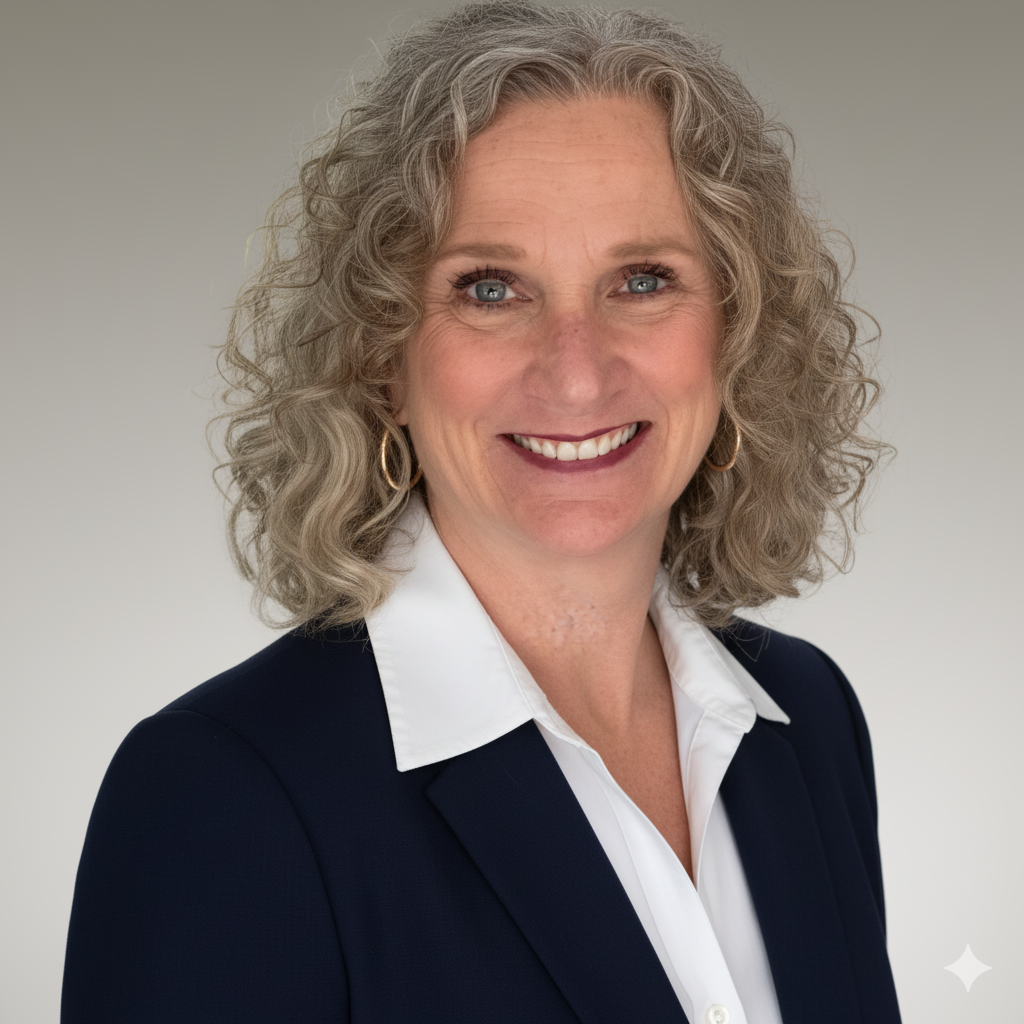
Drawing on more than two decades in education and assistive technology, Colleen is dedicated to empowering learners to reach their full academic potential. Her passion lies in removing barriers through accessibility, ensuring all learners can access and comprehend digital material. A strong proponent of Universal Design for Learning (UDL), equity, and personal growth, Colleen aims to positively influence partners, higher education institutions, districts, and learners by sharing her expertise and commitment to accessibility.