


 Apple Podcasts
 Spotify
 Amazon Music
 iHeartRadio
 Pandora
 Castro
 RSS Feed
 Audible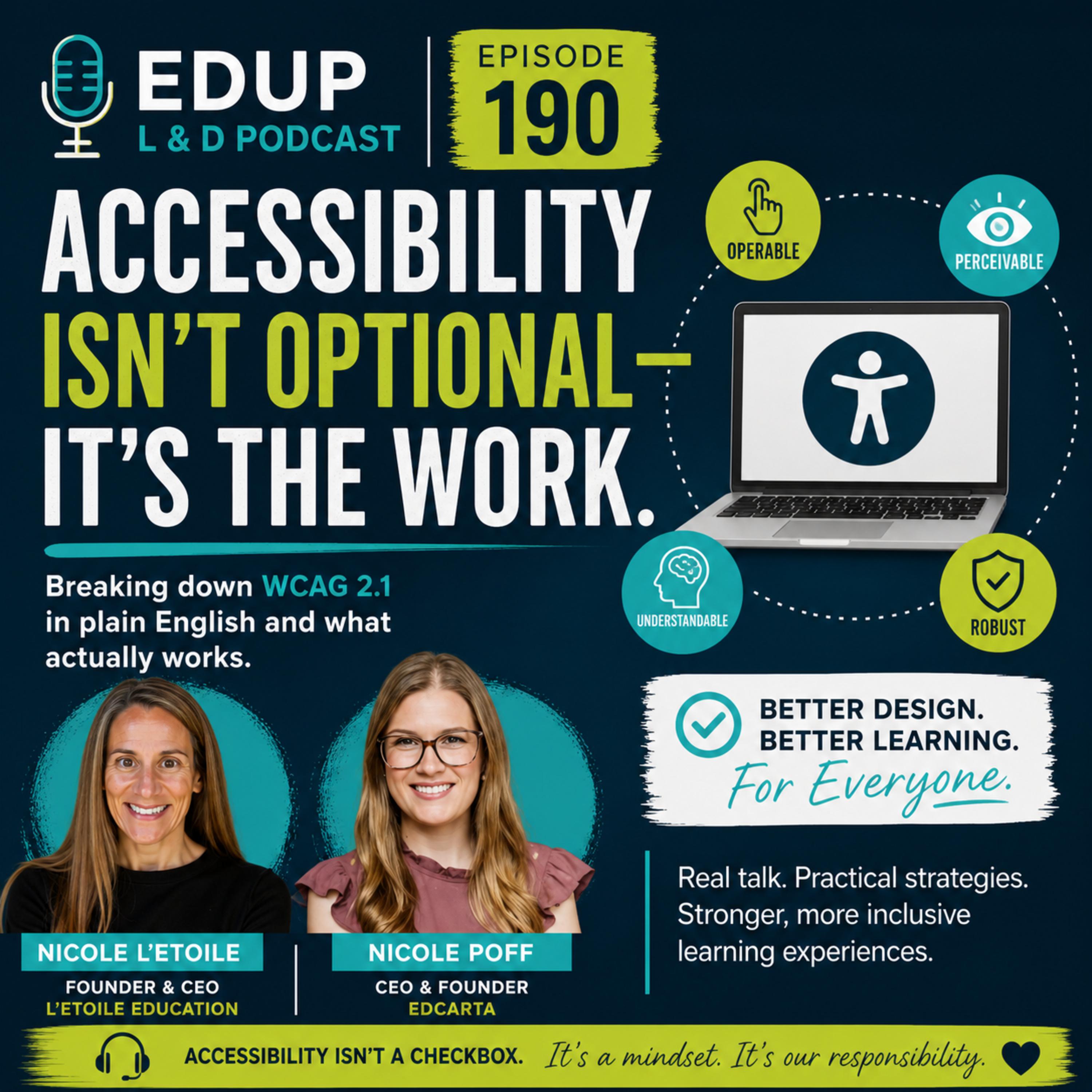
In this episode, Holly Owens is joined by Nicole Poff (EDCARTA) and Nicole L’Etoile (L’Etoile Education) to break down WCAG 2.1 in plain English and talk about what actually works in real courses.
In this episode, Holly Owens is joined by Nicole Poff (EDCARTA) and Nicole L’Etoile (L’Etoile Education) to break down WCAG 2.1 in plain English and talk about what actually works in real courses.
NOTE: This was previously recorded as a LinkedIn Live session
What We Talked About:
No fluff—just practical insights you can use right away.
- What WCAG 2.1 really means
- Why LMS accessibility scores aren’t enough
- Common mistakes institutions are making
- Simple, high-impact fixes you can start now
- How to make accessibility part of your workflow
Resources Shared:
Accessibility isn’t a checkbox—it’s how we design better learning for everyone.
Follow Us ⬇️
Dr. Nicole Poff, CEO and Founder of EDCARTA
Dr. Nicole L'Etoile, Founder of L'Etoile Education
Holly Owens, EdUp L&D Host and Lead, ID at EDCARTA
🎧 Want more great content? Be sure to listen and subscribe to our show.
Thanks for tuning in! 🎧
Holly Owens (0:00): Hey everyone, we're back. EdUpLND is back y'all. I am so excited and I'm your host, Holly Owens, and we have got a great episode for you. This episode is definitely one that every instructional designer faculty member and leader in higher ed and or corporate needs to hear because we, and I have some great guests on this episode, are talking all about accessibility and not in the way that you usually hear it. So no jargon, no overwhelming to do list, just a real conversation about what actually works and how you can incorporate accessibility into your daily workflows.
Holly Owens (0:38): I am joined by two amazing experts, Nicole Poff, who is the CEO of Edcarta, and Nicole Latoire, who is a leader in digital accessibility and founder of Latoire Education. And together we're breaking down WCAG WCAG 2.1 in plain English. We're getting very honest about making institutions, you know, talk about accessibility, be proactive about accessibility. The pressure that people are feeling when it comes to accessibility because of the federal guidelines, although they've been extended, we still need to pay attention to them because here's the truth. Accessibility is not optional, and it's not something you can push off onto someone else.
Holly Owens (1:24): So the student disability services people or the accessibility expert on your team, it's a part of what we design every day. We design better learning experiences for everyone, make it accessible for everyone. So if you're feeling overwhelmed by accessibility and all the talks about it, unsure where to start, or just trying to keep your head above water with everything that's coming your way right now, this episode is for you. Let's get into it. All right, we're live.
Holly Owens (1:56): Hello everyone. And welcome to this special LinkedIn live. I'm Holly Owens, and I will be hosting this particular episode, if you will. And I'm excited today to be joined by Doctor. Nicole squared.
Holly Owens (2:11): We have two great Nicole experts in the room. I'm going to allow them first to introduce themselves and then we will jump right into the content. So who wants to go first?
Unknown Speaker (2:23): Let's give it to Nicole. Other Nicole.
Unknown Speaker (2:25): This is going to get tricky.
Unknown Speaker (2:27): This is
Unknown Speaker (2:28): going be short. Yes. We didn't think about that. All right. Yeah.
Nicole L'Etoile (2:32): So hi, I'm Nicole Latoil. I'm a digital accessibility consultant, founder and CEO of Latoil Education. And we focus on preparing those in the learning development space, actually across all sectors in getting their learning content into an accessible format and inclusive format for all people. So, Nicole?
Nicole Poff (2:50): Yeah. Thank you so much, Nicole, for being here with us. I am Nicole Poff. I am the CEO and founder of Edcarta. We are a curriculum and instruction provider.
Nicole Poff (3:00): So we help schools audits, new program development, curriculum enhancements, kind of all the things we just try to be an extension of their teams. So I'm excited to be here too and talk about accessibility, which is coming into more and more conversations every single day.
Holly Owens (3:15): Absolutely. And it's, we're really glad that you all are here and joining us on this live. This is the conversation I've been having for a while. I was like, we should just do a LinkedIn live and kind of simplify and break things down for our audiences. We all have a great network of people, especially Nicole Latrois with her, her company and accessibility and being seen as an accessibility, not only an expert, but also an influencer as well.
Holly Owens (3:41): So today we really wanna talk and focus in on that accessibility, but not necessarily in like the theoretical concept or in the heavy way. We wanna talk about like what actually works. And at the end of this presentation, you're gonna get access to a download that we created here at EdCarta that is a checklist, it has information all about WCAG, that's what we're calling it, you know, everybody has a different nickname, so we're gonna say WCAG and you can download this checklist and use it at your organization and or your institutions. So I think we wanna dive right into it here. But before we do that, actually, I want to tell you that we have something special that's going to happen at the end of the presentation.
Holly Owens (4:22): And I'm about to share a link in the chats that we have. I want to tell you that we're gonna do a giveaway. So those of you that are joining live, we're gonna do a giveaway and we are going to offer you an opportunity to speak with Nicole from EdCarter or myself about accessibility course design. We're gonna give away a forty five minute free consultation. And if you want in on this, if you want to be put on our wheel of fun at the end and be in the contest, I'm putting a link to a form.
Holly Owens (4:54): Please fill out this form. Diane in the background is going to be putting all the information into the Wheel of Fun, and then at the end there, we will do that giveaway for you. So please stay till the end. You have to be present to win. All right, let's get into it.
Holly Owens (5:09): So first question I want to ask, what's WCAG 2.1? What is it? Like, let's break it down. I mean, we hear it all the time. We're, we're talking about the federal regulations that are coming down, things that are going to be happening this month and then the following year.
Holly Owens (5:25): So what is, what is WCAG and what are we talking here when it comes to deadlines? Who wants to, I'm a pass it over to the expert, Nicole Latrois.
Nicole L'Etoile (5:34): All right, we're going right in. We're jumping right into the guidelines themselves. So, the first question you asked, I think, was what is the WCAG? What is the WCAG guidelines? Specifically, I know we're talking about 2.1AA because of the new title two ruling, but I also like to just talk about it in general because we are in the 2.2 version of it.
Nicole L'Etoile (5:54): So there's nine criteria that were added in to 2.2, so it's one of those where let's reach for 2.2 because that's where we are. If we were to talk just about the law, we'd be looking at 2.1 AA. So what are these? That's the way I like to talk about it like a bridge, right? So many of us have heard about universal design for learning.
Nicole L'Etoile (6:11): Many of us have talked about inclusive learning, and we kind of intertwined some of these and say, well, it's accessible. Well, does that mean I can get access to it? What does accessible mean? So the way I look at these guidelines is there are criteria or technical ways to bridge the gap to make things accessible to all learners, especially those with disabilities. So the guidelines are specific to disabilities and making everything accessible to everyone, but they also do help us all.
Nicole L'Etoile (6:37): So that's why I like to say they do bridge it to inclusive learning and design. So if we were to get really technical, would you like to know that there are 86 success criteria inside there?
Holly Owens (6:46): Learn something new. There's 86. Wow.
Nicole L'Etoile (6:49): There's 86. But we could talk about what it means to reach this new role, Not necessarily the 86 criteria. I'll stop. I'll pause because I could, you know, keep going on in there, but I'll make sure that we answer all the questions and get to the actual purpose, which was to talk about the new rule, which is on April 24. So if you are a state or local agency, specifically we're talking about higher ed today.
Nicole L'Etoile (7:14): So if your population serves 50,000 or more, that means not your population, not your student body. Okay, so if you are a state university, you are meeting the state population. Think about it that way. Not the student population.
Holly Owens (7:31): Yeah. I think people are confused by that. Cause at first when I read that, I thought it was the FTEs or, you know, whatever they go by when they're purchasing like technologies or reporting statistics. So it is by the state population. So that is for most states in The United States happening here.
Holly Owens (7:48): If you're listening live in ten days.
Nicole L'Etoile (7:50): Yeah. And so, and if you are, if you have a smaller population, 50,000 or less, your your deadline is next April, 04/27/2027.
Holly Owens (8:00): Well, I love the fact that they're giving, they're giving that time for people that have the less, you know, they're kind of breaking it into two chunks. I think one of the things that I've been hearing a lot from people is some of
Unknown Speaker (8:11): the
Holly Owens (8:11): anxiety or like the pressure around making sure that the courses are all accessible. And now that we have ten days, we're out ten days, like I wanna know from you, what can people do? They should have probably been doing something already, but what can they do right now to kind of make this happen by the deadline or just get on the right path?
Nicole L'Etoile (8:33): Good question. I actually want to turn and make this a little bit more conversational if I can, and ask Nicole a couple of questions too. Maybe we can talk about that back and forth. Yeah. So in terms of what you're seeing, because you're, you know, as your job and your work is to go in and look at this, you could talk about that.
Nicole L'Etoile (8:47): And then I could say, yep, seeing it. It's on that list of one of those top
Unknown Speaker (8:50): have a things common we things can we're seeing work for sure. Right? Yep. Yep. Yep.
Nicole Poff (8:54): So I'll hop in. I'm seeing a couple of things. So I'm seeing a, our goal is we're telling all faculty to get to 70% accessibility in the accessibility checkers within the LMS, right? There's a little trackers within Brightspace, Canvas. They're saying we're telling our faculty get to 70% and you're good or get to 80%, 90%.
Nicole Poff (9:15): So there's like a strong reliance on the LMS as like just get to this number, do what you need to get to this number and you're fine. I'm hearing faculty say, I don't feel like I need to do this. I don't have any instructional design support. So I'm just going to start pulling things out of my classes. So books that I loved that are scanned in PDFs, those are now gone.
Nicole Poff (9:36): Videos where I introduce concepts, those are gone too because they're not transcribed and we don't have closed captions. So I'm just pulling things out to get this to just a text based course because that feels the most quote unquote accessible. Right? It's the easiest way to get to accessibility is just removing all the extras. And then I'm hearing a lot of like, I think we'll be fine.
Nicole Poff (10:00): Like I don't know that they're coming after us is what I hear a lot of. We're little fish so I don't necessarily think anyone's gonna be checking our LMS. So I think those are the three things that I'm hearing quite a bit.
Nicole L'Etoile (10:11): Okay, so I'm going to calm my nervous system from those three things that you just wrote down. And I wrote it on a sticky note because I was like, there are three things there that came up. Yeah, so a couple of things I heard was the 70%, 80% checker. Definitely want to talk a little bit about that. I heard culture belief systems in that as well.
Nicole L'Etoile (10:30): And then I kind of wanted to do the insight that, you know, this was always the rule. Your web content, your digital content always had to be accessible, but with the new rule applied was a particular standard. You now have to reach 2.1 AA. So that standard was never applied, which meant it was more vague, but that didn't mean that everybody was exempt from having to do these things. It was just more vague.
Nicole L'Etoile (10:51): And then what we see, right, in the education space, specifically whether it's K-twelve or higher ed, is we tend to see that this lives in accommodations. This lives in special education. So there's this cultural belief that it's not my responsibility, it's the individual's responsibility, kind of falling back on that medical model of disabilities and belief systems that it's not, you know, it's not our society. It's not us as a human rights model. We need to let them ask for accommodations and I'll deal with it.
Nicole L'Etoile (11:18): And then culturally, I'll just take it out of my course and make this easy. Kind of makes me think it's like a punishment, right? Like, because this new thing is coming, I'll now punish my student population and respond by just giving a bunch of reading. And however, you know, and take out any other UDL, Universal Design for Learning opportunities as well. And then we can talk about the checker, but I'll stop there because.
Holly Owens (11:41): Yeah. Then it becomes all text based. Like that, that's not the intention here. And I think there's a lot to be said about what's happening. Nicole, you and I talked about this on a podcast episode about the more of the reactive culture, and this kind of regulation should hopefully be putting into place more of the proactiveness that we should have, and not, we're not punishing people.
Holly Owens (12:06): Accessibility is not a punishment. It's making something better for everyone. So that's not a punishment. That's a reward. That's a benefit.
Nicole L'Etoile (12:14): Right. And so not an, this isn't an initiative or that, I mean, we're putting that, it feels like that top down, right, that we always experience in these spaces of like, well, this is a new mandate. This is a new initiative. Something else I have to do. And really, this is, instead of opening the conversation of, wow, we could be making things better for everyone, and this is actually a bonus, right?
Nicole L'Etoile (12:35): This is a plus that we have to now meet this regulation. This is an opportunity to work on our materials. And I understand, right? There's competing spaces, but this really never was supposed to be one of those competing spaces, right? Like this is a fundamental right, so why did it ever get put in that bucket of like, isn't a competing initiative sort of feeling or a policy or project.
Nicole L'Etoile (12:55): To the point about the checker, I will say that's a good start, but that's not good enough. Right? So especially like, as I said, when we, before we jumped live is I'm in the middle of a remediation PowerPoint project and we're remediating over 2,500 slides. You go through, run your checker first, and hard to read contrast gets checked as passing. But then if I go through and manually check something that I'm not quite sure, it'll show up in my WebAIM tracking color contrast tool that it doesn't quite meet.
Nicole L'Etoile (13:23): So the trackers are okay to start you, right? They're kind of there to say, this is what you need to check for, and then we have to go in and make sure that we're meeting it, and that it's correct, right? That it's not a bad place to start, but it's certainly not the place to stop.
Holly Owens (13:40): And are all accessibility checkers, I think I'm getting an implication from you, that are not created equal.
Nicole L'Etoile (13:49): Well, yeah. I mean, so, one of the things that you noticed too is not everyone's technologies are exactly the same, whether we use the same browsers and the same programs to view things. So I'll give you a perfect example too of this. So I'm working on a slide deck and, on my end, I run it on a Mac. And so PowerPoint running on a Mac, everything is checking as meeting compliance in my checker.
Nicole L'Etoile (14:10): So, then when I upload it and send it over to the client, they're downloading it and some things are coming back on theirs as hard to read contrast, like seven issues that I already fit that were already addressed and checking off clean on my end, but they're not showing up on their end. So, you know, it's one of those things where the tracker itself now that the content is right, the color contrast is correct, but the checker is showing an invalid it's not showing a valid I know there's a better word for this, but you know what I mean? Like, it's not it's not correct.
Nicole Poff (14:40): Can I can I ask a question then? So I like to think about like ultimate source of truths, right? If if these trackers are not necessarily foolproof and someone wanted to check color contrast, what would be a way in which they felt like, okay, I can feel good. I know that I'm using these two colors in this banner and the color contrast is what, where would they go for that kind of ultimate source of truth?
Nicole L'Etoile (15:04): Yeah. So we could use to check it. We would use the WebAIM color contrast checker, but there are other tools, and we should probably share these somewhere in LinkedIn. I'm sure there's folks listening in that are like, I use this one. I use that one.
Unknown Speaker (15:16): There's pre color palette. Don't have a ready to go, but yeah, good things Just
Holly Owens (15:21): shared one. Thanks Jared.
Nicole L'Etoile (15:22): And then you could also use like one of those pre, like Adobe has them and you have the one you can go in and make, like, choose your colors. Right? And then just keep using these color patterns pre before so so you know that they are going to work. And then I also like to talk about large text, small text because I particularly like in my course that I have, I like a gold. I like a gold heading, heading two, for some reason, it's a dark gold, but if the gold on white normal text, which is doesn't pass, but if it's large text, it's 14 or larger, 14 and bold, sorry, and larger, or 18 or larger.
Nicole L'Etoile (16:00): So if it's 14 and bold, it meets large text. If it's 18, not bold or higher, it meets large text. So sometimes it could be something as, I really do like a color and it gives you some creativity. So I like to give people that option, right? You can meet the standard.
Unknown Speaker (16:15): Yeah,
Holly Owens (16:15): absolutely. Yeah, I think like there's a whole bunch of different tool there's a whole bunch of different tool out there. So how do you, you know, coming from, let's say if we're a new instructional designer or we're an instructional design team like Nicole Poff, like what have we encountered so far when we're dealing with instructional design teams? What are they saying about accessibility at their institutions and what they're trying to do for, you know, like, what's the ultimate goal here? And I'm gonna guess that it's gonna say everybody's different in their approach.
Holly Owens (16:47): So I want to kind of hear from your experience, since I've only been with Ed Carter for about three months. What are you seeing with the instructional design teams?
Nicole Poff (16:54): What I have found from instructional design teams is that internal teams are typically pretty passionate about accessibility already. Are designing with accessibility in mind and where the resistance comes from is sometimes a SME side, right? Like I really just want to use this resource. This is a very valuable resource for the student. Why can't I use it?
Nicole Poff (17:16): Or sometimes there's just, I hate to say it, there's timeline constraints, right? Like if you're talking about checking every single color contrast and you have two weeks to stand up a course in the LMS, sometimes the institutional deadlines just don't permit the time. And so they're putting things in the shell that maybe they're like, I think this works, but I didn't actually verify it works. They're marking images as decorative just for the sake of compliance.
Unknown Speaker (17:43): Just
Nicole Poff (17:44): a lot of kind of little hacks that get the checker in the LMS to be a higher number that I think they just have found are kind of loopholes along the way. Yeah. But for institutions, I think most instructional designers are very aware of accessibility and they want accessible design. And it's figuring out how to communicate the importance to the faculty, to the SMEs, to the provost, to the leadership, to how to get kind of that buy in.
Nicole L'Etoile (18:11): Yeah. And I think there's the back to culture, right? So by giving a number, an arbitrary number to folks, right? So it's like beating the system. You know, we always find a way, like, I have to meet this certain regulation by, you know, I think, in my experience in K-twelve, like, let's say the Department of Ed came down with a particular rule, everybody figured out the game, How do I make this so I could just click this box and move on?
Nicole L'Etoile (18:33): Right? So by giving this checker and saying you have to meet this requirement, it's like a numbers game now. It's not even about what's great for people. And so, and I understand, I do get that there is a time constraint, but I think that that's where the work went wrong. And I think the purpose of having this rule was so that we could make learning available to everyone.
Nicole L'Etoile (18:50): It wasn't to make it so that you have to particularly hit a particular number or, you know, or so I think that it gets lost in its meaning in that way, and completely understand people playing the numbers game because that's the system in which they have been shown. You can continue to play the numbers game here, just click the box and move on because this is a lot of work to critically make time and think about how to do accessibility well.
Nicole Poff (19:13): Absolutely. And Nicole, I think I may have taken this from your course, but one thing that I can say typically to faculty members or provosts or really any person who's kind of challenging like the importance here is, okay, you are designed for let's say the busy online student who is going to work, balancing kids. Let's say they're at a soccer game and they can't listen to a video or let's say they're on a bus and they don't have their headphones. Having those closed captions or having the transcript really is serving your adult student well. You know, taking it and I probably got that from your course, but that type of analogy where it's like, this is beyond compliance, but really practical for every single person.
Nicole Poff (19:56): This just makes it better for them. Those types of kind of having it in my back pocket seem to really help. And again, I probably learned that from you.
Nicole L'Etoile (20:05): Yeah. Well, appreciate you calling that out. And I, you know, it's something I've learned from others too. You know, it's just having that conversation. I think when I first started out in this field or on this mission to do this work was that I was more involved in like, let's meet the criteria versus, okay, let's now sit back and say, why is there some pushback here?
Nicole L'Etoile (20:25): So I think that that also took me some time too, to figure out in terms of why is this a struggle for some? Yeah, it's just having conversations with people and realizing that this is the one thing that always reminds me is, if somebody asks me, Okay, how many people are you excluding with your learning if you're not doing this? And when we ask the question, it turns the conversation away from the number and the criteria tracker and says, Okay, what am I? Am I opening the door for folks or am I closing the door? So because it's about people, and I think we get lost along the way that it's something different.
Nicole L'Etoile (20:59): So yeah, so maybe, you know, I think back to the question of, Holly, when you first asked, like, what are people, what are they seeing? What are they doing? Why is there, I think you asked like, why is this a struggle? I, you know, I think that, is that where we started?
Holly Owens (21:10): Yeah. Like, is this, why do we, why do we have to continue to have these conversations about changing the culture? Why hasn't culture already changed when we know that now the federal government is regulating it? That should make people think that this is super important. I mean, I just don't understand like every, I'm the type of person like I can't unsee click here at this point in my life.
Holly Owens (21:31): If I see a click here somewhere, or if I see like, red text or, I mean, those things are so ingrained in me now that when it comes to accessibility, I'm like telling the person like, you have to fix these things right away. I mean, like with everyone, it should be like that, especially those of us that are instructional designers, those of us who teach online, because I, or teach in higher education in general, all the faculty, like how do we get people to that point where it's just like, this is not acceptable, just as if we were putting a course together and it had content inaccuracies and we'd be like, accreditation bodies would be freaking out and people in committees would be all over the instructor about like, how did you let this happen and stuff like that. I think that's like kind of where I'm at with it or what I'm hearing from people is like, why hasn't it shifted a lot? I don't feel the shift yet.
Nicole L'Etoile (22:20): Yeah, no, that's a good question. And you mentioned like the click here piece, right? So unless you know why, like, right. So what would be the reason why should I not right click here? Right?
Nicole L'Etoile (22:29): Like, can visually see that, can't you? That it says click here, and I've talked about all these things. So I think there's sometimes like you only know what you know. So if you're not aware that, and too, I like to say, so click here to a screen reader user. Right?
Nicole L'Etoile (22:43): Where's here? Right? I don't know where here is, and it could be in context. It could be out of context. But also, sometimes, like, I'll get, you know, a message or an email or a newsletter, and it says click here.
Nicole L'Etoile (22:54): I'm not gonna click here. I mean, I can see that you want me to I have a vague idea where it's going to go, but I don't want to click it, because why would I do that? Like, what's the purpose of going to the place that you want me to go? I think that that descriptive has, you know, so understanding that it's about good design too, right? And that's why you're not going to do it, because you know that one, it's not accessible, and also two, it's like, well, where's it going?
Holly Owens (23:18): Yeah. Where's it taking me? And you know, goodness gracious, what if it takes me to a site that's like, who knows? Like if they didn't check their links and things and stuff like that. Yeah.
Holly Owens (23:28): Yeah.
Nicole Poff (23:28): I think part of this though too is making sure that we're communicating the fix, right? Like as instructional designers, it's easy to leave feedback on a course guide or a course, right? We're auditing it and we're like, don't say click here, But making sure that we're closing the circle or closing the loop with instead of saying click here, which isn't accessible, let's reframe this to say blank and not just say, because I think we're instructional designers. We know it so well. We'll stop with you need to include descriptive text.
Nicole Poff (23:57): But that doesn't mean anything to someone who doesn't know accessibility. So really giving the example of, here's what you said, this isn't accessible because blank, we need to use a descriptive text. What does that mean? Here's an example of how I reworked this sentence, and now how the link makes sense.
Nicole L'Etoile (24:14): Absolutely. Yeah, give a path forward, right? So I'm to explain what it isn't, then I'm going to show you an example and give that person a path forward so they can do that for the next time. And it is not knowing. So I think one of the people ask is, How do you build this into your workflow?
Nicole L'Etoile (24:30): They want to know, How does this become part of your day to day when you start? And it is knowing the criteria. So not all 86, like I started out, please don't go memorize 86 criteria, But there's probably like 20 to 25 of the criteria that you're going to see every day. And we talked about links already. You could talk about headings.
Nicole L'Etoile (24:48): We could talk about making sure your course is keyboard navigable, that I could just put my mouse aside and use my keyboard to get to what I need to get to and do what I want to do. You know, is it is it color? So it's these, you know, things that you the more spent time you spend in the criteria, you usually hear there's a lot and there's jargon. I don't know how to break this down. So when we talk about what does it mean to put WCAG in plain English, right?
Nicole L'Etoile (25:16): There is, and I want to give a shout out. We're going to have a checklist at the end of this, right, to look at, and I imagine that's going be in some plain English to start there, but to think about, you know, what are the more time I spend understanding criteria, then I can do it from the start. And so people don't know what they don't know. And then once they know, they could build it in. And then it does become time.
Nicole L'Etoile (25:39): Might know that captions are needed for all video and audio. But like some people, they're going to take them out as opposed to, I should really go in and edit these captions. I should go in and make sure the captions are accurate. So there's knowing, there's I don't, or versus I can't versus I won't. Do you remember?
Unknown Speaker (25:56): We used say that all the time. Yeah. Is it an I can't or is it I won't? Which one is it? So yeah.
Holly Owens (26:02): And Nicole in the audience had got another Nicole. So now we're Nicole times three had a great question that I want to show on the stream. She says, how do you balance competing accessibility needs? And I feel like we're kind of going into that right now. So maybe we can look at this from an instructional design perspective, or maybe start the institutional level and then look at it from an instructional design perspective and then maybe from a faculty perspective?
Holly Owens (26:25): How do we balance all these different needs with all these things that are now being thrown at us?
Nicole Poff (26:30): I want other Nicole to take this because is such a loaded question, right? Where do you start? Know, you're coming into an institution and Nicole, I would really love, I mean, like if you're coming into an institution who's kind of they have what they have, where do you start and is there a hierarchy of importance, right? Is it? Yeah, I would love you to take this, Nicole.
Nicole L'Etoile (26:52): Okay, yeah. So I'm going to say competing accessibility needs. Are we saying, so we know that, okay, let's say we go to a course and we see that that course is lacking proper HTML semantic headings. So instead of using h one, h two, h three, h four, h five, h six, they're just making the font really large and really bold and really big. Right?
Nicole L'Etoile (27:11): So, okay, let's, let's, let's do that. Let's fix the headings. That's something you can do that doesn't take too much time. It's something that has a big impact for screen reader users, and let's also take a look at how the, what's the names of these headings, right? Are they, are we getting good labeling?
Nicole L'Etoile (27:25): Are we getting good heading? So we can meet about three of the criteria just by looking at headings. We could get the code correct, and we can get the labels and names correct. The other thing I would say is we could go back to, I won't repeat what links certainly would look at. We'd look at color, but the other thing I would look at is what are the interactions like?
Nicole L'Etoile (27:44): Can I interact with this content? If I add a drag and drop in there, how are folks gonna interact with this? So we're looking at what I call the least amount of friction. Let's make this as smooth as possible. And then if you really wanna get into, like, and get to that best, best practices, after we reduce the least amount, we get to the least amount of refriction, we can fine tune this.
Nicole L'Etoile (28:07): But we need to get this smooth experience for someone, then we can go from there. Is that a helpful answer? I'd like, look for feedback on that. Does that sound reasonable? I guess it's my question.
Holly Owens (28:18): Yeah, that sounds very reasonable to me. And I think too, like everybody starts somewhere with this, like whether you're just getting into accessibility or you've been in accessibility, but once you get started, it's like you're chunking, making access the accessibility information accessible to yourself by chunking the information and digesting what you can, and then putting that into practice and process, in your organizations and your institutions.
Nicole L'Etoile (28:42): Yeah, one thing I do here, and I'll pass it over to Nicole just to get some feedback in too, because from the course, is participants will go through a course that I put out where I teach the perceivable, the operable, the understandable, and then the robust, right? The four key perceivables. If you've heard of the POUR principles, P O U R, start there. And then we chunk that out, though. You look at your content, and just look at perceivable, and fix perceivable.
Nicole L'Etoile (29:08): Look at your content, work on operable, so that it doesn't feel like, I have to open my course and get this 100% perfect and fix everything all at once. I know that I can get good at some things and then better at other. I'm gonna get really good at color contrast. I'm gonna get really good at links. You're never gonna see any of those issues in my courses ever again.
Nicole L'Etoile (29:29): Okay, now I've got that. I've mastered this. So now what's next? So yeah, I would say scaffold the process for yourself.
Nicole Poff (29:36): Totally. And I love that you mentioned the POUR principles because that was, so I learned accessibility from like a QA checklist basically. So I learned the other side of it first. I worked at an institution that fortunately was hyper focused on accessibility years ago. I mean maybe even eight years ago.
Nicole Poff (29:54): They were hyper focused on accessibility and so as an instructional design team there was someone who said I'm really going to be the expert in PDFs and that instructional designer took it and ran with it and basically taught the team everything they could about PDF remediation. And another person said, I'm really gonna be the expert in keyboard navigation. Right? And they took it and they ran with it and then they reported back to the institute to us, instructional designers. But I learned it from a compliance standpoint.
Nicole Poff (30:21): And so then that was ingrained in my head. Nicole, when I took your course and I learned the PORE principles, I was like, I wish I would have started here because this makes it more reasonable and it doesn't just become that checklist for me. So if you're listening and you're like, what is the PORE principles? I just know accessibility, then I would highly encourage you to go do a deep dive on the POUR principles.
Nicole L'Etoile (30:44): Absolutely. Yeah, and I think back to the question, too. So if you put it into the POUR perceivable, you can get the I like a big bird's eye. You know, I like to zoom way out. I even blew I have a poster, I won't pull it out right now, that has all the criteria on it, but it's like here, and it has it coded so that I could see what I'm working with first.
Nicole L'Etoile (31:05): I always like to get a little bit technical here and say, if you are working on perceivable, when you start getting into the criteria and you look at numbers, people panic when they start thinking. Like if I was like 1.4.1, use of color, Right? But if I know there's a one in front of it, I'm looking at perceivable. If there's a two in front of the number, I go to operable. If there's a three in front of the number, I go to understandable.
Nicole L'Etoile (31:30): If there's a four in front of the number, I go to robust. So I can pull back now, have this framework of where to go that's more resourceful in then memorizing, see an issue, and then I go and I align it and be like, Okay, I know this has got to be perceivable. Let me go find the one that it That's a good way to learn that. Yeah.
Unknown Speaker (31:50): Yeah. I love that. Jennifer, she wants a poster.
Holly Owens (31:53): Yeah. She wants a Okay. I was like, I echo Jennifer's name and I want a poster too. This is all great conversation. I'm going to take a quick little ad break to talk a little bit more about EdCarta and what we do here about EdCarta, and then we're gonna get into some more questions with the Nichols.
Holly Owens (32:10): So let me go ahead and read that spot. So here at EdCarta, this is exactly the space we work in every day. Most higher education institutions are dealing with the same reality, curriculum that needs updating, new programs that need to be built, and online courses that actually need to retain students. So enrollment challenges, this challenge isn't knowing this, the challenge isn't knowing what needs to be done. It's the internal teams already stretched too thin to do it well.
Holly Owens (32:40): We all know that too well, don't we Nicole? It's like being stretched too thin on an instructional design team. That's where we come in. Ed Carta is a curriculum and instructional company built specifically for higher education, but what really makes us different is how we partner. EdCarta is a curriculum Sorry, EdCarta is a curriculum and instructional company.
Holly Owens (33:00): I already said that. Look, I'm doing bad at this already. I'll have to cut that out. We don't force institutions into our process. We fit into yours.
Holly Owens (33:08): Our team is US based with real experience, and I can tell you, like, we have years and years of experience on our team. We have experience navigating the complexity of higher ed, and we stay focused on what actually matters. That's student success, faculty support, and outcomes that move the needle. So whether that's rebuilding courses, launching programs, or auditing what's already there, we scale to meet institutions where they are. At the end of the day, if your curriculum isn't performing the way it should, which a lot of us have that issue, or you're trying to grow and don't have the infrastructure to support it, that's exactly the conversation we want to have.
Holly Owens (33:48): Did I miss anything, Nicole? No. So if you wanna learn more about it, Carter, I'll put a link in the chat. Love working for this company with Nicole and the team. And like I said, we have tons of experienced instructional designers, people who come from bulk.
Holly Owens (34:02): A lot of us come from K to 12 or in higher ed. So we're here to support you. Everybody wants a poster. I'm seeing that in the chat. Everybody wants so many posters.
Unknown Speaker (34:10): I had no idea. No idea it was gonna be this popular.
Holly Owens (34:14): Well, I loved, I learned, I just learned something from you about the poor and the numbers. So I didn't know that. I didn't know that if you're looking at a one, the two, so that's great information. And since we're recording this live and it's gonna be released as a podcast episode, we're definitely gonna include all the links and resources and things that we talked about in the show notes so that the people who are here live and those that are listening in can go to the show notes and access those resources, which also includes Nicole H. Wells courses and training opportunities, which are amazing.
Holly Owens (34:43): You don't wanna miss out on those. So we'll put those in the show notes as well. I'm done with my soapbox ad thing now. We want to move on to something else.
Nicole L'Etoile (34:52): Nice job. Well, I actually want to come back to the question around the balancing accessible and the concept, because as we, as we were talking about that, I wrote two things down was screen readers versus voice activation. So like two different assistive technologies and the competing factors. Just something to think about too in technical terms, because people will, once you get really, I'll say jazzed and into this, you're going to figure out ways to make something screen reader accessible, but then we would say, oh, but now it's no longer voice activated. What do I mean by that?
Nicole L'Etoile (35:21): Okay. So like, I'll give you an example on my website. So on my website, I had a bunch of I have blogs, and I mean, blog articles, and it would be like, you know, read more to learn. It was pretty vague, but it would be right under the article. It was like within context, you would know, and we put some screen reader friendly HTML code in there that the screen reader themselves would actually get the full name, but it just wasn't visible.
Nicole L'Etoile (35:44): Screen reader would get a full name when they got to the link. Somebody who was cited invisible just saw the read more underneath it. Somebody pointed out to me, but what if I'm using voice activation? And I said, read more, blah, blah, blah. It's no longer going to work because they need to say the right link.
Nicole L'Etoile (35:59): They need to say the name of the article too. So there was something where I thought I was fixing something for screen readers, but I was actually not fixing it for a competing disability. So I was getting very specific there, but I wanted to make sure that that was answered. So did I lose everyone on that?
Unknown Speaker (36:15): Holly, you're muted.
Unknown Speaker (36:17): Holly, sorry. I'm muted. I'm sorry. No. Okay.
Holly Owens (36:19): Thank you for that clarification. Absolutely.
Nicole Poff (36:22): And I think that answers the participant who asked the question. She got a little bit more specific and said, I think what I'm asking is when one person's accessible is in conflict with another's. How do you balance those priorities?
Nicole L'Etoile (36:35): So I think I was trying to answer that, but I don't even know if I'm still answering that because I'm curious, maybe there's something more in context that that person is referencing from their experience. So if we could get a little more of a movie, we could dive into it.
Unknown Speaker (36:48): A few. Definitely.
Unknown Speaker (36:49): Do you like real time problem solving?
Holly Owens (36:52): Look, go us. I was gonna say that I was, when Nicole asked that question, I was thinking about leadership when you're not, they're not in step with, what the teams are trying to do, or they, they don't have an awareness of what's happening with the federal regulations. They just like, you know, they need to check a box. We need the hard data. We need to be reporting the information to our compliance or accreditation agencies.
Holly Owens (37:14): Like that's a difficult conversation to have when you're down in the trenches and you're trying to figure out like, first of all, the process, what this all means and how to break that down in a way that's simple enough for faculty to understand. But how do we get, how do we get leadership on board with all this? I'm gonna go to Nicole Poff because I wanna know her, her feeling about that because she deals with, a lot of people at the leadership level when we're partnering with these institutions. So how do you think we can do that? What are some tips or tricks that we
Unknown Speaker (37:42): can get them?
Unknown Speaker (37:42): I mean, pretty involved.
Nicole Poff (37:44): I'm gonna be honest. I haven't really experienced leaders yet who are very anti. Right? Especially anything around compliance. Like, think if we were to go to leaders and say, is a nice to have, they would they would be like, oh, this is nice to have.
Nicole Poff (37:58): You start yeah. Talking about But you start talking about regulations and it's like their spider sensei goes up. Right? And they're like, what do you mean regulations? What's what's happening?
Nicole Poff (38:07): So I haven't really met anyone resistant around it. I think where I am experiencing kind of the disconnect with leaders is they want the the remediation to get passed down to the faculty. And where I'm seeing the disconnect is faculty have research responsibilities. They're advising students. They're teaching courses and they don't always have the instructional designer support, right?
Nicole Poff (38:31): Maybe they have two people on their campus supporting an entire institution. That's where I'm seeing the disconnect is just a simple bandwidth. Like our people should just be able to remediate the courses and then we're great.
Holly Owens (38:44): Would it solve the problem if we had like an accessibility expert on every team, like a Nicole, like to all to just be there and be accessibility? I feel like that's a full time job Sometimes in higher education, we put that on the student disability services area when really, like, those two departments need to be collaborating. So, would that solve the problem? I'm not sure.
Nicole L'Etoile (39:04): It could just end up being one of those things where you just put it on another person's responsibility, so we just shift it, and then that one person becomes that they're the accessible person, they'll do the job, they'll do it, and then I think that shift, I think it still brings us back to what was the purpose of this to begin with, and this was, you know, the purpose of around that culture, around the belief system. So it is supposed to be a shared experience, really. I mean, should be shared from leadership to staff, to faculty, to designers. We're all are working together at this. You know, I always say, I say it and I mean it, accessibility is a team sport, and one of the things we have to do is let our egos really drop your ego.
Nicole L'Etoile (39:38): It's a team sport, and we have to come together to work together to make this happen. So I think you certainly could benefit from having people on that role, and to put somebody to kind of, I would say, be, you know, almost like project management to, you know, but again, you can't have one person just be that champion. They leave. Things you have to build up, right? But certainly having more people doing the job is never a bad thing, right?
Nicole L'Etoile (40:01): Yeah.
Holly Owens (40:01): Right. I feel like you need someone like you on the team, like an accessibility focused instructional designer, somebody that can just go out and talk to everybody and advocate why this is so important.
Nicole L'Etoile (40:11): So I see the comment and I don't want to, coming in from, you know, adjective and part time, don't have the time or resources, and how often not part of the team department. First, I want to acknowledge that that is a real that that is valid, and it's not specifically to that, but it just makes me think about that. I want to say, we don't have time to make something accessible to all people. Like, that's how that's this innate response that, let's ask the question, why? Why is that a competing factor to making something?
Nicole L'Etoile (40:40): And I think, you know, it's very easy for me to sit on this side, not, you know, be in that role and in that classroom or in that position, to say, I don't have time. But I would ask why. And I think this comes down to, you know, I like to think, I'm a runner, I eat well, I take care of myself, and I always, when I meet somebody who's like, I don't have time to eat well. I don't have time to run. I don't have time to do this.
Nicole L'Etoile (41:05): What do we know? It's about priorities. It's about what we carve out and make time for. So does that mean something does have to go? Sure.
Nicole L'Etoile (41:13): But I always would say the foundation is that this is the foundation. This one of those things that's not a competing factor. It's a foundation for so many people, just like we need to be able to feel safe and have shelter and have food. People who don't have the ability to access content due to some, you know, this is a foundation for them. So I'll get off the soapbox.
Unknown Speaker (41:36): I'll stop.
Nicole Poff (41:36): No. Yeah. And I, no, I love that. And I think, you know, I see sometimes, you know, we go into institutions and they use a master shell approach, right? So there's a master course and then adjuncts just teach what's in the master course.
Nicole Poff (41:50): And so sometimes adjunct faculty can feel like I don't have any control over this curriculum, right? Like I just teach what's already in there. And to that I would say we definitely need to create communication channels so that adjunct faculty, part time faculty can begin to help or can begin to request, hey, I have this course and it needs to be remediated. There's resources in here that we need support to fix. It's almost like an agency issue to me I think is there's this perception of your adjunct faculty, you're just going to teach this class and then carry on your way but we need to be giving agency to our adjuncts and our part times and giving them the space to say this course isn't accessible and it's important and I need help fixing it.
Nicole Poff (42:36): Right? I need you to give me the authority to fix the videos or to fix the resources. And I don't know if that's what Jennifer is communicating, but I see a lot of this and I see it growing where adjunct faculty or part time faculty feel like they don't have the authority to make those changes.
Nicole L'Etoile (42:55): I think you really did bring up a very important piece here, those channels of communication, right? And that's the systems and not making it one person's job either, right? So that's the leadership of coming in and making the time and creating the systems that say, This is a priority. Here's how we're making it a priority. Here are your channels to work on this.
Nicole L'Etoile (43:16): We have people that work on the PDFs. We have people that can look at this particular, you know, go through your course and find the top five things that you could fix on your own, and then maybe we take the top five, you know, of those other things. Like, so there is that team sport, but how are we communicating that? I think that's a really important piece that you just brought up.
Nicole Poff (43:34): Absolutely. I think to a lot of faculty, this would almost feel very overwhelming in the very beginning. So I wonder too for institutions who, you know, they're looking at a large academic catalog and they have 1,200 courses, right, that somehow need to become accessible. The easiest way is to say, okay, faculty, you're going to do this. And then faculty strip it down, right?
Nicole Poff (43:53): It almost feels like we need to remediate. Like, hey, faculty, we'll step in, we'll help you. And then also teach them at the same time so that as they move forward, they can build accessible resources, build accessible design. But I definitely don't like that I hear the answer, it's just a faculty problem. It's their course.
Nicole Poff (44:12): They can deal with the accessibility pieces. I don't think that that is the answer to this problem, especially with deadlines pushed up against our backs.
Nicole L'Etoile (44:20): Yeah, yeah, this is an opportunity to work together, absolutely. It shouldn't be one person's or one team effort. I think the other part of that is the remediating and the training. You know, one of the things that, you know, people will often come and say, Can you remediate these documents? Can you work on these?
Nicole L'Etoile (44:36): Get this ready? But at the same time, can I train your staff? So as we're working remediating, they don't keep putting out a material, so then you just keep creating a backlog and a backlog and a backlog. Let's, sure, let's fix what needs to get fixed, but at the same time, let's get people the skills and the capacity to make that correction.
Holly Owens (44:54): Yeah. The guidance is so needed. Like, we just can't, like, here, just figure it out. I dislike that so much, especially when it comes to adjunct faculty, like they don't have, like they said, the time to invest, they need to be able to consult the resource, understand it, or have access to an ID or some, an expert.
Unknown Speaker (45:13): Yeah. And it shouldn't be an advocate. They shouldn't be the only one advocating for it. Right? So it's not as if, yes, go do this.
Nicole L'Etoile (45:19): Now go advocate it. And I think back to the, you know, I don't love to use, I don't love to say time because I, like I said, it comes back to who, what are we prioritizing? And it's not specifically saying that that adjunct professor is not prioritizing it with their time. Right. But it's also to say that as a culture of where we are, it's not a priority in terms of time.
Nicole L'Etoile (45:40): Right. So, so whether it's an individual belief or an institution's belief, or it's systems belief that it is over here versus it is just who we are and what we do. I think, Nicole, you mentioned you were with an organization eight years ago. It was about accessibility. And you know when you go to places, when you work in different organizations, institutions, where it's being prioritized and maybe where it feels like it's falling on an individual's plate.
Nicole Poff (46:06): And I think along with that, people have had really bad experiences with accessibility as like a punitive, right? Like maybe you're a faculty member and you had an instructional designer who was very punitive of like all this has to get stripped out and can feel very compliance versus flipping this, I love what you said it's a team, kind of a team sport, And it's not something punitive. But when I was doing my doctoral research, it almost seemed like every faculty member had a little bit of like, I don't want to say PTSD, but some sort of like really bad experience that then carries with them. Accessibility kind of becomes this bad word. And if an instructional designer uses accessibility, sometimes it feels like an immediate like block, right?
Nicole Poff (46:52): So maybe even just there's different words we can use to be sensitive towards past experiences.
Nicole L'Etoile (46:58): Yeah. Well, don't know if I would agree on that whole point on the staying away from the word accessibility, but I would agree with you that identifying that there are triggers and people have reactions to it based on how they're, know, the way that they were exposed to it or how it happened and whether it's like somebody did a course and sent it and it came back and like, is over and go fix it, right? Like, I have been in those conversations. It's one of the reasons I started focusing on the designers and the training so that it wasn't that conversation. But I worry about going away from making things accessible and just helping people understand that this is why I say we have to get the egos out.
Nicole L'Etoile (47:32): We have to let it go. And it's not easy to do in these spaces. We are individuals. We create our content. We're very passionate about what we teach and what we do.
Nicole L'Etoile (47:42): It's very important to us. So to have someone be critical or comment on it, like it has feelings. It has a lot of feelings. So I think being patient and kind with that is important, but I don't also want to shy away from saying let's make it accessible and why. Yeah.
Unknown Speaker (47:57): Yeah, that's fair.
Holly Owens (47:58): So we are about ten minutes away from the end of this session. That went by very quick, didn't it? Time flies when you're having fun. And I want to make sure we have time for questions and I want to make sure we have time for the giveaway. So I have one final question that I want all of us to answer.
Holly Owens (48:13): And if you could leave everyone here, like with one non negotiable when it comes to accessibility, something they should start doing immediately. Would that be? And I'll start with Nicole Poff.
Unknown Speaker (48:25): Oh, that's a really man. Holly, that's-
Nicole L'Etoile (48:27): Well, you were in thinking mode there.
Unknown Speaker (48:29): Yeah. I know there's so many. Yeah.
Holly Owens (48:32): What does one, one non negotiable? You want me to go first?
Nicole Poff (48:36): Yeah, you go first. I don't even know how to prioritize the most important.
Holly Owens (48:40): I would say that the non negotiable for me would be to, yeah, I have to think about this too, because this is stomping me as well. I think it's simply having a conversation within your instructional design teams about including accessibility in your workflows. How do you do that? What's the QA checking? What's happening there?
Holly Owens (48:58): How does accessibility become a part of that? So go back and have a conversation would be my non negotiable. The one thing you could do right now. Was that No.
Unknown Speaker (49:06): Yeah, it is. I was going to build on it, but Nicole looked like you had a thought too. So I'll yield.
Nicole Poff (49:11): Yeah. I mean, I think, I mean, non negotiable is that this is going to sound harsh. We kind of have to get our head out of the sand. Like it's not someone else's problem. No one is coming to save us.
Nicole Poff (49:22): It's an opportunity for all of us. Time to start building this into like our own system from the beginning. If you have a new building or a new build, you start there. But I don't know, it's almost as like we're waiting for someone to come save us and we just have to own it and say we're saving ourselves and we're doing such a good service for our students. And that's where it becomes hard to have these conversations, like you said, Holly, when you can't unsee it, right?
Nicole Poff (49:46): You can't see how well this serves your students. So yeah, just building on our own and not saying we don't have the resources for this, but really figuring out how do I as an individual have agency within my institution to make positive differences, that's going to ultimately impact our students for the better.
Holly Owens (50:05): That's a wonderful answer. I love that so much.
Unknown Speaker (50:09): That's why
Unknown Speaker (50:10): I had to That was so good.
Unknown Speaker (50:11): Deeply love
Unknown Speaker (50:12): That's good.
Unknown Speaker (50:13): Love it. Cause you gave me a lot to work with. It's just I'm like, okay, now I got it. Okay. So that it'll build on that.
Nicole L'Etoile (50:21): So ask your so here's what I would say. If you're, if you're on the call, if you're listening with whoever you are, open up your stuff today. Okay. Open it up and ask yourself, who am I leaving out? Who have I included?
Nicole L'Etoile (50:31): Who haven't I included? And then shift the mindset about assumptions. Don't assume that the students are going come to you and ask you for the accommodation. Don't assume that somebody has disclosed their disability. Drop the assumption and the mindset, and open your course today and ask yourself the honest question.
Nicole L'Etoile (50:46): And are you honest with yourself? Who have you not included? And who are you excluded? And I'll leave it there. That is all deep down the two things
Unknown Speaker (50:53): All you just of us.
Nicole L'Etoile (50:55): Not have gotten there without that insight.
Unknown Speaker (50:57): Yes, absolutely.
Unknown Speaker (50:59): My 11 year old daughter would be doing this right now. She would
Unknown Speaker (51:02): be- What does this mean?
Unknown Speaker (51:03): I've seen people. What does that mean?
Unknown Speaker (51:04): Clock, clock, clock it?
Unknown Speaker (51:05): Clock it. Yeah. My 11 year old daughter would be doing this right now. Yep. There you go.
Unknown Speaker (51:09): That's cool. Never heard it. I'm going to walk around the house now say my husband clock it. Clock
Unknown Speaker (51:13): it. Yep.
Unknown Speaker (51:14): Is that like when you go to like poetry readings and you yeah, do
Unknown Speaker (51:19): Just like that. Yeah. So my daughter always goes like this. So when you see people going like this, it means that they're supporting you or yeah. Quiet clapping.
Unknown Speaker (51:28): Yep. Cool. Did not know that.
Unknown Speaker (51:30): Jennifer said she loves it. Yeah. I feel so old too,
Unknown Speaker (51:32): You feel so 11 year old daughter would be like, this is such a cringe conversation you Yeah.
Unknown Speaker (51:38): We're not supposed to actually talk about. It.
Holly Owens (51:41): Yeah. Well, as we're wrapping up this conversation, I want to open the floor to people who have questions, comments for the next few minutes that we can answer for you. I'm going to drop a link in the chat. It's also going to be available in the show notes of our EdCarta, WCAG 2.1 accessibility checklist. This is for you.
Holly Owens (52:03): This is something helpful that was created by this wonderful team. Please download it. Please view it. Please use it. Please ask us questions.
Holly Owens (52:11): Please go to Nicole Latoire's resources. Like I said, everything's gonna be in the show notes, so you don't have to write everything down. We're gonna share everything with you, and after a few questions, then we will do the giveaway. So what are your questions? I'm gonna check LinkedIn land and see if anybody has questions.
Holly Owens (52:30): Make sure I'm getting both streams here. I just want to say thank you to both of you for This doing is amazing. This was fun.
Nicole L'Etoile (52:38): Yeah. Thank you. It's really interesting and fun. Like, I haven't, I work alone a lot of times, so I don't always get to go back and forth with smart, intelligent people. So this was really fun to do, to just go back and forth, because I can only talk to myself and I'm not that smart and intelligent on a daily basis.
Nicole L'Etoile (52:55): So it's just a matter of conversations with myself. So thank you.
Holly Owens (52:59): Yeah. Yeah. I don't see any questions on LinkedIn or in the chat, but Joyce says, she said, thank you for a great call. Have to drop. Hope I don't miss the giveaway.
Unknown Speaker (53:07): All
Unknown Speaker (53:07): right. Yeah. Let's, should we do the giveaway real quick, Holly, so that people can, if they have a next meeting,
Unknown Speaker (53:13): go for it.
Holly Owens (53:13): Yes. Let me add the rest of the names. I just had a few last minute people come in. So let me add the rest of names to Holly's Wheel of Fun.
Unknown Speaker (53:21): Holly's Wheel of Fun. And Nicole, I was thinking the same thing. I was like, this was so fun. What are you guys doing for lunch next week? Right?
Nicole Poff (53:27): Yeah.
Unknown Speaker (53:29): Yeah, please. Can we continue the conversation? I would
Holly Owens (53:31): love that. Think this is a conversation that definitely 100% that we need to continue and keep having, especially as these things come into practice. And I'm not sure, maybe a future question is like, what happens if we get audited? What does that look like? So that might be for like a future episode.
Unknown Speaker (53:48): We didn't talk about
Unknown Speaker (53:49): people that are, yeah. What about the folks? Sorry, didn't mean to direct you, but you just made me think of the, that we didn't talk about, you know, those who are waiting to see what might happen approach. Yeah. Or what they actually did in audit.
Unknown Speaker (54:00): Yeah.
Unknown Speaker (54:01): There's so I'm ready. Much
Holly Owens (54:03): I'm ready I'm to spin the wheel of not going share my screen because it might take too long, but I'm going to press this button and somebody's going to win a free forty five minute consultation with Nicole Poff or myself. And we can talk about WCAG. We can talk about course design. We can talk about what Acarta does, whatever you want. I love talking about learning and development jobs.
Holly Owens (54:20): If you wanna talk about that. So let's spin the wheel. Let's see who's gonna win.
Unknown Speaker (54:24): Here we go.
Holly Owens (54:25): And it is Jared. Congratulations, Jared. I will be in touch with you via email to get your information and schedule a time to chat. If you wanna, you can pick who you wanna chat with. And we are so grateful that you all joined the session.
Holly Owens (54:40): We can't thank you enough for being proactive about accessibility at your institutions, in your organizations, you know, take the checklist, use it, tell us what's wrong with it. We can make improvements. Tell us what you need. We're here for you. So have a wonderful rest of your day.
Holly Owens (54:55): Thank you to Nicole Latrois for being our surprise special guest. She is amazing. Go check out all our resources. Everything will be in the show notes, and we will see you next time. Bye,
Unknown Speaker (55:04): everybody. Thanks for spending a few minutes with Holly. She knows your podcast queue is packed. If today's episode sparked an idea or gave you that extra nudge of confidence, tap, follow, or subscribe in your favorite app so you never miss an episode of Ed Up L and D. Dropping a quick rating or review helps more educators and learning pros discover the show too.
Unknown Speaker (55:27): Wanna keep the conversation going? Connect with Holly on LinkedIn and share your biggest takeaway. She reads every message. Until next time, keep learning, keep leading, and keep believing in your own story. Talk soon.
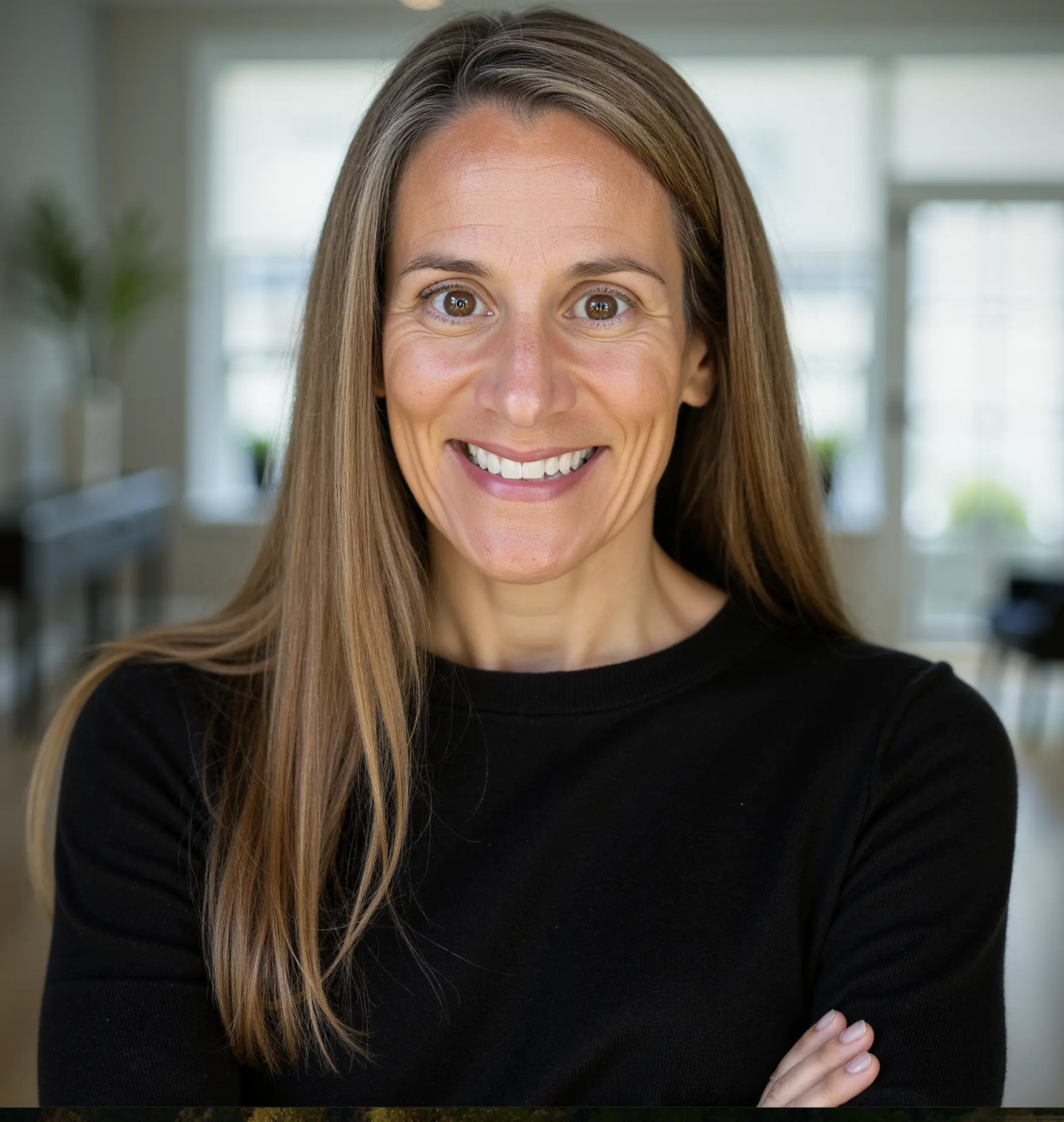
CEO / Accessibility Consultant
Dr. Nicole L’Etoile, CPACC designs and delivers inclusive learning experiences that meet Web Content Accessibility Guidelines (WCAG) and Universal Design for Learning (UDL) principles. With a background in instructional design and accessibility, she trains educators and organizations to create content that works for all learners.,