
 Apple Podcasts

 Spotify

 Amazon Music

 iHeartRadio

 Pandora

 Castro

 RSS Feed

 Audible
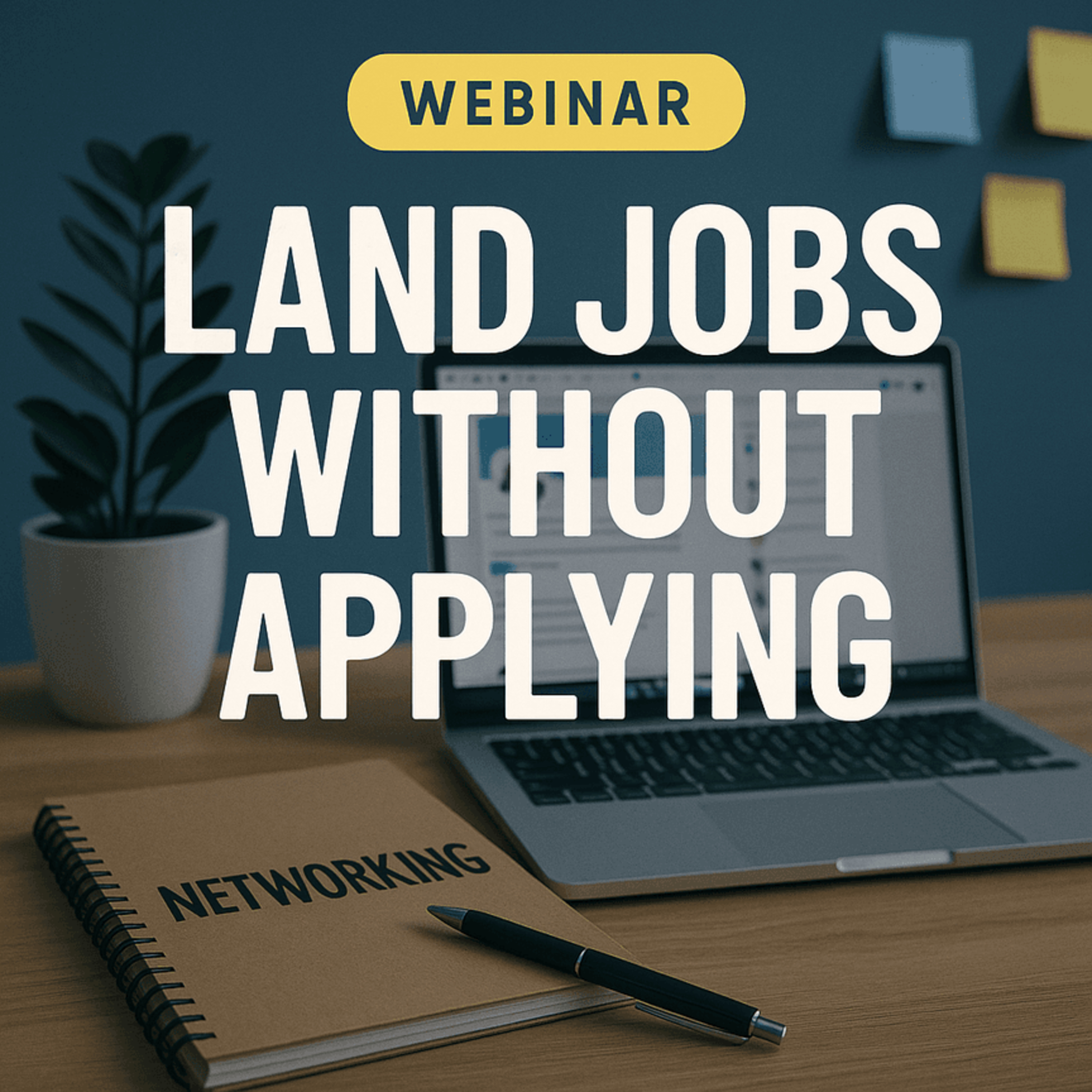
In this episode, Holly Owens breaks down how she landed multiple roles without submitting traditional job applications—by focusing on visibility, trust, and relationship-building instead of mass applying.
Holly shares why the “spray and pray” approach to job searching is outdated and often ineffective, especially in Learning & Development. Instead, she makes the case for showing up consistently, building genuine relationships, and becoming a known, trusted voice in your field.
Drawing from her own experiences landing roles with Yellowdig, Mars, and Lindenwood University, Holly explains how hiring decisions are often made long before a job is ever posted—and how visibility plays a major role in those opportunities finding you.
Why mass job applications rarely work anymore
How genuine relationship-building (especially on LinkedIn) leads to real opportunities
The role visibility and trust play in hiring decisions
Real examples of jobs Holly landed without applying
Practical strategies for building an online presence that feels authentic—not performative
Why transactional networking hurts your long-term career growth
Start building visibility through consistent, authentic engagement
Focus on relationships, not just résumés
Protect your time and energy—connection beats cold outreach
Be intentional, human, and real in how you show up
You don’t need to do everything. You need to do the right things consistently. Visibility plus authenticity compounds over time.
🔗 Connect with Holly on LinkedIn
Thanks for tuning in! 🎧
0:00 Hi everyone, I'm Ali, an L&D professional and a huge fan of Holly and the Add Up Learning and Development podcast. In today's episode, Holly flips the mic and breaks down how she went from classroom teacher to Ed tech growth marketer. Thanks to one game changing mentor and a hefty dose of self belief, TuneIn for bite sized tips on turning teaching skills into L&D gold, silencing imposter syndrome, and owning every win along the way. Let's get this episode started. Hello everyone, and welcome to another amazing episode of Add Up L&D. My name is Holly Owens and I'm your host and I am so excited today because we are diving into how I landed three jobs without even applying to them.
0:48 So one of the things I definitely want to cover here is why submitting thousands, hundreds of job applications is probably not the best way to get the job. So it's going to be important for you. I want you to fully pay attention and be engaged in this webinar. You don't have to take screenshots. Like I said, this PowerPoint is just something, you know, AI helped me generate the real, I'm going to say the real secret and the soft stuff is going to be through what I say. All right, so this is some housekeeping stuff and I hope the LinkedIn live is going to catch up soon. And I want you to know that. Are you going to get access to recording?
1:30 Absolutely. So you don't have to worry about it. Like I said, don't worry about taking notes. Don't worry about screenshots. I will share the link to this presentation and the show notes. So if you don't follow my podcast, be sure to follow up. That's add up and you can find so that's add up, Ed L and then an N and d.com and you can subscribe to my show and you can see when this episode and other episodes are released. Like I said, can I get access to the presentation? No, these are basic notes and it's crap and I said I'll share in the notes. That's fine. The really juicy parts are going to be in the actual recording. So you know, I love when present really good presentations and I'm like screenshot and I'm like taking notes.
2:11 I really want you all to just see it on your screens. So let me see something here. All right, the other thing do you have do I have any coaching resources like services? I get asked this all the time and or other resources that I can share and I will tell you yes, I do and stay tuned because I'm going to share that all with you. Switch this this might be you with a problem. All right, so as you might guess, I have a little disclaimer on this presentation. This is definitely I'm being fully honest and transparent about the things that I've been doing. You know, people were always asking me like, how did you get with this job and you know, what are the different things that you did to, you know, land a job with such and such or you know, how did you find out about that?
2:57 I'm really sharing all the stuff here. I'm giving you that insider access. And it's no way. I'm not saying this way always works. It all the time. Nothing is an absolute. I want to emphasize that your journey is your own and I'm not promising anything, you know, and this is a good side note. When people promise, promise, you're gonna get to do something in so many weeks. Like if you take this instructional design class, you're gonna be an instructional designer in six weeks. That is not the case. So promises like that really don't exist. Sorry about the little mishaps here. All right, so yes, you're going to get access to this. You can have access to the notes that I have in this presentation and I am going to share some things about the coachings. One of the problems that most people think that have, you know when you're applying the jobs and the most common thing I hear in my LinkedIn inbox is that people are applying to hundreds and hundreds.
3:57 And I even had somebody tell me most recently that they apply to 4000 positions in and haven't got one interview. That really is daunting to me. That really is something that you've spent a lot of time thinking about. Like you just found a lot of time applying basically. And most people like yourselves who are probably in this room, you're just doing exactly what you've been told to do. Apply more, tweak the resume, write another cover letter, make it a personalized resume. You know, contact the person via LinkedIn, send them a message, you know, all those different things, those traditional things that we talk about as LND professionals, we give that advice and we, we just hope we kind of just pray that that's going to happen.
4:40 So the problem is that the advice assumes hiring still doesn't work the way it did like 10 or 1510 or even 5 years ago. Because constantly applying, constantly putting yourself out there and getting rejected, not only is it taxing on your mental state, you're also losing that time that you could be spending with your family, that you could be doing other things. It's all consuming. The silence that you're experiencing or the rejection that you're experience isn't personal. And I find that a lot of people I talked to, they actually, they're like, they take it very personally when they get rejected. Like, I know that I am the right person for this job and I can do this job and I love the confidence there.
5:23 But you're also up against hundreds of other people who are just as qualified, if not more qualified than you. So you have to think about that. You know, I like to use the analogy about buying a house. Things are bought off market, so houses get sold before they even reach the market. Job positions get filled before they even reach the market. And that is a space where you need to find yourself in that area that you have insider knowledge into some of the things that are happening. Now, I'm not saying I know everything about that, but this is an area that's commonly untapped and I think it's worth exploring so that you can figure out what's next for you, what's next in your career.
6:12 All right, so here are the three roles that I was hired for without applying. I did not apply to these. One of the positions was created for me. And I just want to talk briefly, and I'm giving you this answer at the beginning about these three different roles and how I got them. So the first one is a full time director of growth marketing. I don't have a marketing degree. I've just been on LinkedIn a lot since 2020. I've grown from 50 followers to 50,000 followers. I've promoted different products, I've promoted different things. So Yellow Dig, the CEO, Shanak Bori, who I'm still good friends with, brought me on and I was originally just a marketing specialist.
6:53 And then he's like, I want to make you the director of growth marketing based on what you've done with your podcast and what you do with LinkedIn. I think it would be great, a great role for our Ed tech company. It was a benefit of role. It was full time and it was a challenging role because I had never really, I mean, I kind of done marketing, but not in the traditional sense of taking one tool and promoting it and all the sales stuff and inbound, outbound, all those different words that I had to use. And the way that this role came about, besides him seeing the influence on LinkedIn and the number of followers that I had is because I had him on my podcast at least three or four times and we kept in contact over the years.
7:37 And I'm not saying you have to start a podcast to get a job. I'm just saying you might have to have some conversations with people and continue to check in with them because in any relationship, it's important that you communicate and it's important that you're you're supporting people and they know that you're there. You still exist. Like if I haven't talked to somebody in a while, I'm going to send them a text. If I haven't communicated with somebody out on LinkedIn World that I used to communicate with all the time, I'm going to check in with them. So that rule came basically out of the podcast and the things and the visibility one LinkedIn, the second role that I landed without applying is the corporate contract with Mars.
8:21 Yes, that's the candy company. I most recently I've been posting about Mars and the contract ending and all that stuff. So that's the most recent position that I had. And the person who hired me followed my job postings and she had said to me, I follow your job postings. I see your resources out on LinkedIn. Again, visibility and she's like, I think you would be perfect for this contract position. So I got hired in that then. So, so far we have like visibility via podcast, visibility via LinkedIn, you know, developing a relationship with that person, then higher education under the contract with Lindenwood University. And this came about because these are people I worked with at a different job in the past who wanted to hire me. They saw my skills, they know what I was capable of, and they hired me to be a contract instructional designer to redesign online content.
9:16 So these three different paths, I had different ways of getting there, but once this starts happening for you, it doesn't really stop. Like people will start to recognize that you are really out there on like LinkedIn World or YouTube or doing other things and that you will also you have an online presence, you have a brand. Now, I'm not saying that after this presentation, again, the disclaimer that you go and you create like logos and a website and buy Google Workspace and start your own business and all stuff. That's not what I'm saying. I'm saying used to free stuff that you have access to like LinkedIn, e-mail communication, texting, if you're close with that person and use that to your advantage.
10:04 You have to know somebody that knows somebody who's going to communicate with you that that house that's off the market is perfect for you. And what are you going to do right away? You're going to contact the realtor. You're going to have your stuff all put together by the the loan officer and you're going to be ready to go. That's also too with a job that you're going to get off market. All right, It is so important that you pay attention to this and I've alluded to this a lot or I've even said it at this point, Irene is relationship driven, not application driven. Yes, you submit an application. You will probably still, you may have to submit an application or share one with the person who wants to hire you.
10:47 Obviously, you know, roles, like I said, they're, they're sometimes discussed, they're scoped and sometimes filled before they, they're even posted. So if you only exist on that resume, and I'm sorry, you can't see my video because I'm very animated right now. If you only exist on paper, you're already behind because the people that you're competing against have some visibility somewhere or not. So lucky for you, they're hiring an internal candidate. That's there's really nothing you can do about that. What does visibility do for you? Creates, I can't even say the word, creates familiarity. And that in turn creates trust. So you're building trust among your audience. You're building trust amongst the people that you might be working for or you might potentially have a job, sorry, that you potentially might land A roll with. So if you just exist on paper that the resume is such a static document, such a static document, hey, so you have to exist nowadays on more than just paper. And again, I'm not saying like you have to go out and spend hours, spend tons of money of buying Canva and they created an interactive portfolio.
11:58 I mean, you do need those things, but you need to start somewhere with with this and creating that visibility for yourself. This is going to be the overall theme of this presentation. All right, What I did differently, so when I started being more visible in LinkedIn, it was I started thinking about this a long time ago, So in 2020, and this was prior to the pandemic hitting January of 2020, I was like, you know, Linkedin's out there. I can't, you know, I don't have a lot of people that I'm connected to. I just want to have some conversations to see where people are at maybe in their instructional design journey or their L&D journey. I'm glad I did because I started to meet some fabulous individuals who I'm still connected with.
12:41 So instead of being focused, like if I was looking for a different job, I just focused on being visible and consistent and clear about what I do and how I think. So people not only got to see that in our conversations, I would share resources with them and they would share resources with me. I'd only met via LinkedIn and we were developing relationships. So when people say it's not possible to develop a virtual sustainable relationship or collaborative ship, whatever you want to call it, so you want to build relationships with people and stop apply. You know, I do the same thing because it makes me feel better. I'm not going to lie. The LinkedIn easy apply is like, it's like a temptation and I don't really feel that it works for people. I feel like it seems like it's easy apply, but it's just going into the abyss of some database that no human is reading or an A or AI system is going to review it and spit you back out anyway as an ATS system.
13:38 So stop applying into those black holes. So the traditional advice when people tell you, and I'm sure we've all been told this, like it sounds really productive, but it ignores reality. Algorithms, rhythms on LinkedIn and other places filter out people before a human never looks at your resume, so you're filtered out. Recruiters themselves can tell you they rely heavily on referrals and people that may know you, and they refer you to them. So if you're only focused on optimizing those static documents like a cover letter and a resume, you really are optimizing for the wrong gatekeeper. And that's when it came.
14:21 That's what's going to keep you out of the game. I'd rather talk to people and tell them about my experiences then send over a resume and they don't get any sort of insight into who I am as a person. Because on paper, yes, you do look good. But if I could sit here and have a conversation with you, it look, it feels a lot better. You're having a positive interaction with me and stuff. So when people tell you just apply more, don't do it. You're just going to get sucked into that black hole. OK, so the question then shifts for us, how do I, I apply better to what am I known for? And I'm not saying you have to be some LinkedIn celebrity or influencer. You don't have to do that, but you do have to make yourself known. You know, other people want to use like Facebook or, you know, TikTok or or whatever, whatever medium you feel comfortable in. But LinkedIn is the professional area. And I know Linkedin's got a lot of slack lately for some of the algorithms in the the fake accounts and things, but I still feel it's a place where other professionals, you can find those circles to connect with other professionals. So one of the things you need to think about too is that clearly positioning yourself matters.
15:33 Public proof matters, showing up where the decision makers are, those people who can offer you the opportunity are they matter? If you know, if you're in the conversation with ACEO and you maybe talk about, you know, the accessibility of your tool and you notice that they didn't have this or they had that and they can improve this, that's probably going to impress that person that you did some research on their company. You want people to recognize your name before you even talk about the role. You know, people that kind of know you like in spaces. It's difficult to do this. I'm not going to lie and say that this is something that everybody can do, because it's not, but it is something that you can work on and you can try to do.
16:17 You have to think about, especially those of us in the room who have decades of experience, how many people you know at this point in your career and think of like, you know this one person and then they know five other people. So if you know 20 people, do the math. That's a lot of people who know a lot of people who know about you. So that one conversation makes a difference. And who knows, the CEO or the president of the company might want to introduce you to somebody that works at the company or say, hey, get in touch with such and such. I think we might have something for you. So just think about it that way. Introverts. I am an introverted extrovert, believe it or not. I could choose anxiety and rooms with people I don't know and strangers and all that stuff.
16:59 But to be visible, you have to be, you have to move past that. And I know people are going to say I don't want to do that. I don't. I just, I can't do it. I can't talk to other people. Well, I mean, chat with them until you become comfortable with having a conversation with them or joining like an audio call or something. I love it when people on LinkedIn, some of my connections, they use that audio, they record the audio and they send it to me. That makes something so much easier. I haven't gotten there yet. I don't know why. I'm like afraid of my voice. I do a podcast and everything, but try something different. Visibility, in my honest opinion, isn't about being loud, OK? It's about post.
17:42 It's not about posting every single day because the algorithm is going to spit you back out and be like you're posting too much or whatever they decide to change. It's about consistency. When people see you thinking clearly and showing up regularly, trust builds quietly. And the reason it's so difficult to do this is because it's not something that happens overnight. It takes a little bit, you know, it takes a little bit to kind of find what you want to talk about. When I talk to my coaching clients and I tell them I'm like, just post, it's about something you're proud of, something that you're proud of, something that you created and related to something important on our stage of learning and development like accessibility, like student learners for higher education, related to something that, you know, think about the gaps that exist. We do that all the time as instructional designers. That's why we develop certain materials. So eventually you stop being a risk to these people and you become the obvious choice.
18:46 I love it when I go to conferences and people are like, I follow you on LinkedIn that and then then they say right after that, I love the resources you share. That makes me feel so good because I'm just throwing stuff out into their world and hoping that people love it and it's useful and that it changes their perspective on getting a job, finding connections, building community. And it's so, it's so great to hear that. It's so awesome when people say that, but that's not what that's not what I was aiming towards. I was aiming towards being like a voice of reason and a voice of truth to the things that people don't talk to you about. I'll let you know a little secret. One of the reasons I started posting jobs on LinkedIn isn't because I wanted more visibility. It came from the fact that people from corporations, organizations, higher education institutions, they were not posting salaries.
19:43 They were keeping it a secret. And I wanted to find jobs and companies that were transparent about that. So I started posting jobs where I only saw what the salary was. So if you're not transparent in your approach, corporations and organizations, higher education institutions, you need to think about being transparent. And now I continue it because. I think people need to see that if you are jumping into learning development, it's not just an instructional design. You can be a learning developer, you can be a curriculum manager, you can be a variety of different things. OK. One of the biggest mistakes I've seen people is waiting until you're desperate to be visible.
20:24 So you start going out to LinkedIn, you're desperate for a job, Maybe this one's toxic. You got laid off, which is common in the job market now, and you start just connection requests, connection requests follow, follow, follow, download this, download that. That's overwhelming. You're not thinking about your cognitive load at that point. You're thinking about like, I'm checking off these items and I, I'm following all these people and I have all these resources and I'm applying to 500 different jobs, but I don't have, I haven't landed anything yet. Well, that's because you're, I dare to say you're kind of overdoing it. You need to be strategic about how you approach the situation. Remember, being visible doesn't mean you're posting all the time, doesn't mean and you're connecting all the time. It could just mean one or two days a week you comment on other people's post or you reach out to an old colleague and say hey, how's it going?
21:14 I may be looking for a position that no wanted to say hi and see how you and the family are doing and maybe get some information about if you're hiring. And another thing, only networking when you want something. I cannot tell you at this stage in the game with 51,000 some followers, how many times people do not read about my experience. I'm sure some of you have experienced this. You know that is an interaction. That's a negative interaction to me. If you put something in my inbox and you haven't read who I am or about my experience, or you've skimmed it and put in the filler words that you use for every message of my experience, I am not going to have a conversation with you. Because to me, that is not genuine. And humans have the ability to be genuine, empathetic, all the different emotions they have, the ability to communicate, feel things.
22:15 You know, like you need to use that intentionally reaching out to people. And I'm going to say this for all the L&D people, influencers, whatever out there, you need to be intentional about your approach. You it's the transactional thing is so visible. It's right off the bat. Like I can't even tell you the message. I block people because they only want to connect with me to show me their tool. They only want to connect with me to tell me about the services that they offer. They will send along their resume and ask me to review it without even a hello, how are you? Why I'm not giving away stuff for free. I give away enough for free if I'm spending time reviewing your resume.
22:56 And this goes just for all of you as well. When you start becoming visible, you need to protect your time. Your time is valuable. OK, so careers definitely stall when visibility is reactive instead of, like I said, intentional. Those authentic conversations. Like some of my very closest friends that I know, if we don't talk every day that I can depend on and have a conversation with, or if I need something, I can reach out to them. Because we've developed that trust. We've developed that relationship. So if you're not ready to develop relationships or get to know people, this approach probably isn't going to work for you. OK. The other thing too is you on this side when you were looking for a job. We put so much power into the hands of the companies, organizations, the institutions that are hiring us like they have the dangling carrot and we want it so bad. And I know there's like dire situations out there where people have been laid off and it's months and months and months that you will do and be desperate and take whatever you get or do whatever you need to compromise some of your your goals.
24:03 You're no compromise. Like take a lower salary. Please don't do that. I've done that in the past and it doesn't work out for you in the end just so that you can have that position. And it turns out like when you do those things, when you sacrifice pieces of yourself for a position, you end up not liking the position you're going to leave anyways. So you really need to think about the fact that you do hold power. I have a, it's free. I have a, the instructional like the, an interview guide. And it talks about the different potential interview stages. And one of the things that I like to point out to people is that when you get that initial interview, if it's an HR representative, if it's a recruiter or hopefully it's somebody in the company, you have certain questions you need to ask.
24:46 If there's no salary listed, you need to you need to ask about the salary. I had a friend who went through an entire process. She was becoming a director of instructional design and is on the East Coast. And they, the committee or the people waited until the end of the process to tell her the salary. She didn't ask. And guess what? The salary sucked. It was so low. It was lower than what I started out as a teacher and in 2007, which was $48,000. And this person was so disappointed because she had jumped through all the hoops. And this is a director position. I mean, there's a whole nother conversation to have with higher Ed about some of their processes, so I'll get off my soapbox for that.
25:32 So don't wait until you need to be visible. Be visible throughout. Again, not saying constantly posting or constantly connecting with people. Eventually, I'm probably just gonna stop taking connection requests because it's becoming overwhelming. And I, I don't feel like people are truly getting to know each other. They're kind of just checking a box, and that's not authentic. OK, Things that you can do today. All right? This doesn't require a fool like Reban or quitting your job. I'm like, I'm not saying go quit your job. Find something else. Like you're a whole new person, you know, shave your head like Britney Spears Circle 2007.
26:14 That's not what I'm promoting here. So what you need to do is start by who are you ever really sat down and thought about who am I? What have I learned through all the positions I've applied for, all the positions that I've hold, you know, the credentials that I hold. Like who am I? What does this say about me? And really sit down with yourself, probably in a quiet room. Get away from the kids and the dogs and the cats and all the things and write down who you think you are not as just a professional, but as a person. Like I love talking about the like the humanness of this. We are not robots. We have emotions. Things happen in life. We deal with grief, we deal with traumatic events. You know, all these things impact who we are as humans. And that is not left out of this part of searching for jobs or having holding a job or being professionals. So you really need to start by clarifying what's your story. It doesn't have to be something profound. Like you don't have to be a Kardashian. You don't have you have to, you know, like do all the different things to make to reinvent yourself constantly and professionally.
27:20 You can think about the insights you can share weekly, not you just have to be perfect. That's another thing too. People hold on to the fact that everything that they submit or everything that they post has to be perfection. I'll be very transparent right now. I use a lot of AI, my post and I add a little bit of me and AI knows me pretty well now based off of what I post in the past. Like it gets to know you and it really knows my brand. So you know, with with that resource, like think back to the time when we didn't have AI and I'm like, I don't know how we did it. It took years and years for me to design courses, come up with outlines and stuff. But you know, really sit down, like I said, and start thinking about who you are and then reconnect.
28:04 I mentioned this earlier with people you already know. Like it's so interesting to me and I've heard these stories. Like I talked to such and such. Holly won't believe this. I talked to such and such. She's working. They're working at an institution, they're building their instructional design team and they're looking for a contract instructional designer. And I'm looking for a contract role. And it just aligns perfectly. Now, I'm not saying it happens like that every time, but you would be so surprised how the momentum often starts for you. It's really closer than you think. OK, I've talked a little bit about this, like who's this approach for? Definitely, if you're listening to this podcast episode or you're attending this webinar live, you're tired of the traditional like throwing things into the void, like you're tired of applying to the millions of jobs. I still can't believe that one person applied to 4000 positions.
29:00 That is way too much. That's way too much. So you're tired of shouting into the void for professionals. This is for professionals who want to move into intentional relationships, conversations, talking to people, putting yourself out there a little bit instead of panicking. I have seen people do this like it's interesting because I'll be having a conversation with somebody in LinkedIn, on LinkedIn in the chat, we're having a conversation and I share, you know, the free resources that I have and all the different things and like ready to go. We want to, we want to coach or we want to, we want to do something together. And guess what? They ghost me. I don't hear for them forever. And I'm like, that's a panic person.
29:41 I understand things happen, people are busy, that kind of stuff. But if I'm spending the time sharing stuff with you, be intentional about that relationship or somebody else is spending time, be authentic with them. If you're busy and you're not going to use any of those things, please don't waste time. Don't waste people's time. It's not appreciated nor warranted and it's for people. This is for people who want long term leverage, not just the next role. Because in today's industry, we are not like the previous generation and some people still do this. We are not especially thinking about Gen. Z and Gen. Alpha not staying in roles for the 253035 whatever years like our grandparents or our great grandparents. In order to move up in this industry or make more money or being more visible or get a, you know, a different title. You have to move because there's often times you hit the ceiling at the current job.
30:37 Don't get comfortable because you're going to have to move. And this is coming from a person. I moved a lot over the past 20 years. And you know what, every single position that I've had has taught me something new and I take the lessons, toxic, non-toxic, whatever environment, and I apply those to my next position. So if you're looking to stop shouting into the void, being more intentional and not panicking and getting that long term leverage, this is the approach for you. And I hope that you think that this is something that where you can find success. OK, again, your takeaways here from this presentation. And I'm going to leave some time at the end so I can answer any questions. Opportunities don't magically appear, OK? You're not Elsa.
31:25 You're not one of the princesses. You're not a fairy godmother. I love Disney, by the way. They're attracted. When you align your visibility, the consistency and the relationships you create leverage. People know who I am. I don't use it to my advantage all the time, but they know who I am. And if they know of me and what I know about learning and development, that makes me competitive in what they're hiring for, OK, that makes me like, oh, Holly, I saw you created this document and we need some help doing blah, blah, blah. So visibility, consistency in relationships, creating that leverage and like using that appropriately, not taking advantage of it. You know, some people are like, I relate this to celebrities. Even though I love pop culture, sometimes they use that stuff to their advantage, like getting out of speeding tickets and things like that.
32:17 We're not doing any of that stuff. We are being authentic humans and we are leveraging that relationship. It's symbiotic. We're getting something. They're getting something. Or think about it this way. And if you're like in higher education, like I am now you, I went back to higher education, it benefits people you don't even know, benefits like the learners, the students or people that are trying to break into this field. So you really don't need luck. You need to align things. OK. I think it's important that you really dive deep into who you are, like I said in the previous slide, and think about the things that you want all too often. This is especially true for like, I realize this because I'm a stepmom now. Like for females and stuff, we don't think about our needs because we put everybody else's needs before ours. And this is not strictly just females. This is a lot of people who are like the heads of their families or they just, you know, they're good at doing stuff. Like I'm sure a lot of you spending this, you're the person in the group that does all the work. And then you become the person in the professional setting that they're like, you're really good at your job. We're going to give you more work. I really want you to think about what that means and what that does to you.
33:28 You want a position where you're valued, you're respected, you have the opportunity to grow, you're respected as a human being. You are not there to be a robot like 9:00 to 5:00 and just sit in your seat and do zoom meetings. Think about what you really want, write it down and put it somewhere where you see it every day. Because I know the things I think it happened when I shifted in the midlife over 40. I was like, why am I taking less salary? Why am I adjusting my expectations in this relationship that don't meet the my needs, my basic needs. I want you to think of it, a job like this, you are worth it. You are worth it. The job industry is toxic.
34:10 You have to find the areas where you can find those pockets, where the jobs are pre market or where you find good people who you just talk and vent about some of the issues or you try to solve the issues of finding jobs. Things like, and I'm getting ready to share my resources, things like teal, things like Skip team for learning. I share these all the time because these systems, these areas are sustainable and help you with navigate some of the things in this job market both like resumes, cover letter writing, all those different things. Remember, you don't having more doesn't mean that it's better. You don't necessarily need more resources. You need the right ones and to use them consistently.
34:52 And sometimes you have those resources already. They might be something in your mind, something you did in a previous job or something you learn. So like I said, I do have a gum Rd. I have some free things out there. I have some paid for things out there and nothing is above like $8. It's just something I decided to do because I was getting so many requests for different things. And I can share that link in the chat once I stop presenting the next thing. And I'm hoping, OK, I've been rewriting and rewriting my book. It's not just one thing, real talk and how to make the leap in the LND. And some of these things I talk about are in there. If you want a preview of Chapter 1 because I've think I finally like chapter 1 is good and I have a couple other chapters finalized, you can send me an e-mail at Holly at at up lnd.com and I'd be happy to share that link with you.
35:40 So that's coming. Whether it's February or March, we'll we'll figure it out. All right, my goal today and I hope I accomplished this was not to give you another checklist like I could have put this on a checklist and say, do these things have a good time. I want you to walk away with some clarity. I want you to walk away with some motivation. I want you to walk away with the the give yourself the opportunity to reflect. You do not need to do everything. You need to do the right things consistently. So as the slide says, come curious, leave with clarity and leave with a plan. You got this. We have about 5 minutes left and I want to see, you know, what are your questions? What can I answer?
36:22 Did I say things you didn't like? And if you're in the Riverside, if you want to come off the mic and ask a question or feedback, I think I hear somebody. So if you're in the Riverside, can you meet yourself please? All right, any questions. I see all the reactions. I love it, I love it, I love it, I love it. I don't know why it's not showing my face on LinkedIn. And you can definitely post things on this thing again or where the sorry words are hard right now, like the recording when it posts on LinkedIn. You can. I'll do. I'll go back and answer those questions. Oh, this is a good one from Geo. You mentioned moving around a lot in the past 20 years.
37:03 Somebody's still got their mic on one second, Geo. I'll get there. All right, All right. Question. You mentioned moving around a lot in the past 20 years. How do you handle the inevitable, inevitable interview question about why you're looking to leave your current role? I tell them. I tell them the truth. I'm like, it's not working for me anymore or there's been a toxic work environment created from certain things. Or you don't have to say anything, you can just say I'm looking to transition out because I want to be able to grow in a different position and I've reached Max capacity here. Give them those different things. But really, honestly, it's none of their business. It's none of their business. All right, I hope that answers your question, Gio. And like put in ChatGPT, like what's the appropriate response? And to me, it's like, I can't go, like it's not your business. To me, it's coming from the perspective of growth. I want to grow somewhere else, right? Let's see.
37:58 Jill asks what is a question you've never been asked but would like to be asked? You know, my personal experiences impact my professional life. There's a lot of trauma in my past, lots of death and, you know, people dying when they're young and all kinds of different stuff. I would love to be asked the question, how does that motivate you in your professional life? I'd love to be asked like, what are some of the things that you you've done personally, what you've gone through because we've all been knocked down that have helped you grow as a professional? I think that would be a good question because it kind of intertwines the human experience with the professional experience because in the traditional sense, you're not supposed to talk about those things, which I think is dumb because why when you talk about those things like they impact you. All right, well, like I said, this is going to be released as a podcast episode.
38:52 So if you want to refer back to it, it's going to be there for life. I will let you know. It should be in a couple days depending upon I have some other work priorities, but it will definitely be released as an episode. I will share out the resources that I share in the presentation along with the presentation, where to find me all those different things. And I really appreciate you taking the time to come to this and listen to me talk about my experiences. I hope it was helpful and I was so like I was so grateful to see how many people registered, how much, how much interest is in this this sort of topic. So if you need anything, I'll see you out on LinkedIn world. Bye. Thanks for spending a few minutes with Holly.
39:33 She knows your podcast queue is packed. If today's episode sparked an idea or gave you that extra nudge of confidence, tap, follow or subscribe in your favorite app so you never miss an episode of Ed Up L&D. Dropping a quick rating or review helps more educators and learning pros discover the show, too. Want to keep the conversation going? Connect with Holly on LinkedIn and share your biggest take away. She reads every message. Until next time, keep learning, keep leading, and keep believing in your own story. Talk soon.