

 Apple Podcasts
 Spotify
 Amazon Music
 iHeartRadio
 Pandora
 Castro
 RSS Feed
 Audible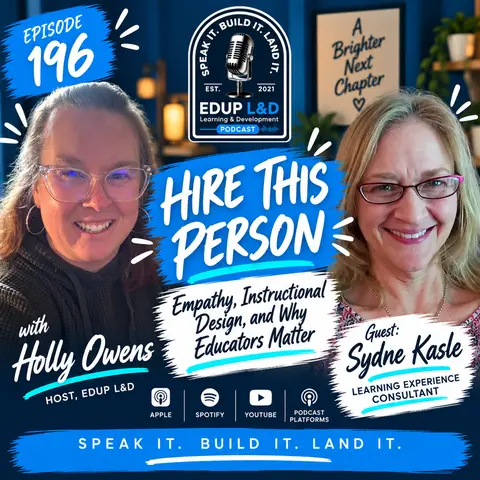

In Episode 195 of EdUp L&D, Holly Owens sits down with learning experience consultant Sydne Kasle for a special HIRE THIS PERSON episode highlighting the talent, experience, and perspective that hiring managers shouldn't overlook.
With nearly four decades of teaching experience, Sydne brings a unique perspective to instructional design, combining human communication, pedagogy, and a deep understanding of how people learn. She shares why organizations should stop overlooking transitioning teachers for L&D roles and start recognizing the transferable skills they bring to the table.
In Episode 195 of EdUp L&D, Holly Owens sits down with learning experience consultant Sydne Kasle for a special HIRE THIS PERSON episode highlighting the talent, experience, and perspective that hiring managers shouldn't overlook.
With nearly four decades of teaching experience, Sydne brings a unique perspective to instructional design, combining human communication, pedagogy, and a deep understanding of how people learn. She shares why organizations should stop overlooking transitioning teachers for L&D roles and start recognizing the transferable skills they bring to the table.
This is our first, but definitely not our last, HIRE THIS PERSON episode!
🎉 In this series, we're putting the spotlight on talented learning and development professionals YOU should consider hiring.
In This Episode, We Discuss
- Why transitioning teachers deserve a seat at the L&D table and the valuable skills they bring to instructional design.
- The importance of empathy and belonging in creating meaningful learning experiences.
- How AI can support instructional designers when paired with strong pedagogical knowledge and thoughtful prompting.
- Why training isn't always the answer and how to design learning that meets real needs.
- What makes professional development work, from intrinsic motivation to giving employees time, support, and a reason to participate.
- Career advice for learning professionals, including networking, asking better questions during interviews, and continuing to build your expertise.
- Why hiring managers need to rethink their approach to evaluating candidates and recognize the value of experience beyond specific tools.
Why Should You Hire Sydne?
Sydne is a creative problem-solver who cares deeply about people and knows how to make learning easier. She brings decades of experience in teaching, human communication, instructional design, and professional development. Her approach combines evidence-based practices with empathy, curiosity, and a willingness to tackle challenging problems.
As she shares in this episode, effective learning isn't just about delivering content. It's about understanding people, meeting them where they are, and designing experiences that help them succeed.
Know someone who should hire Sydne? Share this episode with a hiring manager, recruiter, or someone in your network. Let's get great learning professionals in front of the people who need to hire them!
Be sure to connect with Sydne Kasle on Linkedin.
Connect With Us
💼 Follow Holly on LinkedIn — Connect with Holly on LinkedIn
📹 Subscribe to our YouTube Channel — Watch EdUp L&D on YouTube
📰 Subscribe to the Newsletter — Get It's Not Just One Thing in L&D delivered to your inbox
💃 Check us out on TikTok — @ihollyo
💌 Connect with Holly — Schedule a conversation
💙 Thanks for subscribing, listening, and supporting EdUp L&D!
Thanks for tuning in! 🎧
Holly Owens: Hello everyone, and welcome to the EdUp Learning and Development Podcast. My name is Holly Owens, and I'm the host of this show, but I'm also a higher education professor, instructional designer, entrepreneur, and a proud helper of humans. I've worked in the L&D space for almost 20 years, and I'm here to share what I know, what I'm learning, and what's happening in our industry. We'll talk about instructional design, L&D AI, technology, careers, and the humans behind it all. Along the way, I'll bring in some friends to share their stories, experiences, and expertise too. Because at the end of the day, L&D is all about humans helping other humans. This is EdUp L&D. Hello, everyone, and welcome to another amazing episode of Ed Up L D. My name is Holly Owens, and I'm your host. And today I am excited because I have one of my very good LD friends here on the show. I have Dr. Sydne Kasle Welcome to Ed Up LD. And she's
Sydne Kasle: Yeah.
Holly Owens: a learning experience consultant. She's done a lot of different things. She's gonna talk about it. She's gonna talk about all the her different areas of expertise. Welcome to the show, ma'am.
Sydne Kasle: Hey, what up, as the Kelsey brothers say on their podcast, trying not to be too influenced by them, although they are hilarious.
Holly Owens: They are so funny. my gosh. Their podcast is amazing. We can be influenced by them for sure. They they definitely make things interesting.
Sydne Kasle: Very entertaining. thank you, Holly, for having me here. It's been so fun to talk to you about things on LinkedIn and email about learning and development, instructional design, transitioning teachers. I am a human k a few years ago, yeah. And I was just
Holly Owens: We've known each other f a couple of years now, I feel like. We've been talking for a while. Yeah. Yeah.
Sydne Kasle: like I just happened upon you, I think, and you were offering mentoring. You were offering mentoring and I took you up on that and it was really
Holly Owens: Yeah. Yeah. Yeah.
Sydne Kasle: helpful and and inspiring and helped me just say to myself, okay, I can transition just like so many other teachers transition from
Holly Owens: Yeah.
Sydne Kasle: maybe even do both, stay in education, but also do instructional design, learning experience design. So yeah, it's been a few
Holly Owens: Absolutely.
Sydne Kasle: years now. It's been it's been great.
Holly Owens: Yeah. We've definitely gone through different stages of life and different stages of jobs.
Sydne Kasle: Yes. Yes, we both take jobs and quit jobs very you know, like but it's all about like what fits, what is the best fit, and you know,
Holly Owens: Yeah.
Sydne Kasle: it's hard to know until you're in it.
Holly Owens: Well, tell us a little bit about your experiences. You know, t tell us a little bit about your history, what you do, and, you know, sh share with the audience who you are. Cause I I love your personality. You're such a I love having conversations with you. You're so much fun. And you're so real about stuff, which I absolutely appreciate.
Sydne Kasle: yes, I'm not really the Mary Poppins of instructional design.
Holly Owens: Yeah.
Sydne Kasle: okay, so believe it or not, I am in my thirty-eighth year of teaching human communication. started in nineteen eighty-nine as a regular graduate teaching assistant, also debate coach at Wayne State University. really loved my communication pedagogy class and just started taking education classes as a cognate. Got A bachelor in speech communication education, a master's in it, a PhD in it. I did a lot of research on philosophical Taoism. That's what my dissertation was about, like applying more of an Eastern way of thinking to teaching. And I love teaching. I still love teaching. I never really trying to get out of teaching. but you know, some teaching is more fun than others, some teaching is more rewarding than others. I've done a lot of non-traditional student teaching, working in community colleges, career and technical, and also some traditional four-year, even graduate level. some of my favorite learner populations are like the fourth and fifth graders, teaching them debate, like what's better dogs or cats. That is
Holly Owens: Yeah.
Sydne Kasle: hilarious. Yes. And I love working with teachers, trying to make their life easier. and b couple of years ago I did a really cool thing. I taught for University of Illinois Springfield, Learned Illinois. I designed an introduction to instructional design class with an advanced instructional design pedagogy track, and that was for 50 STEM professors in six countries in Southeast Asia. It included
Holly Owens: Wow. That's really cool. I didn't know you did that.
Sydne Kasle: It included a weekly live Zoom. They were on like four different time zones and it was awesome. And I would do that again in a heartbeat.
Holly Owens: gosh, I love that. That sounds like a lot of fun. Working with
Sydne Kasle: It was so fun. Math educators, phys physics, teachers, chemistry, you know, and they loved everything about learning about instructional design, just how to write an engaging discussion prompt and how to use the Gagnier's points of engagement when you're setting up an assignment. I mean, they ate it up, you know, especially the people who were going to be teaching instructional design to a bunch of people. They were loving it. So they they designed a course, they created this and that, they made lecture videos, like made sure they did everything that they would have their faculty do. And meanwhile I learned so much about being a math educator or teaching physics or I mean things that I would have basically flunked if I had taken them in college. Yeah. But
Holly Owens: Yeah. Me too. Me too.
Sydne Kasle: Brilliant minds, brilliant SMEs, and just a wonderful cultural experience. you know, I just came off of the beach in Indonesia and you know, just they're posting pictures. So much fun. And so
Holly Owens: Just getting to know people and building community. Yeah.
Sydne Kasle: yeah, I mean I actually got into instructional design in the COVID times. my colleagues who had been teaching on ground for 30 years were like, my God, I don't even know what to do. So just informally like you do, mentoring people, just out of the goodness of your heart. I would take these long walks with a friend of mine who's a president award winning teaching professor at Wayne State University. Obviously, this woman knows what she's doing.
Holly Owens: Right.
Sydne Kasle: But she had not worked in the online environment. So we would walk six feet apart with masks on, and she would tell me the kinds of things she was doing in the classroom. And I would explain to her how she could do those either online synchronously or even online asynchronously. And unlike some of the advice that I give my students, where they're like, Yeah, whatever, Dr. Castle. She was like, this is great. I love this. And I'm like, this is fun. Like, I'm giving suggestions and someone's enjoying them and using them and help and it's helping. So I decided to not backdoor my way into instructional design, even though I think a lot of people have done that very successfully. I went back to school. I went for another master's at U of and it included a residency in the Acad the teaching and innovation, or I can't remember it's called now, but it's like the Academic Innovation Center. I was on a design clinic at through the UX program. I got to take all sorts of fun classes. I created a conference called UX at for graduate students for just professional development that ran two years in a row. I was like I'm like fifty but I'm living like a twenty year old for a couple of years. And
Holly Owens: The
Sydne Kasle: it was so much fun and since then I've done several different ID roles and currently looking for another one, a new one.
Holly Owens: Yeah. So you're definitely on the market for another one. Like I am too. I am too. But speaking
Sydne Kasle: Yeah.
Holly Owens: of things like we're talking about the world of work and learning and what what's a problem that you're you're maybe seeing or you were seeing that made you think like there has to be a better way to do this. There has to be a better way. And audience, if you hear like there's a saw going there's like these two big trees are cutting down on my neighbor's house. So if you hear that in the background, I'm gonna try to edit that out. But if not, I'm sorry. So
Sydne Kasle: I don't I don't hear it.
Holly Owens: Okay, good. 'Cause it's really loud right now. They're really taking that tree down. So tell us about what made you think that there has to be a better one.
Sydne Kasle: So you did send me these questions, and so I did think about it a lot. And it may sound
Holly Owens: Yeah. This is a good one.
Sydne Kasle: like a cliche, but I'm gonna say empathy, lack of empathy.
Holly Owens: I love that. I think that's one point.
Sydne Kasle: so first time I learned about I mean empathy is part of me like studying philosophical Taoism and being more of an Eastern thinking kind of person. I've I'm an you know, I have empathy. But when I was in my program, I read a book, that mismatch book, and then there was about like a lot about design and empathy and empathic design. And one assignment was to create an empathy map for a project I was working on. It was a at Wayne State University, I took a ID class there online, and it was partnered with the workforce development office about how to assist middle managers in In building trust with virtual teams. And part of that was to create an empathy map about like what the managers are thinking, what the employees are thinking. and since I've been involved with learning and development and instructional design, I have found that when people are focusing on their own job and not thinking about the other people who are affected and how they experience what they're doing. There's like a lot of problems. And if we had
Holly Owens: Yeah.
Sydne Kasle: we were able and empathy is hard if you have not been in that situation. I know it might be more sympathy than empathy, but with Google, you can actually Google what somebody's experiencing and like learn to develop empathy, I think. So I'm gonna have to take my glasses off for some of these notes that I've made. But from my experience, leadership. Okay, they will say this, I want this done, but they don't think about the instructional designer or the learning and development person and what is it's going to take for them to be able to get that done. the learning and development people provide the training, but they're not necessarily thinking about how the employees or students are re going to respond or receive that training and perceive. Like what is their place? Why are they getting that training? And w like almost a lot of employees I've worked with think they're in trouble if they have to go through a listening seminar. Like it it's
Holly Owens: Yeah.
Sydne Kasle: accusatory. You're a bad listener. No, it's just professional development. It doesn't mean you're a bad person or a bad listener, but there's no messaging that is really explained. And so like a lot of times when I work with people who are asked to go through training. There's a lot of resentment that I don't think is necessary.
Holly Owens: 'Cause we already go through a lot of training. We already go through like the yearly stuff and we already have a lot of different things. But I like what you're saying about what meeting them where they're at and like what is how is it going to impact them? I think that's always has to be a consideration when we're doing
Sydne Kasle: Yes.
Holly Owens: any sort of training. And I know like Kathy Moore talks about like, does this really need to be training? You know.
Sydne Kasle: Right. Does it really even need to be training? Exactly. S it might just be an email. Or it was an e right. Or it
Holly Owens: Yeah, my it should have been a meeting that should have been an email. A training that should have been an email.
Sydne Kasle: was an email and it really should have been an afternoon session with free food.
Holly Owens: Yeah.
Sydne Kasle: Because the 'cause you can win people over a lot more if you have free food and they get to pick the food that they eat. I found that as
Holly Owens: Yeah.
Sydne Kasle: well.
Holly Owens: Or also they get to pick the training that they do.
Sydne Kasle: That's true too. That's like that I talk of I mentioned that somewhere is that intrinsic motivation. Like there's one thing about extras extrinsic. Okay, you can keep your job. That's very harsh. But intrinsic, like picking something that they want to work on. I I use that with my own students 'cause I do speech speech class, you know? that's hilarious.
Holly Owens: The dog just walked by, hit me with the podcast mic.
Sydne Kasle: So instead of saying you need to work on this and this and this and this, I say, watch your speech video and what do you want to work on? And then they work on that. And then they'll work on some other things, but it's that ownership that I think that we're missing sometimes when we oppose the training. Yeah.
Holly Owens: When we connect it. Yeah. Yeah, when we connect it. So for people that are like working in the L and D space, what do and you're kind of alluding to this a little bit, like what's sometimes misunderstood about what people actually need? What do we actually need to learn, grow, and succeed in the workplace? Like what do we need?
Sydne Kasle: Okay, so this is big in academia, but I don't know why it's not bigger in the workplace. Okay.
Holly Owens: That's fine. We're both higher education people.
Sydne Kasle: Right. They need to feel a sense of belonging. They need to feel seen. They need to feel heard.
Holly Owens: A hundred percent.
Sydne Kasle: They need to understand that people recognize their value. you know, when I ask my students in the Help Me Help You survey, what do you need to feel like you belong? I'm constantly surprised it's just things like Constructive feedback, answering my emails, grading my work on time, the simple stuff.
Holly Owens: Yeah, like simple stuff that should already be happening.
Sydne Kasle: Yes. And I think that translates into the work world too. Like if your boss ghosts you for whatever reason, you feel like you don't belong. If you're told to take training, you're you think there's something wrong with you. so Yeah, some of the things that I put is just people need to feel better that they're learning. They need to normalize learning and professional growth and development. They can't feel alone. They should be connected with other people who are learning the same things. the learning and development Yes, it's people.
Holly Owens: That's how we feel as humans, like connecting with others. Like you and I have never met in person. Let's let's take it from that perspective. But we feel connected to each other. We talk. You know, like I know I can message you if I'm feeling frustrated about something and I want to talk about get something on my chest about L and D or just something that's happening in the job. And you know the same. That sense
Sydne Kasle: Yes.
Holly Owens: of community is priceless in this industry, priceless in work. Because when people feel that way, they want to stay. They want to
Sydne Kasle: Yes.
Holly Owens: be a part of that. They don't want to leave. You're not going to have turnover listen, higher education. You're not going to have turnover companies if people feel like they belong. And also on the other side of that, and I think you would agree with this, is that when they feel like they can grow into something, and they're not just, you know, narrowed into this one job or, you know, like I know when I worked at Amazon, they did like, I forgot what they were called, but it was like these little side quest, like you could do like a growth activity or like a growth project. Like those are the things that make me feel like I'm a part of something bigger and that I'm having
Sydne Kasle: Yes.
Holly Owens: an impact.
Sydne Kasle: Yes, and they that that you have potential that you can grow, that you
Holly Owens: Like
Sydne Kasle: can still be part of the c the same organization, but grow. And and I've worked with some places that are very nurturing and other places that almost wanna just keep you in your place if not demote you if they can. Yeah, yeah. So
Holly Owens: Yeah, I think all of us have that experience.
Sydne Kasle: I would say if you want if you wanna be successful in learning and development you have to you have to really you can't just trickle down some training. You have to you have to make it clear that they b that that they belong there and that you believe in them and maybe and have have a growth mindset and make sure they understand that.
Holly Owens: Right. So the leadership is a big part of that. Like is a huge part of like any situation. Like the person that is your leader is the person that you look up to for mentorship, is the person you look up to for guidance in situations and the person that you want to know that you can trust to take care of you, to support
Sydne Kasle: Yes.
Holly Owens: you as you continue to grow, whatever stage that's at. If that's at entry level, if that's at mid senior, you know. you eventually become the person, you become the leader that's doing those things. But in order to feel that sense of belonging, you want to feel like you wanna feel safe and secure in the role.
Sydne Kasle: Yes, you don't want to be shamed for going through training. You do want to be rewarded, you know. Yes, that's true. Right,
Holly Owens: Yeah. Or having time to do training, like you're in meetings all day. Yeah.
Sydne Kasle: right. Like like where it's been successful at the places I've worked, there's a designated hour for professional development. There's there's
Holly Owens: Love that.
Sydne Kasle: financial compensation, God, you know, like it's not even a huge amount of money. You know, I worked at this place for a while. And I said, we've got to bring quality matters here and you've got to pay them for their time. Well, they should just do it because of blah, blah, blah. And I'm like, Since when were you successful getting a tenured teacher to do trading? So
Holly Owens: Right.
Sydne Kasle: I'm I'm like, just give them anything. Give them like twenty bucks an hour. And they're like, Well, that they they'll want thousands of thousands of dollars. And I'm like, my eighty-four year old mother will drive across Tucson to save fifteen cents on a grapefruit. I guarantee you if you burn
Holly Owens: Hired faculty same.
Sydne Kasle: I said, if you put any and so the people who were the most senior who are were due to retire, who were making like six figures, they were in the training. Why? Because they were paid, and because we ordered food, and they got a Google form, and they got to pick the food that I got picked up for them. And I had so much success. I was able to train 50% of the total work. sports population and six months on quality matters because of simple things like perks and making them think that this was valuable to them, making them understand that they w this was just to truly help them do better at their job and be there for their students. And at the end of the day, if you're in a career for thirty plus years as a teacher, you do care about your students.
Holly Owens: Yeah. Even a few years like it's you know, like like I care so deeply about my graduate students and the the future that they have. I always say like a lot of them are New York City public school teachers is a where I teach in in in that area. And I'm always like, This might not be your n your last stop. You know, you might not you might consider other things. and they're like, What? Because they feel like they're so I don't wanna say trapped, but they they're like, This is what I Went to school to do and I did the same thing. I went to school to be a a public school teacher and then, you know, things happened and here I am. But, you know, like it when you care deeply about other people, whether that's somebody who works for you or it's a learner, it just changes it changes the game. It really does.
Sydne Kasle: Yeah, I think people who get involved in L and D and teaching and I D, they care. That's why they're
Holly Owens: Mm-hmm.
Sydne Kasle: there. They they are there to help.
Holly Owens: Yep, absolutely. So I wanna talk a little bit. We've we've talked a little about like your things you like you've been currently doing, like what keeps people there. So this might be a loaded question now, and this is one of the questions is when you think about the future of work, like what
Sydne Kasle: Mm.
Holly Owens: the future, like I know a lot of times people will jump in with the AIs and what gives you hope and what do you think we need to rethink at this point?
Sydne Kasle: Okay, so what gives me hope is there's always going to be a teacher and a student. There there's
Holly Owens: Yeah. In any situation.
Sydne Kasle: always gonna be a trainer and employee. There
Holly Owens: Yeah.
Sydne Kasle: there's always gonna be knowledge gaps that have to be addressed, right? So I feel like if you're an L D, L and D or I D or L X D or whatever you call it, there's something. There's some there is a role. It's like cause I've used AI and it can do some things, but I've used AI side by side with a non-educator using I, and we produced vastly different material. Mine
Holly Owens: Yeah.
Sydne Kasle: can be used. The other persons, it's like, what is this? You know?
Holly Owens: Yeah.
Sydne Kasle: so it's all about prompting AI. So as long as you have that knowledge of being an educator, you have that intuition, you've had that experience teaching somebody something, and not just giving somebody information but actually walking them through that and and witnessing the metacognition and talking about the them reflecting on it and then that design being iterative and going back to it and refining it, et cetera. I believe there's always going to be a role. the rethink, honestly, I have recently rethought using AI. I was totally against it. I'm like, I don't have my students use it. Like we're gonna Develop your I, not your AI. I'm going to use
Holly Owens: Yeah.
Sydne Kasle: my I. but boy, some of the things that you can do with AI really streamline your work. Like I was messaging you how you can like take a bunch of materials, like
Holly Owens: Yeah.
Sydne Kasle: maybe you have six different books that you're using in a course and you can put them in Claude and it can spit out a sample, 30-week curriculum. Now you have to evaluate it, but if you're specific about the resources, then Claude can pick up the end of the chapter activities to include. You can say I want it to be quality matters aligned, I want there to be measurable learning outcomes. So again, you've got to know what prompts to use. I took recently I designed these career classes with the OER, David Dillon's Blueprint to Career Readiness
Holly Owens: Mm-hmm.
Sydne Kasle: book, but when I When I created some lectures for the teacher, I asked for an adaptation to the student population we had. So the examples that got placed on the slides were curated specifically for the learner population as as opposed to just general material. Then you can say, I want a slide deck created from the lecture. I want it to be WCAG two point two compliant.
Holly Owens: Yep.
Sydne Kasle: so yeah, I think the future is that you can use AI. as long as you're well informed so you are able to give it the right prompts.
Holly Owens: Yeah, absolutely. And there's jobs now called prompt engineers for AI. It's crazy, isn't it? Like these things didn't exist four or
Sydne Kasle: I'll take one of those jobs.
Holly Owens: five years ago. And I love it how you you talked about like a at first you're resistant to it, but now you're s you're actually seeing the benefit in how it's you know, the thing I say with instructional design and AI is it really it's my partner. Like I back in the day, like being an instructional designer, an instructional technologist, whatever it was called, I would design trainings and workshops. And it would take me so long. Like my supervisors would want these glorious descriptions of these workshops so people would come to them and like set up the learning objectives, set up the whole session. And you know how long that took? You do.
Sydne Kasle: Yes, it takes a long time. But if you can
Holly Owens: Yeah.
Sydne Kasle: say to AI, I'm covering a week, it's including these chapters, it's including these assignments. Now write me a p a script for the first page of the module that talks about what they will learn and how it's related to what they learned last week and why it's important what they learn, and then list me some measurable learning outcomes for these assignments that I'm planning. And it's cut and and it's copy and paste.
Holly Owens: Yeah.
Sydne Kasle: And then you can be like, now write me a weekly summary that is encouraging and congratulates them for what they learned and explains how what they have just learned will connect to what they're learning next. So again, it is all about still knowing how to design instruction because, like I said, I was working with someone who's not an educator. And what they produced from AI the teachers could not use. They said, I don't understand this. This just sounds like a robot
Holly Owens: Right. It's just
Sydne Kasle: saying it. There's nothing adapted to the students. And I'm like, Well, that's the difference between a good prompt and a bad prompt to AI.
Holly Owens: Absolutely. So diving a little bit further into that and thinking about your own career journey and where you were and where you are now, what's one lesson that has shaped how you think about learning and development? There might be multiple
Sydne Kasle: wait.
Holly Owens: lessons.
Sydne Kasle: No, I wrote I wrote that one down too because yeah.
Holly Owens: Yeah, that's a good one. I like this question.
Sydne Kasle: Yeah. So I wanna say like what I thought about L and D and instructional design when I first started is much different than what I think now that I've been in several roles. When I started and when I was in the educ when I was still in you know in the schooling and then started doing interviews, I was like, why is somebody people asking me about quote how do you deal with a difficult SME? It's like
Holly Owens: Yeah, that's always a question.
Sydne Kasle: I was like, wait a minute, as an SME, you know, because I've got a PhD in speech com and I've been educating for, you know,
Holly Owens: Right.
Sydne Kasle: many years. I'm like, what do you mean? Like we're just SMEs are people too. Like and then I would be like, well wait, if there's no SME, how is there a J O B? Like don't you need the S E? Like so
Holly Owens: Right. Yes.
Sydne Kasle: I was very like, what's going on here? Well, then I got into some jobs and I began to understand, especially if you go into ID and you haven't been a teacher, I can see all the frustrations that IDs and L and D people have. For teachers, like we've been on the front line and we've heard, is this gonna be on the test? Do I have to really learn this? This is like I thought this was just a suggestion, Dr. Castle. I didn't think you really wanted me to go to the library. I'm
Holly Owens: Right.
Sydne Kasle: like, okay. So we as teachers, we already know what the the learner internal dialogue is and the resistance and all of that kind of stuff. But what I've learned being in the L L and D, and I say L and D because I've trained faculty and staff at
Holly Owens: Right. Me too.
Sydne Kasle: within organizations is not to mention all of the people who are in the workforce who come into my classroom because they're told I need to take this class in order to, you know, finish my degree so I can get a promotion. And I'm like, okay, no problem. change is uncomfortable. Learning is uncomfortable. Somebody once said to me, whoever whoever told you learning was going to be comfortable, you know, learning
Holly Owens: Right.
Sydne Kasle: can be uncomfortable. if you're one of these people, there's a there's a a great group of people who have uncertainty avoidance, high uncertainty avoidance. A lot of it is culturally bound as well. If you are a high uncertainty avoidance person, change is very uncomfortable for you, any kind of change. Like even if it's a good change, it's just uncomfortable. It's like they can't even see past the reward of the change because the change is so uncomfortable. you wanna as an L and D or an ID person, you wanna make the change as easy as possible. Like I said, food,
Holly Owens: Change management.
Sydne Kasle: train yeah, yeah, any kind of change management, food, happiness, training, collect collective thought, support, growth mindset.
Holly Owens: And it has to be authentic. You can't fake that stuff.
Sydne Kasle: No, it totally has you're right, it has to be completely authentic.
Holly Owens: I know some companies like free pizza. That's not gonna make everybody feel great. I mean it's gonna fill my belly, but you know, you want it to be like an experience. Like always think about Disney. You have a poo bear in the background. I saw your poo bear.
Sydne Kasle: Well a and if it's yes, yes, my students sometimes will send me quotes from Wendy the Pooh. I I mean the
Holly Owens: Yeah.
Sydne Kasle: Tao of Pooh is one of my favorite books. well, even free pizza. Free pizza sounds good unless you're watching your carbs or your gluten free. And then it's like, wait, what do I get? So I have to just not eat the free pizza and you don't have anything. So even down to what you provide for food. has to truly be adjusted to the people who are eating the food. You can't just bring in 10 boxes of pizza and say, I gave you some pizza, why don't you like my training? so one, like if you have not read, this is one book that's really stuck with me over the years. I read it in as a PhD student at Florida State. It's called Diffusion of Innovation by Ev Rogers.
Holly Owens: Uh-huh.
Sydne Kasle: Don't know if you've read that. He's a guy Who was from Stanford. And
Holly Owens: The the model. Yeah.
Sydne Kasle: it is a great model. the book was written about studying farmers in Iowa and drove around and asked different farmers why did you adopt this farming technology? Why didn't you adopt this farming technology? And I've used that to start a high school debate league in Tallahassee. I used it when I started the UX at conference. I used it when I did the Quality Matters training at a community college because every person is different.
Holly Owens: Well you've done so much. The more you talk, I realize we haven't really got into like our conversations about you've done a lot of great stuff. Yeah.
Sydne Kasle: So many cool things. And what is it, Necessity is the mother of invention or whatever it is.
Holly Owens: Yeah.
Sydne Kasle: like out of to be honest, this UX at conference, my fellow graduate students who were in their twenties were on Group Me complaining there wasn't enough professional development as part of the program. And I'm like, well, then do something about it. Like Nobody cares enough. If they don't have it for you, you have to make it happen.
Holly Owens: Right.
Sydne Kasle: And here I was, like 30 years older than they are. And I'm like, hey, there's a fifteen hundred dollar grant from this center. Let's get that. And then before we knew it, we had all of this different funding. We had a hybrid conference. It was like it was so successful, nobody could believe that it was the first year. and obviously I had some. training and a background. I was a director of debate many times and I I've done a lot of events like yes,
Holly Owens: So you've done events. Add it to the resume. People listening.
Sydne Kasle: yeah, yeah, a lot of a lot of events. conferences a conference is like a big debate tournament that lasts four days with people coming in from all over the country. You know, you just have to make a list and make a spreadsheet and assign out duties and roles and it gets done. so yeah, I mean same thing when I was living in Tallahassee as a graduate student. some mom wanted there to be a debate team at Lincoln High School so her kid could debate. And my the director of debate didn't want to bother. So I had lunch with her and I'm like, I'll help you start a debate team. Why don't
Holly Owens: Ha.
Sydne Kasle: we have high school debate? It's the capital of the state. Well, in one year I started six high school programs, taught the teachers. how to coach debate, held a two-round tournament at each one of their schools so that they could learn. And then, you know, you that whole thing about teaching people how to fish, that that debate, that debate league, some of those programs are still around and
Holly Owens: It's awesome.
Sydne Kasle: this like 30 years later. So diffusion of innovation, that's what I was trying to say, is that you're gonna have early adopters, you're gonna have late adopters, you're gonna have the gatekeepers of information. When I start a new job and there's a quality thing rolling out, who do I like to work with? The person who's the loudest mouth who says they don't want to do it. That's the person I want to work with first. Because if
Holly Owens: You gotta get that person to buy in.
Sydne Kasle: if I can get some intrinsic motivation going with them, which I usually can, then guess what? Then they sing my praises and then people are like, Well, you got so and so to show up. Something must be I've heard that over and over again from the people who attend my sessions is John's never stayed past lunch. Why is he and I'm like, well, you know, it's just secret. it it's just knowing people, realizing that it's not just about content,
Holly Owens: You gotta read the room.
Sydne Kasle: reading the room. It's if you're gonna be successful, you need to know psychology, sociology, you need to know human communication, you have to be willing to listen to your learner populations. Have conversations about how they learn, have metacognitive conversations and adapt to them. And then you can be very successful, I think. And it can be really like it can't it won't feel like an uphill battle. It can it feel like you're all like hanging out in a boat together, taking a cruise. Yeah.
Holly Owens: You're all in this together. Yeah, you're hanging out. You're like having a picnic. Yeah. I love it. So as we come up on like the the end of the episode, I've I have a few fine like a couple final questions for you. One of the things is like, what do you see in the workplace right now that you think like L and D L and D leaders should be paying attention to? I think you've kind of alluded to this definitely in some of your answers. I want you to have the opportunity to share anything you else you want to share. because I know you're in the job market and you're looking for a job. And then the final question is three pieces of advice that you could give people in this industry. It could be advice, it could be resources, it could be people to follow, things, you know, things to do. So what are they needed what do the leaders need to pay pay attention to? Anything else you want to share? And then the three pieces of advice. And I'm gonna mute my mic 'cause now the dogs are going crazy.
Sydne Kasle: Okay, well, I already mentioned this, but I in terms of what people should pay attention to, I feel like a lot of teachers are overlooked for learning and development roles that I've been overlooked.
Holly Owens: One hundred percent they are.
Sydne Kasle: I have applied to so many learning and development roles, and I'm turned away because I have not had corporate experience or because I don't know articulate storyline. And I gotta tell you something. Articulate storyline may look fun. But do you realize your learners can just Google all the answers and click the right buttons and then the
Holly Owens: Ha ha.
Sydne Kasle: training is logged, but that that learning has not actually happened. So for and I I'm just not talking about me right now. I'm talking about anyone who's looking at a resume where someone has been a teacher and they want to go into ID or learning and development. These people have been on the front line. They have had the conversations with the parents and the students, or the students and the deans, or whoever, and they understand how people receive instruction and what what goes down like a spoonful of sugar and what goes down like the most bitter-tasting medicine. And they've had to adapt. They've had to change. They can't just continue to push out the same. content or the in the same way if it's not working because mutinies occur. So I would say don't overlook transitioning teachers because they are wonderful
Holly Owens: Love that.
Sydne Kasle: at adjusting to their learner population and they they have the knowledge and this the practice to do that.
Holly Owens: Yeah, I I totally am one hundred percent advocate for transitioning teachers. And I think a while back I saw a job post and that says like something about not hiring teachers. And I feel like teachers bring such a unique and not teachers in K P to twenty. I'm talking about higher education people too. And when you mentioned articulate and like that's just one small piece of what the process is. That's that's like in a supporting role piece. And I think that you need to come into those conversations, like if you don't know articulator, you don't have the experience and you can't purchase how expensive. It's very expensive to purchase that.
Sydne Kasle: Yeah.
Holly Owens: you need to know just enough to be dangerous is what I say to people, is like you have to have an understanding of the tool or what the tools, what they do. And then any good company, and I'm seeing this less and less now as I as I'm applying to jobs. I don't know if you are too, they want you to come in already knowing it. But I feel like companies still need to train people. I feel like companies still need to allow for that thirty, sixty ninety or that acclimation or that onboarding time, which I'm not really seeing in some of the things that I'm filling out. It's like it's you're just gonna come in and you're gonna know the job. It takes a while to know the culture and all the the different processes in the systems.
Sydne Kasle: Well, and I would also say that there's people who know that, and then there's people who know things like I know, and those you don't necessarily know the same thing. So I feel like I could look at any planned articulate storyline and tell you why it would be good or not good for the learners. It's kind of like you've got an instructional designer, you can also have an instructional technologist, you can also have an LMS administrator. Those are three
Holly Owens: Right.
Sydne Kasle: different people who have job duties that overlap, but they're all very different. And so I guess I would look more if I were hiring somebody, I would want to know that they took education classes and pedagogy and andro andagogy classes and that they've been boots on the ground. and then in terms of like putting something into articulate storyline, that could be somebody who made a lot less money because it's more it can be more technical at that point, that they're collaborating the technical person with the idea person. or like you said, learn on the job, especially with the new AI features. There you can learn it and do it a lot faster than, you know, when it was like add this layer, click this button.
Holly Owens: Right. Yeah. Yeah. And there's a there's a book
Sydne Kasle: Yeah.
Holly Owens: I wanna mention here 'cause we're talking about like the the pet the training that teachers get or have to get to get certified. But higher education faculty don't have to. They don't have to be trained to teach. there's a book by I'm gonna say his name wrong, David Golblar, The Missing Course. And it talks about the art of
Sydne Kasle: okay.
Holly Owens: Yeah, it talks about the the art of teaching and it was started because grads assistants were coming in and they were dealing with students and they didn't know like how to deal with all these different things and like helping with the content and like grading and giving feedback and what all that meant. So it's a pretty good book. Put in the
Sydne Kasle: That was another thing that I did when I was a graduate student, because I was the only one studying pedagogy. And I was sitting
Holly Owens: Yeah.
Sydne Kasle: next to people, they had way better GRE scores than I did, way better grades as a graduate student. But as a GTA, they were like, I'm gonna quit graduate school. This is horrible. And I'm like, Well,
Holly Owens: Yeah.
Sydne Kasle: we need to do an academy for them. And, you know, I will say That a lot of places do have centers for teaching and learning or office for teaching and learning. That woman I was telling you about who had worked already for 30 years at the institution, had not worked at the Office for Teaching and Learning. She never had had a need to before. She's an excellent professor. But then I
Holly Owens: Right.
Sydne Kasle: said, Look, you know, I'm helping you a little, but I think there's people getting paid annually to do this exact thing. And they have and and
Holly Owens: And they have all the resources, yeah.
Sydne Kasle: so she started working with them. She learned a lot from them. They helped her get her online courses built and in line. Then she became a faculty advisor for other people. So that ended up being a really wonderful relationship as well. So yeah, I mean, if you're in higher education, you want to leverage that. You want to do you can do free seminars for them. And you know, like I've I've done that before when it's not been my job, but I'm just an instructor or assistant professor. I just Do those trainings for the Center for Teaching and Learning. Or you can look for even contract work for Centers for Teaching and Learning. A lot of them are looking for people to help build new classes or evaluate the online classes and do like more of an internal low cost review as opposed to the X number of dollars that it costs for an official quality matter peer review. Not that there's anything wrong with that because I've done them myself as a peer reviewer, but if you don't have that kind of money, you could hire an instructional designer who's familiar with OLC core scorecard or the Blackboard online rubric or quality matters and and you can just do quality assurance through the OTL.
Holly Owens: Yep. Tell us about you more. Like why should somebody hire you? Tell me about tell me tell me that. Give me your little give me your little pitch since we're both in the job market. What why should people hire you? I can tell you why people should hire you, but I want
Sydne Kasle: Honestly, I don't
Holly Owens: to I want to hear from you.
Sydne Kasle: Well, honestly, if I could just tell people all the people I've helped in different ways, like I truly embrace somebody's work problem and I want to fix it for them. I don't like, yeah, that sucks. Good luck with that. It's like, my God, this
Holly Owens: See you later.
Sydne Kasle: is now my problem too. Let's figure this out. I've been told I'm a unicorn and I'm like, sometimes I feel more like the black sheep, like but
Holly Owens: It's because you just have different ideas and we know so many different things.
Sydne Kasle: It's different ideas. Honestly, I had no idea that learning experience design was going to replicate what I already knew about human communication. So I've been able to leverage everything I know about interpersonal communication, public speaking, intercultural communication, persuasion theory. I've been able to leverage that all to be successful in the instructional design space. And that's not a lot of people, you know. To have a PhD in speech communication education, lots of years of educating people on human communication principles. It could be something as simple as coaching the SME to be a more dynamic communicator so that their video lessons are more engaging and the students actually watch them. or it can be something as simple as, what do you mean you don't do online discussions? What is what it will they the
Holly Owens: Ha ha ha.
Sydne Kasle: The answers stink, and I go, Well, maybe the question stinks. And then
Holly Owens: Yeah.
Sydne Kasle: it's like just a small tweak. And then it's like, Wow, I love teaching online now. I love the online discussion. I never thought I would love that. And I was like, Okay, my job is done here. So I think you should hire me because I'm I love working with people who are frustrated. And making something easier for them. And I've got a lot of tricks in my bag. And if you don't like any of them, I'll come up with another one because I'm a big f fan of like evidence-based
Holly Owens: Yeah, y for sure.
Sydne Kasle: scholarship of teaching and learning. And yeah, I mean, while I'm looking for a job, anybody can connect with me. I'm totally on the Okay,
Holly Owens: Everything's gonna be in the show notes on where to find you for sure.
Sydne Kasle: yeah. And I'm just like Holly, like I'm not gonna charge you just because you want some advice from me. Like I would love to connect with this time that I have. I'm only doing part-time teaching right now and full-time looking for a job. I'll
Holly Owens: Yeah.
Sydne Kasle: connect with anybody, problem solve anything, listen to you, connect with you, show you my work, look at your work, help you with anything. I feel like I can learn as well. And networking is always good.
Holly Owens: Yep. So three pieces of advice. We're gonna end on that. You're already giving advice. Networking is one of them. Networking
Sydne Kasle: Yeah.
Holly Owens: people, that's I think that's that's a big one for us is to because it's such a traditional job market right now. So networking. What else?
Sydne Kasle: Mm-hmm. Well, I would probably say, and I mentioned this before we were recording, that I feel like the words learning and development or instructional design, they're almost like adjectives like tall or short.
Holly Owens: Yeah.
Sydne Kasle: So when you're going through your interviewing, ask a lot of questions about what your day-to-day is really going to be like. Because what I found out is some people think instructional design means secretary.
Holly Owens: Yeah. Goodness. I mean sometimes, yes. Not really.
Sydne Kasle: Editor, reminder, LMS administrator, builder, learning experience designer. Like it just depends on where you work and with whom you're working and what their knowledge of instructional design is. Some people go into ID by way of graphic design, other people go by way of teaching and everything in between. I've known technologists who have become instructional designers. So you don't wanna be in a role that you're mismatched for because you are hoping to bring a lot of ideas about pedagogy and andagogy and they just want you to build something on an LMS or vice versa. So I would say that. And then the third one is probably that reading and learning new things about how to expand your own knowledge of what you can do. Like I said, that Diffusion of Innovation is a book that any learning and development or ID person should read because it really unpacks the different mindset of your trainee or learner population. Yeah,
Holly Owens: Yeah, the audience is all in that.
Sydne Kasle: we tend to teach or train the way we would like to be trained, but that's only one way. And there's like all these other ways that we have to be sure to adapt to those populations, even if it's only one person. you don't wanna le you don't wanna leave anybody behind. So you have to make sure that you whatever you design is is for everybody. Julie Dirksen's book is a great you do you have like mini L and D, mini IDs among
Holly Owens: Yeah.
Sydne Kasle: did. And then all of a sudden you're interacting with them. Well, you've got to be able to share the why behind your what with them. And sometimes it's read this short article, let's have a brown bag, let's do a book club, something like that. Just keep the knowledge sharing going. which makes it really easy to then train them on digital accessibility or something if they've read about it on their own. And they understand why they're getting that training. Not just that they have to get it or they have to do it, but why. those that's probably more than three things, but
Holly Owens: No, that's good. I love those. I love the those. my friend, I can't thank you enough for your time and sharing your experiences and your expertise. I love talking to you. I love hearing I I love that we share the higher ed space. We could probably do a whole podcast episode just on higher
Sydne Kasle: We should.
Holly Owens: ed. We should. We we definitely should about the the things that are shifting and ebbing and flowing there. But thank you so much for your time. Thank you for sharing your experience with the audience. Truly appreciate you and all that you're doing.
Sydne Kasle: thank you. It's been so much fun.
Holly Owens: Yeah, that's great. Well, that's a wrap on this episode of EdUp Learning and Development. A huge thank you to our guests for joining me and sharing their experiences, insights, and expertise. Be sure to check out more great episodes at eduplnd.com Until next time, keep learning, keep sharing, and keep helping other humans. Speak it, build it, land it. See you next episode.
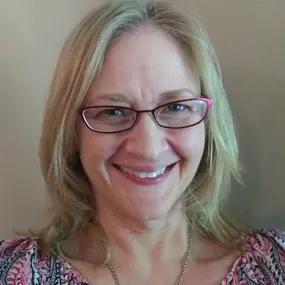
Learning Experience Designer
Dr. Sydne E. Kasle is a senior L&D strategist and performance consultant with over 20 years of experience driving business results through innovative workplace learning. Armed with a Ph.D. and an M.Ed. from the University of Michigan, Sydne specializes in blending adult learning science with human communication strategies. She has engineered large-scale workforce development initiatives, custom compliance tracks, and digital learning journeys for major institutions and corporate teams alike. A user-experience enthusiast and expert in program evaluation, Sydne is dedicated to making professional development engaging, accessible, and highly effective for modern organizations.