

 Apple Podcasts
 Spotify
 Amazon Music
 iHeartRadio
 Pandora
 Castro
 RSS Feed
 Audible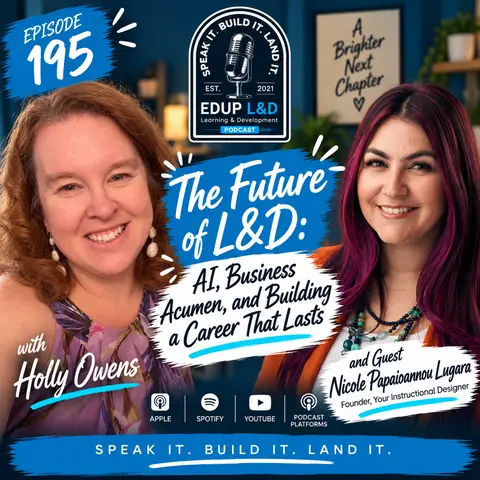
In this episode, Holly sits down with Nicole Papaioannou Lugara, founder of Your Instructional Designer, to talk about the changing world of learning and development and what it takes to build a sustainable career in an industry that continues to evolve.
From the rise of AI to the expanding role of instructional designers, Holly and Nicole have an honest conversation about what is happening in L&D, what professionals need to pay attention to, and how to prepare for what comes next.
In this episode, Holly sits down with Nicole Papaioannou Lugara, founder of Your Instructional Designer, to talk about the changing world of learning and development and what it takes to build a sustainable career in an industry that continues to evolve.
From the rise of AI to the expanding role of instructional designers, Holly and Nicole have an honest conversation about what is happening in L&D, what professionals need to pay attention to, and how to prepare for what comes next.
Together, they discuss:
- How AI is changing the L&D landscape
- Why instructional designers need stronger business acumen
- Setting boundaries, defining scope, and knowing when to say no
- Building a sustainable and profitable L&D career
- The skills that will help L&D professionals future-proof their careers
The big takeaway? Future-proofing your L&D career isn't about chasing every new tool or trend. It's about developing durable skills, understanding the business, building relationships, and being willing to evolve.
AI is changing the industry, organizations are changing, and the role of the instructional designer continues to expand. But Nicole makes the case that professionals who can think critically, understand business needs, communicate effectively, and adapt to change will continue to bring tremendous value.
Whether you're an instructional designer navigating the job market, considering freelancing or entrepreneurship, or simply trying to figure out where L&D is headed, this conversation offers a realistic look at what it takes to keep growing in this field.
Shoutouts and resources shared:
- Your Instructional Designer — Learn more about Nicole's work in learning and development.
- Nicole Papaioannou Lugara — Connect with Nicole and follow her work in instructional design and L&D.
- Christy Tucker — Nicole highlights Christy's approach to setting boundaries, defining her area of expertise, and knowing how to say no.
- Offbeat by Lavinia — A practical, community-centered L&D newsletter recommended by Nicole.
Connect with US
💼 Follow Holly on LinkedIn — Connect with Holly on LinkedIn
📹 Subscribe to our YouTube Channel — Watch EdUp L&D on YouTube
📰 Subscribe to the Newsletter — Get It’s Not Just One Thing in L&D delivered to your inbox
💃 Check us out on TikTok — @ihollyo
💌 Connect with Holly — Schedule a conversation
Thanks for subscribing, listening, and supporting our show! 💙
Thanks for tuning in! 🎧
Holly Owens: Hello everyone, and welcome to the EdUp Learning and Development Podcast. My name is Holly Owens, and I'm the host of this show, but I'm also a higher education professor, instructional designer, entrepreneur, and a proud helper of humans. I've worked in the L&D space for almost 20 years, and I'm here to share what I know, what I'm learning, and what's happening in our industry. We'll talk about instructional design, L&D AI, technology, careers, and the humans behind it all. Along the way, I'll bring in some friends to share their stories, experiences, and expertise too. Because at the end of the day, L&D is all about humans helping other humans. This is EdUp L&D. Hello everyone and welcome to another amazing episode of EdUp L&D My name is Holly Owens, and I'm your host. And today I have a fabulous guest with me who we were just talking about. This should have been on the podcast way sooner than now, but we're glad she's here now. So I have Nicole Papaioannou Lugara and she is the founder of Your Instructional Designer. Nicole, welcome to the show. Finally.
Nicole Papaioannou Lugara: Thank you, Holly. I'm very excited to be here. say the longtime listener, first time ge guest, I guess. But I'm I'm super
Holly Owens: Yeah. Love it.
Nicole Papaioannou Lugara: excited. Yeah. And we were talking about, you know, we've we've come full circle on our office arrangements and all of this. So it's life. Yeah. It's cool to see where we've
Holly Owens: The decor life, kids, all the different things. Absolutely.
Nicole Papaioannou Lugara: I think it's actually better. It's almost like a where we were and where we're going. It it's it's fun. It's great. It's perfect timing. We're
Holly Owens: It's it is absolutely. Well, for those in the audience don't that don't know you and don't know about your instructional designer, give us give us a scoop. Tell us little bit about you and what you do with your instructional designer.
Nicole Papaioannou Lugara: So We'll start with the now. Your instructional designer is a learning and development agency, and we really focus on building scalable social and collaborative learning experiences. So that just means we are really targeting those high impact skills, management, sales, product launches, things where one-time training just will not do the job. And really what you need is to create an ecosystem or a culture of learning around that skill set. So that has been our mission. And well, our mission really is to make learning that matters. But that's been the vision that we've been working with probably for the last five years. That's been our area of specialization. And next year, or technically January, so three months from now is actually our 10-year anniversary. That is wild for me to say. Thank
Holly Owens: congrats. That's awesome.
Nicole Papaioannou Lugara: you. but I started very windy road. I was a adjunct professor of English, and I was working on my PhD and I thought I was gonna be in that world forever and I will just say life lifed and I decided I wanted to move to Los Angeles and fell into instructional design simply because it was a job that paid the bills and I liked building online courses for my students. yeah, it's been a wonderful journey ever since.
Holly Owens: Yeah. I thought I was gonna be a teacher forever. But I am. I still teach in I still teach in higher education, so we have that commonality. Do you still teach? Do you still adjunct towards
Nicole Papaioannou Lugara: I I do not last year I was doing writing workshops for my community, like locally and online.
Holly Owens: cool.
Nicole Papaioannou Lugara: Yeah, that was really fun. But then I decided that, you know, this is like a passion project and I like doing it and I don't want to build another business for myself doing it. so I've just, you know, I've kind of released that and I'm I will partner with other organizations locally to when I feel the need to scratch that itch.
Holly Owens: Yeah, absolutely, I totally get that for sure. you know, I I want to talk about the world of L and D right now because I feel like there's a there's a lot of different things that are going on in L and D people are in the job market, I'm in the job market myself. People are trying to be entrepreneurs, start their own businesses. From your experience, when you think about you know, where you s where L and D was then to where it is now, can you kind of give us your perspective on on what's happening? maybe talk a little bit about the AI inception or what you know, 'cause we met like a while b before AI, like w out on
Nicole Papaioannou Lugara: Yeah.
Holly Owens: LinkedIn world. So I'd love you to to give the audience your perspective of what was happening then and what's going on now.
Nicole Papaioannou Lugara: Yes. And people will still ask me for advice on transitioning from, you know, a
Holly Owens: Yep.
Nicole Papaioannou Lugara: teaching career to the and I'm like, it's just, it's not the same landscape. It's not that the advice doesn't work at all, but it was just a very different place. So when I first got into the industry, it was about 2014 formally. I you know, in higher ed, you're doing adult education, but it's a little bit different. And so at that point Instructional design jobs, from what I understand, were were not like I didn't see them everywhere. It was the first time I had heard of one. and
Holly Owens: Yeah.
Nicole Papaioannou Lugara: what my company was doing was groundbreaking. and so I went to work for a company. They were essentially a Hollywood film company that purchased an adaptive learning platform. And so they could tell the stories, but they didn't understand the learning science to really structure training. They were just creating beautiful things. And so at that time, adaptive learning was a buzzword and also like really forward-thinking, you know, our platform basically scored and leveled our assessments and would adjust to the user. So if you were doing really well, it would bounce you up to harder questions that were worth more points and you could master that subject matter and get out of that online. lesson, module, whatever it is, faster. Whereas if you were newer to the subject and you needed more time, it would bounce you down as you got things wrong to easier. So maybe more foundational knowledge until you got back up to scenarios and higher order thinking. Then you would move. That was like groundbreaking thinking ten years ago.
Holly Owens: Absolutely.
Nicole Papaioannou Lugara: Yeah, and then we had COVID and it was the worst thing for everyone except for L and D, because if you understood how to build things online and scale systems, you were very much in demand. And so we saw the army of people leaving the classroom where things were very stressful and entering into instructional design and other areas of learning and development, helping move things on. From kind of emergency to now virtual. We thought we were all gonna be online remote workers forever. And then return to office happened and AI happened at the same time. And I think it's been Chaos, but not really since right. So we're seeing now a return to some in-person and virtual online training, so live training. We're seeing that really being prioritized right now because in theory AI can kind of customize your curriculum and give you the same thing as an ebook style online class. And so we're seeing that movement, and then we're seeing instructional designers really being asked to produce more than ever before with lean teams. And so AI is definitely a piece of that puzzle.
Holly Owens: Yeah, I think like
Nicole Papaioannou Lugara: yeah.
Holly Owens: I don't know. I don't want to comp I don't wanna say instructional designers are getting more put it on them, but I feel like they are like teachers do. Like there's there's there's
Nicole Papaioannou Lugara: no, I think so.
Holly Owens: like a never ending like there's always the other duties as a sign that continuously gets added to our roles, like we're project managers, we're therapists, 'cause when we talk to the SMEE You know,
Nicole Papaioannou Lugara: yes. yes.
Holly Owens: those those kinds of things that get added on that aren't necessarily a part of our roles. We're conversationalists, we're public speakers because sometimes we have to do trainings and presentations and things like that for people. So just thinking about all the different things that instructional designers do now than when I used to read I like you said, when I was looking for instructional design roles specifically in higher education, it was like very rare that you saw and it was typically called
Nicole Papaioannou Lugara: Yes.
Holly Owens: back then. we're we're around the same around the same age. it was called instructional technologist or instructional technology specialist. And then you focused on like yeah, you focused on ed tech. Yeah. Yeah, you're
Nicole Papaioannou Lugara: yes. You were like teach exactly, exactly, yeah.
Holly Owens: teaching how to integrate ed tech into the classroom.
Nicole Papaioannou Lugara: Yes.
Holly Owens: Yes. So eventually that evolved into instructional design for me. But you know, basically you're focused on like the technical back end. But then it started to grow into this like you're gonna design the whole learning experience from start to finish. And the technology is just a piece of that.
Nicole Papaioannou Lugara: Yes. And now I think they just want it all because I feel like my role I maybe it's just by, you know, nature being a consultant, but my role, but I thought I was going in to like tell people how to build the experience. And then it became like, okay, well, no, I need to help you find your learning management system or like your learning management
Holly Owens: Yeah.
Nicole Papaioannou Lugara: system is not the right place for this. I need to help you find community platform or I need to help you find the right video service tool. So yeah, it's become a very hefty job.
Holly Owens: Yeah, for sure. And I don't I don't know how I feel about that yet. I mean, I think it's good in the sense that we become more marketable in the different things that we're doing. But it also feels like sometimes and just because I focus on jobs so much that the salaries aren't keeping up with what we're actually doing. We're doing the job of three or four people and we're getting paid the job of one. But I digress. That's probably an episode for another day. Yeah.
Nicole Papaioannou Lugara: I also think, you know, it's also us. Like it's an us problem. because I think we are naturally inclined to be both curious and helpful. And so that doesn't work in some ways in corporate space because curious people are gonna want to keep learning at whether they're being paid to do so or not. And they're gonna want to be helpful whether they're being paid to do so or not. And corporate's just gonna be like, here you go. We don't have to pay you. This is free labor. Wonderful. Here's more, here's more, here's more until you can't, until you can't.
Holly Owens: Yeah. Yeah. You know, and you don't want to disappoint the partners or the clients you're working with. So you're not gonna be like, that's not
Nicole Papaioannou Lugara: No?
Holly Owens: my job. You don't say things like that in instructional plan. Like, that's not my job. You know, I always say th say things and I'm sure people in the audience have like, Let me see if I can find the help that you need, or let me see if I can figure that out for you, you know. I just know that through conversations with SMEs and and companies that are doing different things, like the scope of the job continuously changes. There's never just like a set It's not it doesn't stay in this this lane. It it goes across the highway quite a bit.
Nicole Papaioannou Lugara: It does, it does. So I think, you know, I if we're talking just practically, I would say it's a really good skill for l instructional designers to learn how to speak to scope and kind of yes end people. I think learning how to say no is a very difficult skill that for us and it's helped me i build my career by learning to say no, but I'm still not great at it.
Holly Owens: Yeah, it's hard to say no. I'm I'm I'm in that camp with you and I know people listening right now are in that camp too because I think there's a if a fear if we say no, then that's going to look bad on us. Like what are we doing? Or that's gonna look bad on the company that we represent, if we're working like as a freelancer or you're working as an instructional designer as an individual contributor.
Nicole Papaioannou Lugara: Yes. Well, Chrissy Tucker taught me the yes and from improv and I think that's the most powerful tool we have. Yes, we can do that and it will cost you X more dollars. Or yes, we can do that. And it's gonna take me three more days.
Holly Owens: Yes. I need to go back to that. This is the s yeah, I shouted out Christy on my LinkedIn live I did last week 'cause I just love her so much and here we go shouting her out again. So I definitely need
Nicole Papaioannou Lugara: Yeah.
Holly Owens: her her back on episode and I need to go back to that particular thing.
Nicole Papaioannou Lugara: And I will say Christy's very good at saying no, like in a good, good way. She's said it since the beginning, since I've known her, which is like, this is my area of specialization. This is what I do. This is how I like to work. Here's how I can help you. She's not she's always expanding her skill set, but in a way that aligns with her values and what she wants to do. And I really admire that. And I think that's what's kept her around for so long, and also just you know, something she really advocates for, and hopefully we can use her as a model for. that.
Holly Owens: Yeah, she's definitely the adultery adult that we look up to in this space because
Nicole Papaioannou Lugara: Yeah.
Holly Owens: she was she was doing these things way before you and I got involved in L and D and I definitely was like when we're I was first getting involved in it and like Googling people and you know a few popped up like Tim Slate, it was Christy, I think Kathy Moore popped up, those people
Nicole Papaioannou Lugara: Yes.
Holly Owens: and you know, Carl Kapp have been around f around this instrument
Nicole Papaioannou Lugara: Coral, yeah.
Holly Owens: Yeah, have been around for a long time. So Lots of shout outs in this episode, lots great people in this space. so one of the things I do want to ask you is what have you learned? 'Cause I know there's some people like sitting right now, like they're in a space like me, and they want to be an entrepreneur or they wanna do freelance work, they want some more, you know, opportunity for themselves and maybe some more work life balance. so what kind of advice can you offer to people like just running your own business? What what does the day to
Nicole Papaioannou Lugara: Mm-hmm.
Holly Owens: day look like? And like how can people manage all the different things while and we don't talk about enough while still making enough money on the back end to kind of sustain your life and pay your bills?
Nicole Papaioannou Lugara: Yes, I think I've learned a lot of lessons, some really wonderful and some very hard taught. I think the first thing, and this is gonna sound really silly, but like being a freelancer, I've learned it's much easier than owning an agency in some ways. Like when I had the agency the most or have I guess the most wonderful part is working with other people. Like I absolutely
Holly Owens: Yeah, yeah.
Nicole Papaioannou Lugara: loved having my core W two team, which we don't have anymore. Now you know I'm back to working with freelancers, but that was like Not just my pride and joy, but like it was genuinely my joy. Like Rocillo and Kitty and Diego, they just made everything so much better about coming to work, about the work we did. But it's much harder to I would say, for me at least, like being responsible for other people is it's definitely difficult. Like, you know, when when money got tight, I had to I went into personal debt to sustain the business to make sure my people were getting paid and we could stay afloat as long as possible. But as a freelancer, I have so many skills. I can pivot on a dime. So that's that's kind of
Holly Owens: Right.
Nicole Papaioannou Lugara: what I would say. It's not It you know, you're I you're probably gonna start as a freelancer and maybe you'll find that you have a lot of clients and contracts and build your business and end up in the agency and just there's just different kinds of risks involved. Like you're gonna gonna find that out. That's probably way more way
Holly Owens: Yeah.
Nicole Papaioannou Lugara: off base from where we needed to start. But I think the first thing I would say is if you do wanna be a freelancer, which is more likely where your journey will start than an agency, is Really get to know yourself and your strengths. Know what's profitable, what your expertise is in or what people will say you're an expert in and what you're passionate about. I call that like knowing your pep because that that will help you.
Holly Owens: Your pep I love that.
Nicole Papaioannou Lugara: Yeah, and where it aligns is your sweet spot, right? If you're passionate, if you're an expert and it's profitable, that's the magic sauce. If it's not, like honestly, go expertise and profitability over passion because you're gonna need to make money at some point, at least in the beginning, and then you can turn yourself to passion projects because you'll be able to fund them. But you need to look for where the need is in the market if you want to build a business. It's really about serving your clients and not just serving yourself. That doesn't mean you let everything about yourself go. That doesn't mean you have compromise your values, it just means that you really need to understand what people are saying and what they need. And once you can do that, then you can start to position your marketing and you can start to do your outreach and you can find the right targets for your product. But if you don't know those three things to begin with, especially that what your problems you're going to solve, that expertise and where how you're going to make your money, then it's going to be a very difficult journey for you.
Holly Owens: Yeah, it is difficult, especially we're just talking about saying no and g and also there's this this thing about giving it away so much for free. Like, you
Nicole Papaioannou Lugara: Yes.
Holly Owens: know, there's there's an issue there. I get lots of people, not an issue because I love designing things that people can take and they're tangible right now, but like thinking about like that took me time. I w you know, even though we have AI, I had to still, you know, evaluate the AI and put that resource out there or take the time to think about like what that resource was gonna be about. that sort of stuff. So I really like I love the PAP. That's that's that it's so easy. I love it. Yeah, that's great.
Nicole Papaioannou Lugara: It's very easy, yeah. It's like ikagi but not not so many circles.
Holly Owens: I'm definitely gonna start using that for sure. so you've talked a lot about like what you've learned over the years and you know, having your own company and working with people and taking care of people. You know, I I did have a team on the podcast that, you know, a small team, but eventually like sponsorships run out, you know, we kind of have to ebb and flow with what's happening in the economy, whether that's in corporate and especially higher education, because higher education, like, you know, they're they're having some budget issues depending upon where you're you're at right now. But when you think about like the future of work, like what gives you hope and what do you think we need to rethink when it comes to the future of work?
Nicole Papaioannou Lugara: So many yes, this is okay. So no, it's a great question. I
Holly Owens: in this space. I know there's a load of question. Yeah.
Nicole Papaioannou Lugara: think in some ways, you know, we always think we're further advanced than we are. And looking at what happens inside of real companies, that's been a privilege of being a c consultant or, you know, working at For my own agency and before that I worked for like a vendor. So I've seen so many businesses and like they come out swinging and they win these big awards. And then you look under the hood and you're like, you're like actually not doing anything you're saying you're doing. Yeah. Yeah.
Holly Owens: Let me say something about those awards because I've worked for companies and like you have to pay for those things.
Nicole Papaioannou Lugara: Not only that, but you have to be able to have the people to be able to take the time to fill out the awards and meet certain criteria. Yeah.
Holly Owens: Right. That the the applications are astronomical. Like those things, like I always and I'm probably naive in in saying this, but I always thought those awards like they evaluated you. But no, you have to apply for those awards and you sometimes you have to pay for the application fees. And I'm like, application fees? What is that? Anyways.
Nicole Papaioannou Lugara: Yes, you do. Absolutely. So there's a whole like other t show probably should go with that. But yes, and having submitted them for other companies I worked for, it's it's a big process. Like we applied for Brandon Hall Award and we did win a bunch, which was wonderful. But it was
Holly Owens: Yeah.
Nicole Papaioannou Lugara: like pages and pages of documentation and data. And then I've been the judge on the other side where it's like you're not actually looking at the thing that was created. You're looking at people's report outs about the things that were created. And so
Holly Owens: Yeah.
Nicole Papaioannou Lugara: That's interesting. Yeah, that's interesting as well. Like I just I
Holly Owens: Yeah.
Nicole Papaioannou Lugara: would say that like I congratulations to any team that has won an award because you did do hard work and I'm not
Holly Owens: It's a lot of work.
Nicole Papaioannou Lugara: saying you didn't, but what I would say is like for those of us who are smaller or who haven't won a like it's not a it doesn't mean we're not as good. It just means we haven't filled out the paperwork usually.
Holly Owens: Yeah.
Nicole Papaioannou Lugara: which leads me totally away from what were we trying to get at?
Holly Owens: Yeah, but yeah, no other yeah, I know. I took us off on a tangent there, which is totally fine. Talking about like the future of work, but but yeah.
Nicole Papaioannou Lugara: the future work. Great. So anyway, most teams are just they're not as far advanced as you would think they are. Or those advancements are happening in specialized units of the business. Like Johnson and Johnson is so cool, right? They're always innovating, whether you agree with Big Pharma or not. But a lot of those
Holly Owens: Yeah.
Nicole Papaioannou Lugara: happen within specialized innovation units. And I'm sure they're not my client, I can't say that, but like, you know, I'm sure I'm sure that across units things look different. And the same thing as at some of the smaller companies I've worked with. So that is all to say. Don't feel discouraged. Go back to basics in in many ways and start learning. Yes, and not basics of even instructional design. What we're missing as a field is business acumen. I the
Holly Owens: Uh-huh.
Nicole Papaioannou Lugara: easiest tool that I have taught again and again in my career is IRACIS And it is increase revenue, avoid cost, improve service. Those are the three goals of business. And if your training isn't doing any of those, then
Holly Owens: You're giving me so many good tidbits in this episode. I love it.
Nicole Papaioannou Lugara: I really try. But yeah, if you're not doing those things, then no one cares about your training. So like and that's just facts. So go back and see, well, how can we do this? And is it training? And it and those are the two questions you have to ask. And not everyone will be in a position where they can do that all the time politically. Perhaps they're not in the right space to do that. Maybe they have a boss. But it's about introducing ideas and kind of learning to play the game a bit until your voice becomes trusted and your recommendation can go through. So
Holly Owens: Yeah.
Nicole Papaioannou Lugara: So yeah, that's that's kind of what I would say. The future of work is coming. We definitely need to stay, you know, on top of the trends and see how things are moving. If you can check it, I think seeing vendor presentations is really a good thing to do. I have paid for an absurd amount of subscriptions over my time as a freelancer and agency owner, and I think it served me really well to tinker in things, even when they were expensive. But just knowing what's out there and knowing the capabilities makes you a good instructional designer. So I could say, hey, I have not built with this tool specifically before, but I do know how to build video. And given what you're telling me your company needs and what this vendor says they have, I think we'd be a good fit. Why don't we do a demo and then I can call some, you know, current clients and reach out to my network and see if this is a good fit for you. So being able to do things like that, I think that's gonna serve us while going into the future.
Holly Owens: Yeah, like I I keep saying it's still a traditional market in the sense of like knowing people and and that networking piece is it I feel like that's always gonna be there.
Nicole Papaioannou Lugara: Yes.
Holly Owens: and like, you know, bringing in like having good relationships with vendors, having good relationships with people if you're trying to get a job. it it's really important nowadays. And I think people I think sometimes we take that for granted. the
Nicole Papaioannou Lugara: We did.
Holly Owens: relationships, and I'm not sure about you, but I get a lot of LinkedIn messages about people wanting me to like Do resume reviews for free or do this or do that. And I I and I'm happy to take a quick glance and like give you some quick feedback on that. But also too, like just thinking about like what you know, have you taken a look at like what I do? I think that's the the piece of like the relationship building that I appreciate the most is when people actually invest in my experience and know a little bit about me before they come, you know, asking for some sort of assistance. And I think that's an important piece, like when you're talking about these vendor relationships and helping the companies figure out like, you know, the tools and things that they want to use.
Nicole Papaioannou Lugara: Yes, your vendors, your management team know what's important
Holly Owens: Yeah.
Nicole Papaioannou Lugara: to them, what deliverables are they trying to accomplish? Like get get to know humans. I would say on the flip side though, since we are talking future of work, I think our biggest challenges are are gonna be like two-prong. And so like instability is because you're talking about right, there's there are layoffs happening, there are job changes happening, people aren't staying with companies for a hundred years anymore. And so like that's a really hard thing to overcome because learning does require commitment, it requires motivation, it requires people to feel somewhat safe in their space many times. I mean, there's obviously exceptions to all of those rules. And so we do have a bit of an uphill battle because we're now we're trying to put learning in front of people whose brains are just all over the place, who maybe have lost half their team and are now doing double the work, maybe don't care about the company anymore. And so that that I think is something. Doesn't exist. Yeah.
Holly Owens: Or the mission has just y you know, the alignment of the mission is it's Yeah. Yeah.
Nicole Papaioannou Lugara: And then the second part, I think, is, you know, the whole idea of AI will take our jobs. For me, it's like a yes and it's not that AI is gonna take our jobs as in we're gonna be replaced, at least not in the next five years. But I think what people are missing is that AI will take our jobs in that they want to put more AI in place, and that is expensive. And between token costs and implementation costs. And so they are going to cut learning to afford that. And they're going to cut people who would require learning to afford that. And so I think
Holly Owens: Mm-hmm.
Nicole Papaioannou Lugara: just thinking about, well, how do I continue to make myself something that doesn't end up on the chopping block is hard and scary. I don't necessarily have the best answer to it, even I would say. I I just think that's the reality that we're going to be facing. And learning how to tell our story and to remind people that human capital is important is going to be, is going to be our challenge for the next five years.
Holly Owens: Yeah. And I th I think it's important that we're we're real about what's what's coming or what's already happening in the industry. Like like you said, I've seen tons of people like Amazon. I when I worked at Amazon, I started there in two twenty twenty two, like I went through four or five rounds of layoff and that was like pre before AI is like getting in
Nicole Papaioannou Lugara: Yes.
Holly Owens: getting into everything. And also too, like just thinking about like you're saying, it's it's expensive to implement, but over time the companies are thinking about what's the ROI on that. Instead of hiring people It costs a lot of money for turnover for companies.
Nicole Papaioannou Lugara: Yeah.
Holly Owens: you know, to hire that person, the investment in time at the in the onset, you know, getting their salary, you know, training, professional development, access to tools, that kind of stuff. It's not and then we're not saying that's not to worry, but how do you future proof yourself into being being
Nicole Papaioannou Lugara: Yes, that's that's
Holly Owens: a part of the process, and assimilating into the into the process? I recently I have a friend who works as like an events manager around here in the Wilmington area for a brewery and people were coming at her because she was using AI to advertise and said they would never come
Nicole Papaioannou Lugara: yeah.
Holly Owens: they would never come to a place that was using AI to a use, you know, create their ads and things like that. I'm like, people Yeah.
Nicole Papaioannou Lugara: It's so sad. Yeah, that makes me mad. Okay. I'm just let me go. Because really at the end of the day, all of these AI innovations that are having genuine impacts on our environment, right? That's their their complaint. Seeing people out of the day, it isn't these small businesses who are using it to make their venue. Like leave the poor mom and pop. Business alone. This is their leg
Holly Owens: Right.
Nicole Papaioannou Lugara: up to try to compete with. It is enterprise AI and these big, you know, let's be real, is getting put into like our government systems and things. That that is the right that that's what harms our environment. Whether we think it's for good use or not for good use, it's a whole other conversation. But like leave the poor mom and pop businesses alone. They are just trying to survive.
Holly Owens: Yeah. They don't have the funding.
Nicole Papaioannou Lugara: It is so expensive right now, and everything is inflating faster and faster. Go patronize them and like stop dealing with Microsoft. if you really want to take a stand. I don't know what to tell you. I don't
Holly Owens: Right.
Nicole Papaioannou Lugara: and I'm not saying that as like my you know, my advocacy right now. Not nothing against
Holly Owens: Yeah.
Nicole Papaioannou Lugara: you, Microsoft. I'm just saying like the thinking, the line of thinking to attack someone in your neighborhood versus it
Holly Owens: Right. Like the community who's just trying to build something and somebody said something along the lines of like you should use pa I would be more much more inclined to come to your business if you use something like Microsoft Paint to design your graphics. I'm like, What? No you wouldn't. These people have too much time on their hands is what I'm trying to say.
Nicole Papaioannou Lugara: No, you wouldn't. I that's no you wouldn't. That's what I've learned as a business owner. Like people Yes, but also like there's this interesting thing because I feel that way sometimes as a right. I'm a writer. I'm I do all these things. I'm like, AI, but then I'm also like, I'm sitting here reading this comment from top to bottom. Like I'm sitting here reading everything this poster wrote, even though it's clearly written by with AI, like it's their
Holly Owens: Mm.
Nicole Papaioannou Lugara: ideas. Like so. Really? It's
Holly Owens: Yeah.
Nicole Papaioannou Lugara: still yeah, it's still getting across the impact that this person wanted to have. so I think we just need to be more nuanced in our thinking is really what I would say. And I would say to support our small businesses, that's gonna be very important. do know that people are anti-AI and you have to check your work and make sure it doesn't look like you straight up copy-pasted it off of Clawed Design or ChatGPT, but we are gonna be using it. That's real life. In 2026, in the learning and development industry, your business is going to expect that you use it.
Holly Owens: Absolutely. And I I don't think like like I'm saying the resistors right now that's fine, but eventually it's gonna be like when people didn't want a T V or they didn't want a cell phone or they you know, like these things are gonna be a part become a mandatory part of our ecosystem that you are gonna have to work harder to avoid than to try to like understand and get you know, use it for idea. I don't know. Well I guess we'll see what happens. I guess we'll see if our predictions are right.
Nicole Papaioannou Lugara: Yeah. And yes. And I definitely think this conversation, at least from my perspective, I think you've been very you've been good about being I think my view on it is definitely gonna be challenged and some people won't be happy about it, but I d I do very much take a realist perspective
Holly Owens: Mm-hmm.
Nicole Papaioannou Lugara: to it. And it's like the powers that be have invested a lot of money in this and they are not going to let it go quietly. So so yeah.
Holly Owens: Yep. Yep. So definitely people need to be paying more attention to AI and how much their companies are investing in it and like just figuring out like how they fit into that picture. Like 'cause
Nicole Papaioannou Lugara: Yes.
Holly Owens: you know, maybe you be you can become a person who is a leader in understanding AI and how it impacts your field in certain you know, not L and D any field
Nicole Papaioannou Lugara: Yes.
Holly Owens: here, and you become an expert in the area and how things are done and you just make yourself more marketable that way anyways.
Nicole Papaioannou Lugara: I love that. Yes.
Holly Owens: Yeah.
Nicole Papaioannou Lugara: I think what people believe is the future, like everyone wants to jump into AI readiness training and having done.
Holly Owens: And get certificates and stuff. Yeah.
Nicole Papaioannou Lugara: Like, like, yeah, like I'm gonna start a that's how I'm gonna build myself as a freelancer. I'm gonna offer AI readiness. I'm gonna build AI literacy training for your company. it's for it's gonna become like Microsoft Word. I think we're already almost there. Like most people who work in a white collar job understand how to use AI at a basic level. They may not understand privacy risks and all of that stuff, and like, yeah, there's some compliance training that probably needs to happen. But I think if you're building your whole business on AI and you are not a genuine AI expert like the Myras and the Josh Cavaliers and right, then I don't think you're really future proofing your business, but you're doing maybe what'll work now. But I I think that's
Holly Owens: Yeah.
Nicole Papaioannou Lugara: also if you're you can't just look at the problem narrowly is what I'm trying to say. I think what you said about like, look at how people are using AI in the field and we're creating something around that expertise, or look at how we can use the tools, that's going to be more important. How you connect people, how you get the champions and the people who are a little less sure about how to use it in their own use case, like that's a good use case for it. But I would also just caution people against pouring all of their energy into AI training.
Holly Owens: Yeah. Yeah. I agree with you there. I think, you know, so many times like people ask me, should I get a certificate or should I get some sort of like further education in this? Yeah, and there's tons of free stuff out there. So do that stuff first before we start. Like I feel like it's still very new. It's still a very new environment. It's only what four or five years old. So we're still trying to figure out. So I would say, yeah, get a certificate. And obviously, you know programs at higher education institutions are incorporating in AI, but they're also having issues with their own AI policies and that's another conversation. But just figuring out like what living in the moment for right now, but again, as we said, future proofing yourself that you're prepared for a shift because I know you and I are both sitting here right now and we know the L and D's gonna shift. It's already shifting.
Nicole Papaioannou Lugara: yeah. It's already ass, yeah.
Holly Owens: It's already it's already happening. So we wanna be very open and honest about what the future of that looks like. my gosh, we could talk about this so much longer. I feel like you're gonna have to
Nicole Papaioannou Lugara: Ha ha ha.
Holly Owens: come back for another episode. But I know you have maybe a change on the horizon. So I want you to say as much as you want about that.
Nicole Papaioannou Lugara: Sure.
Holly Owens: And then we'll end with the final question that I love for my guests to share with the audience. It's three pieces of advice you would give somebody in the L and D industry or three resources that you're like, you just need to go out. And these are great resources or people, just three things that they have a takeaway. So anything else you want to share? And then the three pieces of advice. Nicole. This is it went by really fast, Nicole. Yeah.
Nicole Papaioannou Lugara: Okay, sounds good. So I so fast. I have so such a good time. I'm so glad we could do this. yeah, I am making a change. I wasn't really planning to announce it to the universe, but since I'm here, so I am kind of Downscaling, I would say not downgrading, but just scaling down. I'm gonna be really entering back as a freelance consultant for the time being. Right now, most of my work is in cost number education. I'm doing a lot of events and marketing that are also education focused, but definitely not quite the same work. So I'll be doing that. Feel free to give me a call if you if you just need one person to help you with your vision. Yeah, yeah.
Holly Owens: And everything's gonna be in the show notes, so f we're gonna contact you.
Nicole Papaioannou Lugara: So I'm still here. I'm still happy to help you with your learning and development. But I am starting to shift. I have a big dream.
Holly Owens: Yeah.
Nicole Papaioannou Lugara: and I would like to so I just turned 40 and I feel like it's midlife crisis time, but in a good way, you know, like I I no, no, it's a it's a calling. Yeah, yeah.
Holly Owens: We need to like we need to restate that. Like it's not a midlife crisis. It's like a it's like a it's like we're done with the bullshit at this point. Like we've we've been we've been in this industry for a long time and I'm sorry to cuss about it, but like we've seen we've we've acclimated and we've assimilated and we've even like we've done what we needed to do and now we're doing something for ourselves. So that's yes. That's what it's a doing doing
Nicole Papaioannou Lugara: Yeah. Yes. I think what it's really happening.
Holly Owens: something for ourselves time.
Nicole Papaioannou Lugara: That is it. And it and so what is that? It's like not like I I hate L and D, I'm burning out and leaving. It's nothing like that. It's that I want to take the skills that I have acquired in this field and move it into something that I feel is extremely valuable and extremely necessary at this time. I don't know how much I want to say about it or not. I have to think about it. but that's enough. Yeah, I'm moving into something. I
Holly Owens: That that's enough. Just say that you're making yeah, you're making a transition and we're we're looking forward to supporting you in that.
Nicole Papaioannou Lugara: Thank you. I can't wait to tell everyone my domains are purchased for this new idea,
Holly Owens: Yeah.
Nicole Papaioannou Lugara: and I think it'll be really wonderful. So yeah, I'll I'll still be LD, just not in the way that I have traditionally done, unless you want to hire me to work with you one on one. That's a whole different fall game. as to what I think folks could use, what's like the three things? Okay, so I think first is going to be the skills you need, in my opinion, to stay ahead are going to come from critical thinking, your ability to read through and analyze the situation, and your ability to do design thinking slash systems thinking and write well. Right. Like I'm never not gonna believe in writing. So if you can write well, you can prompt well. Yes, you
Holly Owens: Yeah. You're an English person, one hundred percent.
Nicole Papaioannou Lugara: can ask your you can ask the AI to help you prompt, but you still have to be able to think to get yourself to that point. So like start thinking about those skills, developing those skills in tandem with whatever technical skills you are building. that's not mind-blowing. I'm sure lots of people are saying the same things right now. Durable skills are important. the second one, so resource wise, I love offbeat by Lavinia. I'm gonna mess up your last name, Lavinia, so I'm not say it Lavinia, but I I will I will send you a link to her profile and you can link it. Yeah, yeah,
Holly Owens: Lavinia we like we love you. Yeah, we'll put it in the show notes and we'll
Nicole Papaioannou Lugara: you can send the show notes. But Lavinia has exactly the right way of thinking about Learning and development. It is, she has a very social and collaborative way of thinking about it, a very like networked social ecosystem way of thinking about it, very much like what I have advocated for at your instructional designer. And more so than that, she has wonderful resources. offbeat is on Substack. It's not just her, but you know, it's her baby. So OffBeat is on Substack, and they just they have this amazing newsletter that goes out with wonderful resources, very thoughtful, and it's always very plugged into the realities of what is happening in learning. development. So it's not just theoretical, it's very practical. It's very industry and community centered. I love it. Please go check it out. and the third resource, let me think. But well in December, which is a little ways off, our LOL, as we call it,
Holly Owens: huh.
Nicole Papaioannou Lugara: learn the language of learning, mastering writing for instructional design is coming out. It's Hadia Naruddin was our editor, and so myself and a few other names you will definitely recognize have chapters in there that can help you develop your writing for ID skills. Yes, you're still gonna need them, even if even if AI is doing a lot of writing these days. I think having judgment and taste and knowing when something is good and not. That also comes from just understanding what to do when you're not using the tool. I'm sure there's something better I could say, but that that's where I've landed.
Holly Owens: No, I love, I love no, those are great resources and those that you've given great advice and great tips throughout this entire episode. So this is definitely something that people are going to love. So I just want to close by saying thank you so much for your time. Thank you for sharing your expertise. Thank you for sharing your honesty and just telling us what's going to happen. I appreciate it so much. And I know the audience appreciates the realism because we're all You know, we're all this big community and we're all in this space together. So we're gonna have to figure it out because like us, like in our forties now, we still got a while to go before we can retire. So we definitely need to be able to pivot or assimilate to what's next. So thank
Nicole Papaioannou Lugara: Yes.
Holly Owens: you, Nicole. And everything on how to connect with Nicole, find about find out about your instructional designer the resources that were shared are all gonna be in the show notes. So go there. And thank you so much.
Nicole Papaioannou Lugara: Thank you. I'm so happy we could do this. And thank you to anyone who made it this far in the episode and is still listening. I hope you'll find me on LinkedIn. right, of course. Well, yes,
Holly Owens: Me too. Yeah. They they listen 'cause they want the three pieces of advice. Yeah. Yeah.
Nicole Papaioannou Lugara: and feel free. Feel free to connect with me to find me on LinkedIn. I love to meet people in our industry and I think we're an awesome field of wonderful colleagues.
Holly Owens: Well, that's a wrap on this episode of EdUp Learning and Development. A huge thank you to our guests for joining me and sharing their experiences, insights, and expertise. Be sure to check out more great episodes at eduplnd.com Until next time, keep learning, keep sharing, and keep helping other humans. Speak it, build it, land it. See you next episode.
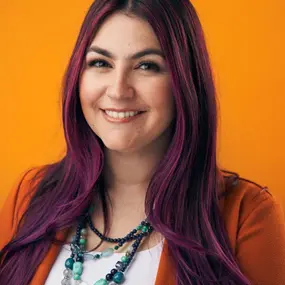
Founder, Your Instructional Designer
Dr. Nicole Papaioannou Lugara, PhD, is a learning strategist, speaker, author, and founder of Your Instructional Designer, an agency specializing in scalable social and collaborative learning experiences. With a background in English and educational research, she bridges the gap between compelling written communication and impactful curriculum design. Her work—ranging from corporate training and digital learning ecosystems to co-founding ventures for women entrepreneurs—has reached over 500,000 learners worldwide and earned recognition from Brandon Hall and Chief Learning Officer Magazine. On podcast stages, Dr. Lugara shares actionable insights on learning design, writing for engagement, and building digital learning products that deliver measurable business results.