
 Apple Podcasts

 Spotify

 Amazon Music

 iHeartRadio

 Pandora

 Castro

 RSS Feed

 Audible

Overview
In this episode, I got to chat with the CEO and Founder of DAE, A.M. Bhatt. You get to hear A.M’s inspiring story about immigrating to the U.S. at a young age and how his learning experiences help shaped him into the person he is today. A.M. is focused on building and providing valuable learning experiences for high school students, and adult learners. DAE currently has two locations in Connecticut and is opening a third soon (listen to the episode to find out more). e. If you are a lover of learning and helping others you really going to enjoy this conversation. It’s time to grab those headphones and tune in now to this amazing episode!
More About A.M. Bhatt
A.M. Bhatt was born in India and came to the United States with his mother when he was six years old (his father had come three years prior to study engineering). For more than six years, he and his mother lived as undocumented immigrants while his father stayed in school to maintain his student visa. A.M. has a personal understanding of how students and adult learners from different backgrounds engage with established systems that tend to be mired in traditional or outdated modes of thinking. He is committed to helping individuals develop their sense of self and community – equipping them with the technical skills they’ll need to launch or grow a career while, at the same time, empowering them to become agents for humanity-centric change in the world.
A.M. created the nonprofit DAE to bridge the gap between corporate America and the realities of underserved communities, using education as a vehicle for social justice while nurturing underrepresented youth with no-cost tech programs and access to digital career and life skills. He also founded U of Next, is on faculty in the University of New Haven’s Graduate Psychology Department, and has 25+ years of advising corporate executives and entrepreneurs. Past clients include Pfizer, Facebook, HAI Group, Siemens, Novartis, Deutsche Bank, United Rentals, Yahoo!, American Express, and many others.
Be sure to connect with A.M. Bhatt on LinkedIn AND Follow DAE on Instagram, Facebook, YouTube, and LinkedIn!
____________________________
Connect with the host: Holly Owens
Audio editor: Daniel Stein
EdUp EdTech - We make EdTech Your Business!
Thanks for tuning in!
Thanks for joining us on today’s episode of EdUp EdTech! If you enjoyed today’s episode, please head to our website and leave us a rate and review to help us reach even more fantastic audience members like you. Don’t forget to check out our website, visit us on LinkedIn, or hang out with us on Facebook or Instagram to stay up-to-date on the latest EdTech happenings.
Thanks for tuning in! 🎧
0:01 Hello, my name is Holly Owens and welcome to Ed up edtech the podcast that keeps you. In the know about all the latest edtech happenings. We interview guests from around the globe to give you deeper insights into the Ed tech industry, the field of instructional design, and more, we're proudly a part of America's leading podcast Network the Ed up, experience. It's time to sit back and enjoy. Enjoy the latest episode of Ed up attack.
0:41 Here's what's coming up on this episode Unity around. Education has always been a central part of my focus. My goodness I love that definition relationship is a technology so you can state of being is that it's a set of behaviors that are really critical. But then in the educational domain, it's a state of being. One of the things that's on the table for us. That's being offered is the possibility of opening it. A full-time High School. Hello everyone and welcome to another amazing episode of Ed up.
1:22 Ed Tech my name is Holly Owens and I'm your host. And today we have a fantastic person with us on the show that is going to tell us so many wonderful things about what they're doing. We have a mbot who is the founder and CEO of Dae so am welcome to the show. Thank you, Ali. Thank you for having me here and I'm looking forward to our conversation, me too. But before we get into all things Dae, I want to know about. You tell me about yourself. And how did you journey into this Ed Tech space? Well, okay, so I'm going to give you the longest possible.
2:04 Subversion. I'm sorry. Was an immigrant to this country. I was an immigrant as well. But by posing energy to study decided as a young man that he wanted to be in America as a funny story around that too, but that's part of a podcast and he came here, you know, classic story didn't know. Anyone had obviously never been here, didn't know anybody who didn't hear and landed here and there are three things that had a thing work. First was education. He was able to get himself into program into an engineering.
2:45 Program, as it turns out having that having that Focus, I think that Target was the first thing that that had kind of Life work here. The second was Community again, he was an immigrant student visa and there is this community of professors and fellow students that sort of took him in and showed him the ropes and just help him understand. All the things that folks might take for granted and then the third was was, he's willingness courage, vulnerability to say, This is what I want life to be. This is what I'm willing to say. The future is, this is what I'm willing to give my life energy for, all right? So that Journey for me has always been instructive. So we get my mom.
3:29 And I did three years later, we were actually undocumented when we came but growing up. I saw the role that the university played for him. As the anchor and played for us as the anchor, we were able to stay because he had a student visa, right? And so School became the way we were able to stay in there. Country literally but then also became the Catalyst to a like that's the kind of you know longest term answer Community around education has always been a central part of my focused from lived experience and then professionally as I moved into the world I spend most of my time on the corporate side doing adult development, a lot of executive development, a lot of work in Europe, across the u.s. obviously mainly in Tech and pharmaceuticals and financial services. And throughout all that time those three pillars, right? CreateSpace cool.
4:15 Individuals can exercise the courage and vulnerability to claim who it is. They want to be despite them not being that and having no basis for being that today, the content of education and community. So when we, when we get into this edtech, for me, the tech grammar, I'm going to be an oddball in your compositions of the biggest tech. For me, means something very different than I think, what it might mean, normally for you. Yeah, it was really long, we're gonna get into that, we're gonna get into that. Well, I really loved your story. Yeah, and I love your story about your dad and coming to the u.s. and say it's a common story, but I feel like every journey is different. It really, really is absolutely and that's one of the reasons I love doing this.
4:57 Show is to here and I and get people exposed to more those Journeys and how you got here. So thank you for sharing that. So being, is it that your CEO and founder? Do you have a favorite like, quote, an education related, or otherwise that you can share with the audience that you were? Back to maybe for inspiration. I'm not big on famous people kind of quote on duty and it's more of a little passage to book a little book by James cars called finite and infinite games. And I was fortunate to have a professor who was sort of my mentors and undergrad who knew cars cars passed in the last couple of years, and brought me a purse edition of that book and said here.
5:38 Kid, this is for you. You're going to love this and among a thousand really provocative gems out of that book. Is the following line to be prepared against surprise, is to be trained to be prepared for surprises to be educated. So what what he's pointing to there is that, you know, most of what passes for education is training, it is very useful, but it is the development of the capacity to not be surprised in any domain to be so prepared to know. All there is to know, the ultimate kind of training is, you know, everything there is to know about this process this tool this whatever it is. That no matter what comes up, you're not surprised you can fix it, you would deal with it, you could engage with it, and that's wonderful, but education for me is more of what cars points, due to be prepared, not against surprise, but prepared for surprised, we prepared in a way where what you're seeking is the fundamentally unknown and then you're prepared to engage with that. And, you know, when I was 16 that was a luxury in the world based on how the world are structured and these days, it's survival, you know, to be prepared for surprise. So that's the quote and Another long-winded sort of tied onto the quote, I wrote down the book. I'm taking notes as you're talking because I don't want, I don't want to miss things and also for myself, that's a really great passage.
6:57 And one, we obviously haven't heard of heard of before here, ended up at Tech. So, thank you for sharing that and it's really good. What? So, you know, along with that, the journey to being like a founder, and CEO is there anyone. Who's inspired you along the way that you want to shout out? Oh, how you know, Ralph carry Ola, that that college professor human remains close to 40 years ago, but he remains one of the kind of several influences in my life. My, my grandfather would shout out in terms of my understanding of Education, like what it is to actually engage with other human beings and the context of in development, I knew him in India. He never came here for the names of people might know, I wouldn't .22 again kind of common sources I suppose. But the people you I know, I think I think every human being He who aspires to do developmental work with other ship.
7:48 We could bond again, I think issue. Yeah, I think that aren't necessarily is not intelligence or Tools in relationship to relationship Yes. Absolutely. People don't realize and this is why I love telling people stories on the show is like how much you as a Founder in a CEO. You're not sitting up there and then I retiree you're here, you're helping you want to inspire, you want to change and I just love that so much. Yeah, so now that we've gotten to know you a little bit more and we know that you founded this company Dae based off of your experience.
8:46 How would you personally? Define educational technology. The obvious thing, Ron educational technology is the technology, it's the pegs and we have an insane and really really useful collection of things right from LMS has we're moving to Canvas, it's just an amazing platform. Don't know, plug intended there, oh my goodness, it's okay. I'm huge bias for canvas in the audience. Know that the audience knows it, so it's totally fine to plug them. Yeah. Yeah. So there's a whole bunch of things. Given that we focus on digital tracks but the technology that I focus most on, in terms of hiring faculty. In terms of developing faculty, is human. Technology relationship is a technology. We don't engage with it that way, but it is a technology. There's an operating system, there are user standards. First of all things you can say about hard technology or about software, you can say about human technology and I think it is the most critical thing not in training and training relationship is secondary.
9:49 What's Primary is the efficiency and accuracy of your curriculum and the expertise of your faculty, right? And there are many things which training is absolutely essential. If you're getting on a plane tomorrow, I'm not actually but if I were getting on a plane tomorrow, the training of the mechanics the Precision by which they can execute repeatable tasks and ensure a reliable outcome, but does not deviate from the previous reliable outcome. Is absolutely critical and the relationship that their instructors. Had to them, was only a marginal importance, it was important, but it wasn't critical. They had to just your bare, minimum respect, the instructors, technical expertise and tolerate them interpersonally.
10:31 And it's good enough to get a good outcome training in education in which again for media is about helping a human being, bring something out of themselves in a way where they are prepared for any surprise that life throws at them for that. The central technology is not curriculum or hard tools or vigil. Software. It is the, the nature of the relief. They the nature of depth of the relationship that they have with the space holders of that, educational space. So for me, educational technology, like, if you were to walk into here and asking my people, what's the most important technology its relationship? It's the capacity and the desire and the willingness, and the vulnerability to cultivate deep relationship with each other. And, of course, with the learners, my goodness, I love that definition relationship is a technology is absolutely true. Like you said, does we have different personalities? We have different beliefs, we have different, so it 100% is and I've never thought about it that way before, that's really, really interesting in and I love that approach. This is my retirement gig.
11:37 I started this company as this is your return, big, CEO and founder? Yeah, yeah, well good, the idea was I was doing the classic These movies that right? Like I came back to my hometown of New Haven where I made me that you know, open a little School is gonna be a non-profit. We're going to keep it taking it be 75 kids and really just focus in on some neighborhood in New Haven where I grew up and the thing just got away from me and unfortunately got away from me because there's so much need for what we're doing. And so, yeah, now we're 300 students to campus has about the open, the third etc. Etc. But yep, the reason I say that is most of my adult life was spent in on the corporate side. Side and it was the same thing.
12:18 Holly, you know, this technology of relationship, we 22 years ago, partner, and I launched a master's program with degree program, a graduate degree program in leadership, and change in at the time, it was one of the first three Standalone leadership programs in the world actually. Not just North America and our prior to that it was either you had a psychology degree with a specialization in leadership by the Nordic psych degree or you. Business degree. Does the more common get a business degree with a specialization in leadership? And our premise was in is that leadership is not forming along as in the humanities and again what's critical is relationship and so on the corporate side we tell people after working with them for a while.
13:01 As you listen, there's only two things were working. The only thing we're working on in these three years, you spend together is relationship. And the only thing when working with is listening, listening is another technology. That's absolutely Central and it is not the Yeah, the accident. Yes, the active listening is critical, but it's still behavioral and psychological. I just published a little book. I published a children's book for adults called. Are you my listener? And we sort of get into it there, there's a state of being listening, is a state of being is it's a set of behaviors that are really critical. But then in the educational domain, it's a state of being. It's, I am listening, I am a space of listening for you. It's not what I'm doing. It's who I am for you. My point though, is again on the corporate side it's the same set of need you know this technology.
13:46 Relationship and listening. I'm over-caffeinated. No no, I'm absolutely loving everything you're saying here because this is totally different take that I have handled things like just working in Academia and I'm sure a lot of the audience can relate to this to working. I can in Academia, I was a k through 12 and then I was hired for about 10 years and I incorporate now, with Amazon. But I love this. This, this perspective, it's refreshing. It really is. All right. So you've gone into it slightly but tell us more about Dae and really what makes your program unique. If you look at our back-end metrics that makes us unique in a way that matters to funders and School District, right? So we in a town in a state and I imagine, this is National metrics, sort of the line to this where programs like ours have something in the neighborhood of 50 to 60 percent retention rates, we graduate, 94 percent of the kids who come to our program and Adele actually had were even better on the adult side.
14:45 And I say, Say that to say to pre credential eyes, but the relationship thing because what makes us unique is when you come in, whether you're a high school student enrolling in a year-long program or an adult enrolling in one of our four months, programs, your first conversation with us and your first chunk of time with us, has nothing to do with. If you're doing the year and software, engineering, we have the field software engineer. What we're spending time on is really grounding you in the idea that this year is not about taking you and fitting to do too. Curriculum, right? Which is what standard training is, right? Is, you know, these are the set of skills using silac. What beshear is, is outfitting the curriculum to you. And so what that requires is that you step out on the ontological ledge?
15:29 Now I don't say that, I don't say ontological ledge. Do a high school sophomore, but that's the, that's the abbreviation of a longer conversation that we have with them. Is you stepping out and declaring something about how you want your life to be. That has no basis, that has no proof that has no. Evidence that you have no skill set for that, you have no right to say and yet it's what you want your life to be about. And we spend a lot of time up front, really just getting kids and adults comfortable with that conversation and it's disheartening how human beings feel licensed to be able to say, to be able to speak. What's in their heart, in terms of what they want their life to be, they'll give you career things. I'll give you like that, that kind of rolls off. But to actually say, no, this is the impact I want to have in the world, right?
16:14 Takes a little work, right? So so So, they're spending time, and that's the grounding for the year. And I think that's what makes us unique over the course of that year. Now, we are a space of listening for who you will become and within that, you're getting tools, you're getting skills. We had our high school program recently certified by a university by the State University system. Actually, because we felt like we're probably doing University level work with these high school students and they were awarded us, a bunch of credits for the kids when they complete the program. So they're going through our core work from a traditional training classroom perspective. But the year is about you deepening internally and broadening, externally your expression. Of what you want to use your kind of planet for and expressing all of that through for example, websites. If you're in the software engineering program, right? That's I think what makes us unique is our emphasis is not, it's not even learner Centric because learner Centric implies the learner today.
17:07 It is learner future Centric is who is it that I want to evolve into that I have no right to evolve into that's where our focus is and then You know kind of help them build skills in whatever track that used as a container for them to evolve into that human being. Yeah. Oh my gosh I was stuck back on me said speaking from your heart because it's kind of like when people ask you, what are your hobbies and your hobbies are typically the things that you're really passionate about. So it sounds like you're taking that perspective and implementing this into your programs. And it's really difficult to answer that question because I don't know about you. But for Or me sometimes because I'm like, I just love working.
17:48 I like podcasting. And I like most, you know, LinkedIn. I like connecting with people. Those are my hobbies, people are like work, can't be a hobby. I'm like, but it's different than work. Oh, I'm so glad you're on the show, this is fantastic. So, tell us a little bit more, but yeah, I just want to know a little bit more like you say, you have a high school program that's approved by an institution, you have adult programs and things. So how often are you like, is it enrolling all the time? Or is there sir? Certain times of the year when you enroll kind of like colleges do so, how does that all work? Beyond the high school side formerly students can enter in September January or July so we run year. Round kids, sign up for a year, meeting a calendar year, not just an academic year, but they can start in any one of those. Three.
18:34 Quote-unquote semesters and September January July. In practice though, there are mid points within semester given how we how we instruct it's feasible for students to enter. So, we will sometimes have small groups of students enter maybe in March, or in end of October time frame, but primarily it's July January and September or the three main entry points, the adult program, we've devised a neat, little model on the adult side because you adult Learners, there are a lot of Life circumstances as child care and transportation and it's very easy. E for somebody in that situation to fall off of a program because they had a week where they just couldn't get child care in most places.
19:17 That means they're either radically behind or they have to wait for the next quote, unquote semester in the next cohort. So we run cohorts entering every two weeks, it's a four-month program, but that's enrollment every two weeks. And so what happens is, if you're in cold war three and two months into your program, you have a childcare issue and you need to miss a week. You're going to be in choler for it and you're going to be in essence a week ahead of them. And so you'll be able to kind of get a running start back up to where you left off, right? So there's always an opportunity to if life comes up drop a week and pick up with the cohort behind you and pick up exactly where you left off and not lose any time. So the adult one, you know, another long-winded answer. I definitely had too much coffee today, Holly I apologize on the adult side missions too weird.
20:06 You're doing wonderfully your cleaning this and I'm I'm sitting her learning, have copious notes, copious notes, written, you're doing great. Wonderful. Yeah, so that's that's that's a structure for both of those in terms of enrollments good. And I'm thank you for clarifying that because I know like with different programs, it's really important that people know when where they're at the stages of their life. Like you seven things are happening there, childcare, there's all kinds of different responsibilities. So you're doing a lot of wonderful things that Dae can you share anything with us? That's happening in the upcoming year or some goals that you have? I think one of the things that On the table for us. That's being offered is the possibility of opening a full-time high school.
20:52 And so it would be our philosophy, how cool? Yeah. Yeah, exactly. To have a clarity about what they're doing after high school college work, they don't know, you know what happens, let's get team we drift around and maybe landed some retail work for a while, nothing setting on retail work. But it'll and they're not because they want to be, but because they have to be right. And that's problematic.
21:34 We're at a point where we think about do we go. Super deep in a geography, open high school is super deep, right? We get kids for entire four-year stretch but we can't do 17,000. So do we do that, or do we keep the model we have? And we are going to be in every city in Connecticut, I'm committed to that and will do that over the next five to seven years. I've got some inquiries from to other states, actually a couple of foundations of reached out. So, one of those two things is coming either, we're going to be opening up out of steak, or I'm going to open a high school in the next couple three years. So that's part of what's coming next. The other thing that I'm really interested in Ali-A, As I said for 22 years, we ran a master's program.
22:18 We work with Executives from IBM and JJ and Facebook and I'm really seriously playing with the idea of reopening that program for educators. I like it. Yeah. See if there's an appetite for developing Educators, but this philosophy. Oh my goodness, so many great things, that obviously means you're going to have to come back on the show and like a year and give us an update. I really like these goals that you have and I can't wait to see what happens. All right. So we're coming up on the end of episode. You shared a lot of information with us is a lot of good things. I know the audience is probably taking notes and they're like oh where I go to find out more about the AE. But before we wrap things up, I want to know. Is there anything that we miss that? You'd like to share with the audience and then tell us what does the future of Education?
23:07 Look like so anything that we missed that you want to share and then tell us about the future, Sure, in terms of myths? No, I don't think it's anything for listening. You know, this thing about relationship and was and listening, is not academic, it's not theoretical. And what's the relationship? You have with yourself out, you're listening to this thing, right? You listening as a tape recorder? Are you listening as a processor? Or are you listening in a way? That this is everything we've said, but catch is what it is. You have to say We are music that like just moves us, right? So yeah, I've got music like that, right? Like that Miles Davis is in the sound wave. Put that on and I'm just, you know, I love music it gets. Yeah, it gets me excited and in my zone, every morning. Yeah.
23:57 But now if I listen to that album, right? If I had somebody else do that, I'll be they figure out who the band members are the specific instruments that they're playing on the temple. They understand the more they work to understand it, the more they missed it. So so you know listening to stuff like this. If you're out there listening they might be stuff in here. That's worth understanding, but becomes more important is what's the music you hear that? That you can rip off of separate and apart from any content or any anything you can understand that? That's pretty much exactly. So that's so that's so cool. And I love music and teach. It's a universal language, for sure. Yeah, yeah. Tell us anybody actually anything right now about the future of blind, Future of potato chips. A reasonable answer is AI because in some way there is going to be an impact.
24:49 But, but I'll give you, I'll give you our answer when I first started teaching and I'm also on faculty in a graduate psychology program, a traditional University of the or 22 years ago. When I first started teaching there. The first group of students asked, if they could meet outside, the class will be. These are weird conversations, I was happening. What happens having with them? But they were really interested and so we formed this little group called Tuesday teaching. Tuesday. Because that was the one night. This group of students could leak and T because I collect, he's back 20 years ago. It was a tougher thing to do, yet to travel to do it. These days, you just go on Amazon and get very rare stuff, but I'd serve tea and we have these conversations that group is now about 400 students alumni, and some of them are in their 40s now.
25:33 And and so, I tell you that, as my answer to what the future of education is if listening and relationship are at the core of my own, Scatting of Education Community is the container. The classroom isn't to get Daniel. It's the community and communities aren't Bound by time. Our programs here. If you come into a four-month program here, you got, you got a ticket for life. You literally have a ticket for Life, the people come back, it's crazy, come back and just hang out and mentor and I just don't want to come back and as a place to work. And so I don't know if this will actually happen, but if I had to decide the future of Education, it would be the understanding that what happens in the container of what I'm calling. Education deep relationship, it is you know criminal and profane to end it with a certificate.
26:20 The the what gets formed with the residue of that is the community that that should have a lifelong access commitment and engagement to it. And this notion that education is these three years. These four years, these six months to be makes no sense. And the what happens in the container of education is the formation of community that we should support. For a lifetime. Oh my gosh, I love that because it doesn't ended always feel like the the learning doesn't end at the degree or the certification. And I do have the credential but the expertise comes in the real world. Application of what you've learned. That's just my opinion. Yeah, yeah, yeah, yeah.
27:03 So well, I'm looking forward to the future. I'm so glad that you were able to come on and share all this with us. Yeah, I really She ate your offering the time and Belgium by ramblings, of course, it's not rambling, give yourself, more credit than that. You have a lot of structured information and things that people are definitely going to absorb. And everything you talked about is going to be in the show notes so they can connect with you, on LinkedIn, learn more about Dae it's all going to be there. So thank you so much, I am absolutely. Thank you, Holly. You've just experienced an another amazing episode of Ed up. Ed Tech.
27:45 Be sure to visit our website at Ed up, edtech.com to get all the updates on the latest edtech Appetit. See you next time.
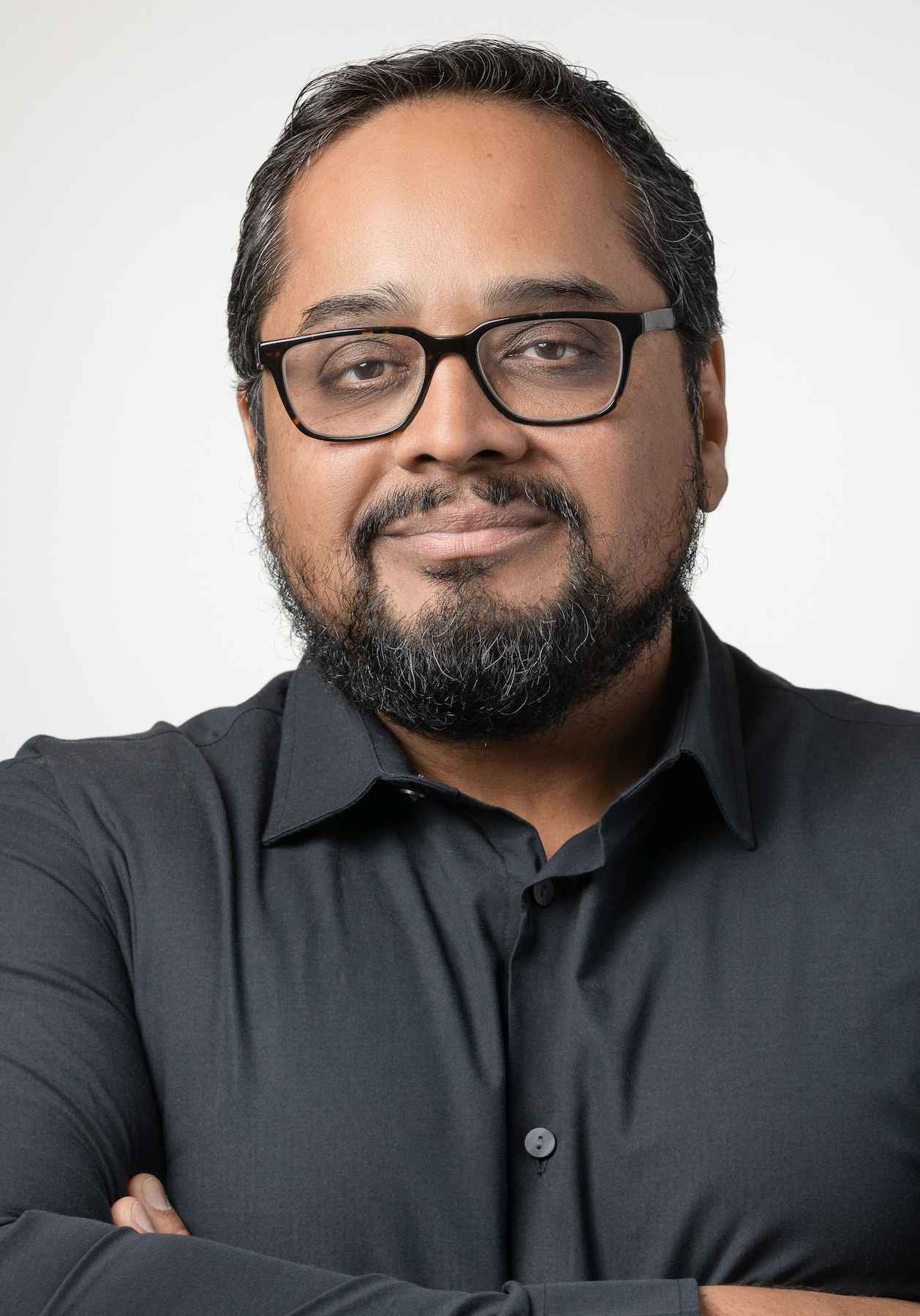
Founder & CEO
A.M. Bhatt was born in India and came to the United States with his mother when he was six years-old (his father had come three years prior to study engineering). For more than six years, he and his mother lived as undocumented immigrants while his father stayed in school to maintain his student visa. A.M. has a personal understanding of how students and adult learners from different backgrounds engage with established systems that tend to be mired in traditional or out-dated modes of thinking. He is committed to helping individuals develop their sense of self and community – equipping them with the technical skills they’ll need to launch or grow a career while, at the same time, empowering them to become agents for humanity-centric change in the world.
A.M. created nonprofit DAE to bridge the gap between corporate America and the realities of underserved communities, using education as a vehicle for social justice while nurturing underrepresented youth with no-cost tech programs and access to digital career and life skills. He also founded U of Next, is on faculty in the University of New Haven’s Graduate Psychology Department, and has 25+ years of advising corporate executives and entrepreneurs. Past clients include Pfizer, Facebook, HAI Group, Siemens, Novartis, Deutsche Bank, United Rentals, Yahoo!, American Express, and many others.