

 Apple Podcasts

 Spotify

 Amazon Music

 iHeartRadio

 Pandora

 Castro

 RSS Feed

 Audible


In this episode of EdUp L&D, Marnie Stockman and Nick Coniglio discuss the transformative journey from education to entrepreneurship, drawing inspiration from the popular show Ted Lasso. They explore the importance of self-reflection, personal growth, and creating value in one's career. Marnie and Nick share insights from their new book, 'The Business of You,' which encourages individuals to take charge of their lives and careers. The conversation emphasizes the significance of leadership, resilience, and the challenges of leaving stability for entrepreneurial pursuits.
Resources mentioned in this episode:
Guest Contact Information:
___________________________________
Episode Sponsor: iSpring Solutions
🎙️ Huge thanks to our friends at iSpring Solutions for sponsoring this episode of the EdUp L&D podcast! 🙌
If you haven’t already, be sure to check out the iSpring Learning Exchange Community — a vibrant space for creators, educators, and L&D pros to connect and grow.
Grateful for the support and excited to see what our community creates 💡
Thanks for tuning in! 🎧
0:00 Welcome back to another episode of Ed Up L&D, where we dig deep into the world of learning, leadership, and career transformation. Today's episode is an awesome one because I'm joined by two powerhouse guests, Marnie Stockman and Nick Cornelio. Between them, they have been high school teachers, Ed tech leaders, entrepreneurs, and now authors. Their latest mission? Helping people lead themselves and others with the same heart, humor, and humanity that's made to have Lasso, a global sensation. We talk about why they walked away from stable corporate jobs to build something of their own.
0:43 How their book Lead It Like Lasso became a leadership framework for life and business, the launch of their brand new book, The Business of You, and how to truly become the CEO of your own life. Plus, the lessons they've learned about risk, resilience, running your life like a business. Whether you're a leader looking to level up, a teacher thinking about making a big transition, or just someone who needs a little push to finally take that leap, you'll find so much insight and plenty of laughs in this conversation. Let's dive in. Hi, we're ispring, an international team of e-learning enthusiasts who help more than 60,000 clients across the globe succeed with better online learning.
1:30 Our two flagship solutions are ispring Suite and ispring Learn LMS. Ispring Suite is an intuitive, all in one authoring tool for creating engaging e-learning content, and ispringlearn is an innovative online training platform for onboarding, upskilling, and certifying your teams. We also provide tons of free resources for aspiring and experienced e-learning professionals, conduct weekly webinars with top industry experts, and organize annual e-learning conferences, challenges, and championships. We'd be happy to get to know you and pick a solution that fits your needs best. Go to www.icepringsolutions.com to learn more about us, download our resources, and connect. Hello everyone, and welcome to another amazing episode of Add Up L&D.
2:25 My name is Holly Owens and I'm your host and I have two amazing guests with me today. I have Marnie and Nick, and they're going to talk about all things leadership leading it like Lasso. But first, before we get into all the details about that, I would love to start with you, Marnie. Tell us your story. How did you get here? And then we'll pass it off to Nick so he can share his as well. Yeah, absolutely. So I started out as a high school math teacher. So in the land of folks transitioning, I definitely did. I made that happen, went into administration, and there I found myself using an assessment platform for the school system I worked for, and that assessment platform decided that maybe I should come run customer success for them. So I landed in the world of edtech that way. So as you know, when you leave the classroom, people say you go to the dark side when you go to the board office, and then when you leave the board office and go to a vendor, that's like the double dark side.
3:26 I can tell you I love it here. And and that is actually where I met Nick. So the company that I worked for when I landed on my very first Zoom call of the support team, Nick was running the support team. And as a secret side note, that's not so secret in the company, everyone put in tickets to clone Nick because they all wanted another Nick on the team. So I knew I was walking into a superhero when I met him. So I'll let him take our story from from there, because our paths are very parallel from there. Yeah, parallel, but they were very different from the beginning. So I was, I was a programmer, I was computer science major, I was a programmer. I was that guy who sat in the corner office with his doors closed, drinking 14 Cokes a day, not talking to anybody. But eventually I, I broke out of my shell. I, I went into consulting from a technology perspective and landed in Ed tech just like Marni said. And not only did I run support, I also ran the engineering team of what is now Power School product. But really our, our paths intersected at a point where we were working for a small company at the time. And we kept on getting acquired and acquired and acquired. And at some point, yeah, absolutely, absolutely, very old.
4:51 And Marni was responsible for customer success. Like she said, I was customer support. That was one of my responsibilities. And we kept on getting asked to do so much more with so much less. They were. They kept paring down our teams, smaller, smaller, smaller, all at the same time saying, hey, our #1 core value is raving fans. And Marni and I kind of looked at each other. We were asked to come up with these plans, which we did. And we were pretty successful at it. We're like this, this clash, this, this stinks. This is no fun. There's no fun at all. And at that point, we decided to what did, what did we say? What did I say, Marty?
5:32 So Nick said we should start a company to see if we can start a company for one and see if and run it so that our employees and our customers never feel the way we feel right now. And that's exactly what we did. Yeah. Yeah. Wow. And Marnie, I was a high school teacher. I taught government, so we have a similar background. Yeah. And I also fell in love with that tech. And I didn't jump into that tech until recently. I kind of stayed away from the dark side a little bit. But now. But now I'm making that transition out on my own. Yeah. But I was. Yeah. It's just.
6:13 It's just, it feels like the right time. It feels like the right time. You know, they say it's never a right time to do things, but at a certain point I feel like I feel it like even when. You're ready. You will never. Be ready, yeah. Yeah, like Nick said, I mean, he and he said we should start a company to see if we can. And because we were working for the largest Ted tech company in the world, we had to build a a company outside our space so that we could eventually come back to the world of education, which is part of our parallels with Ted Lasso, you know, born in a strange land type of thing. Yeah, absolutely. So tell me about the business, tell me about the lead it like Lasso book and all all the different things that you're doing.
6:57 Share with their audience like how how you support them. I want to hear it from both of you. Give us the give us all the goods and the details. I think Nick will start with the lasso part of it, and I'll hate the second part of it because he's the one that found Ted Lasso and frankly hooked us all. Yeah. So the short story is when we left at tech, like Marnie said, we ended up starting a business and it was the world of IT technology providers. We provided a customer success platform and we didn't really want to do that for the rest of our lives, but we did. We did it for a couple years and we started from scratch, we scaled it, we built it to a multi $1,000,000 business and we exited to really pursue what we wanted to do, which was that honestly to help people become the best versions of themselves. We, we are fascinated and we, our passion is, is truly personal development and how to help people do that. So we have we have large plans to do that, but we knew what we needed to start somewhere.
8:01 So that somewhere ended up being writing a book called Lead it like Lasso. And for those that have not seen the show, it's it's, it's Ted Lasso. He's an American football coach who goes over to the UK to, to coach European football, which we know is soccer. And he's truly a fish out of water. But as I was watching that show while we were building that business, I'm, I'm watching it, I'm like, my God, I know Ted Lasso. I work with her every day. And it's Marty Stockman. She is, she is goofy like him. She's positive. She, she is all about helping people become their best versions, which is our passion.
8:42 And we thought, wouldn't it be great to relate kind of the, the lessons that we learned, our personal approach to not only personal leadership, but building a business to the stories and the personal development arcs in the show. Because we love to tell stories and we, we think that's the best way to learn. And that's exactly what we did. And, and we didn't have really any idea because we've never really written a book like that before, what would happen. And Fast forward, I mean the book has sold over 40,000 copies. People we've met all. Sorts of interesting people, yeah. It's been such a fantastic experience for us.
9:25 That's great, that. Part of our journey, we, I don't think we expected to last a full year before or you know, a year plus it that launched October 2023 because we always knew we wanted to get back to find a way to help educators and students. One of the reasons that Nick feels like I was Ted Lasso. I mean, aside from the goofy, that'll be obvious. It was that I, he knew that when I interviewed to be a teacher, that when I asked my philosophy of education, I said that I think it's every teacher's responsibility and privilege to help each student become the best version of themselves. Which Ted Lasso said years later, right? It's not about wins and losses. It's about helping each person become the best version of themselves.
10:08 So with that in mind, we were looking for a way to be helpful. So as we started talking with all of these folks that had used our the leadership framework and lead it like Lasso that had been successful, had been on our podcast, etcetera, we really started seeing parallels, not just in our own lives. We built Lead it like Lasso around the parallels and frameworks. We'd seen a long personal development, but we really started noticing that the folks that were successful, whether they realized it or not, were running their life like a business. And if you hop on LinkedIn for half a minute, you're going to run across, especially now that this is being said out loud so that all of our phones hear it, you're going to run across somebody that says you're the CEO of you.
10:52 You need to run your life like a business. You need to, you know, be the CEO of yourself. But where they get it wrong is a lot of people, especially kids today, when they think of ACEO, right, they think of somebody that's just making all these big decisions and everything else just happens for them. They don't realize that if you're going to be the CEO of your own life, you're the head of your own HR, marketing, finance, right operations. Accounting, bookkeeping, All the things. All the things. All the things. So how can you do that in a way that helps you stand out and differentiate yourself in an extreme, extremely crowded world of automation and digital everything?
11:35 And so that is actually on August 15th, we're launching the Business of U book which addresses exactly that. So. That announcement, people. Big announcement. Very. Excited about that? Yeah, by the time this drops, it will already be out. Perfect. So you can hunt this down. Yeah, on LinkedIn, where Blue the business of you, when you get to the end of the book, you'll see a secret about what blue is. So. Oh, cool. Well, Marty, I love your LinkedIn post, especially today you did the about the emojis. I'm really trying to think of some good stuff to to comment on that. And you know, one of the things I like to ask, especially you've been in Ed tech, you've, you know, programming, teaching, you know, supporting client success stuff.
12:20 So, you know, what are you bringing from that world really into what you're doing now? Because I think sometimes people feel stuck. They're like, you know, I think that one of the main barriers for me was like the constant paycheck and the health insurance. Those are the 2 main barriers that people think about when they're going out on their own or doing their own business. So also too like not the support of like a team, it's just you 2 or whoever is you're hiring to support you in the contract roles or, or things like that. So I would love to hear your perspective about what you're bringing with you, but also how do you deal with that, like that shift from kind of consistency to kind of the roller coaster ride that is being like an entrepreneur? We're probably good people to ask on that only because we're both pretty risk averse, so it's not like we're like woo Hoo. Let's give up all this.
13:11 Nick, what was your first thought on that? Well, I, I think for one, I know I used to identify kind of, you know, my title. I was, I was, I was promoted a lot, you know, and I never really sought out leadership positions. And, and to me, it was all about my identity was my title, vice president, what have you, what you know, you know, leader of development team, so forth and so on. And I'm going to answer your question, Holly here. But ultimately what I realized is how I did anything is how I do everything. And, you know, understanding what drove me personally is really what grounds me in almost everything I do. And, you know, at the core of what I what I did as a programmer, I was a problem solver.
13:56 I love to figure things out and you know, moving on through this entrepreneurial journey that is always been my center, my focus and everything that I do. While my title might change from a, a very consistent job in corporate America to an entrepreneur, it's all still the same to me. It's about helping figure out a problem. It's, it's, it's helping others problem solve for themselves and how to become that. And I think one of the things that that we have learned is that there's a lot of ups and downs with, with entrepreneurship. I mean, we've, we've had moments where we're like, what in the world are we doing this? This is, this is not working at all. But what, what we do find is that if we're centered and we, I use the word centered, but we, we actually use kind of our core values as our bumper pads to make sure that the decisions that we're making keep us on track and we think about the, the future.
15:03 And that's been critical to us because whenever you feel down, you know, you seem to get lost in the noise quite a bit. You know, this is another roadblock. This is something that is is too risky. Are you still centered on what makes you what makes you tick as a person has been really important with dealing with those ups and downs. Marty, you can probably that answer much better than I just. Well, that was good. No, that was actually good. And I want to, I want to comment that a lot of what you're saying is resonating with me because, you know, at a certain point you just get to you're like, what's the, what are the benefits here? Like what am I really leaving? Like toxic work cultures, you know, like paycheck and health insurance. Yes, but a lot of people can get health insurance off the marketplace.
15:48 They can get health insurance through their spouse, you know, and then the, the consistent paycheck, I find like that is something that I'm going to miss. But I, I, I, I'm so much more motivated to work for myself and do the things that I'm passionate about and help people in a way that is different than actually just like just doing the mundane work of the same thing every day. It's just not, it's not invigorating, it's not inspiring. It's just like, and I'm, when we're working for somebody else, we're helping them achieve their dreams. It's not necessarily aligned with our dreams and values. I mean, from a very tactical point of view, I think doing the research so that you understand and plan for like, what is the worst case scenario?
16:34 Like we jokingly laugh. I play volleyball with my adult children on Friday nights. We always go to the pub beforehand and my husband will always say like Marnie's happy to waitress right? Like like the backup plan is all right. So if I have to waitress for health insurance, I can do that And I haven't had to waitress for health insurance. But just so you know, I'm a really good waitress should push come to shove. So I did you know to in the tactical matter of paycheck and health insurance, especially if you have a family, you do have to think through. But if you start thinking of like this has happened, I don't have a paycheck anymore, I don't have health insurance anymore, solve that problem. Like Nick said, he's a problem solver. Work the problem and figure out several different routes and I bet you can find a way to make it happen.
17:19 So that's a tactical piece of it. The other part of your question was what did we bring from who we were to where we are now? So I went from high school math teacher to running customer success to being the CEO of our software company. And like Nick said, we built a customer success platform for IT business owners. So I was typically standing in a room of 250 men doing a presentation. And I would say I started out as a high school math teacher. So you're probably wondering why you should listen to me. And they all would, like, sit up a little straighter, afraid they were going to get detention. But they kind of nodded, like, yeah, I am kind of wondering. And I would say I sold precalculus to 16 year olds.
18:01 So you can bet I can help you sell customer and the importance of it. And they're like, yeah, all right, I'm listening. So Nick mentioned the phrase how you do anything is how you do everything. When we realized that teaching is really selling and customer success and marketing right then to bring that into the world of Ed tech was not hard. To bring that into the world of it was not hard because it's all about helping others. Again, customer success is about helping customers get value from whatever service you're suffering, exactly what you're doing in the classroom, right? It's all of the same pieces. And now we are helping individuals figure out how they bring value to others so they can pick a career that does light them up and fire them up every day.
18:50 And they're delivering their they're getting their dream accomplishing their goals, not somebody else's. And their goal might be working for somebody else doing something else, which is a great goal, right? But you all you need to know that for yourself. Right, I think it's really about reflection too, like reflecting on like where, where you're at in life. It's, it's always different. And I'm, I'm going to tribute this to middle-aged, becoming a middle-aged woman that I'm just like questioning and, and having these conversations with myself. Like, is this something I want to do for the rest of my life? And in relationships, we do this too. Like is this somebody who I want to be with for the rest of my life? You know, those kinds of situations and thinking about like, what am I?
19:30 What am I doing? Like, what am I actually doing? Like, why am I not getting up excited to go to work? Like definitely having the Sunday scary's definitely having like those thoughts of like, can I just call out today and, and take a day for myself? And I was finding too that, you know, working, I've been working full time, you know, for a very long time, like almost 20 years. But I'd always have these side things. Like I teach adjunct in higher education and I know a lot of our listeners do other side hustles, like I'd start the podcast and some other contract work and stuff. And I found that my main work, and I'm OK to admit this now, it was distracted by those side hustles because that's where I was getting, where I was feeling. My joy from your passion.
20:13 Yeah, yeah, that's where my cup was getting filled from. It's like the full time job became the side hustle what it wasn't supposed to be. You're dialing in on that one. Not not people weren't getting the job done, but it wasn't passion driven. Yeah, it wasn't really passion driven. And as much as I want to help people and like, you know, through working in a tech, I definitely understand about the success, the programming aspect and just all these different things. I was just like, what am I doing, you know? So it's. Funny and that's I just say I, I think, you know, we talk about self reflection all the time and, and I'm imagining for you, Holly, yes, that that kind of got you where you where you're going right now. But what we find is asking those questions is really awkward and it's hard. And because you don't a lot of times you don't like the answer or it's, it's not it's scary.
21:03 Yeah, it's risky. And you know, our, our we talk a lot in our new book, the business of you, you know, one of the subtitles ask the right questions. And so many people avoid those questions because they don't really want to address and deal with the answers that they know are honest and true. And I think that's a big hurdle for people to get over. I agree, my puppy is scratching out the door. So you what you have to do to the same point around self reflection, I think it was Harvard Business Review did a study, it showed that self-awareness was the number one indicator of leadership success. And Nick and I talked about and lead it like last said, that everyone's a leader, right?
21:44 In a classroom, a boardroom, a locker room, a living room, you have to lead yourself 1st. And the only way you can do that is to do that self reflection and understand what's important to you. Like #1. Yeah, absolutely. And I think at at this point, and I know like I said, a lot of our listeners are probably questioning this, maybe not so much people at the beginning of their career because they're just trying to break into something. But like, you know, what do you, what do you want for the rest of the time? You know, where do you really see yourself, you know, in the next 5 to 10 years not getting too far away from the present moment, but just figuring out like where you want to be. And I had a tough decision to make.
22:26 Like you're saying, it's very scary to figure out where you want to go and ask yourself the hard questions like can I leave my full time job? Well, basically I have a conversation with leadership and it was basically, sorry, choose between my side hustles, which are my true passions or do 100% full time and the side hustles won, they won. Approach side hustle. And I'll, I'll say something kind of circle back to the, the original question about, you know, the taking on entrepreneurship or, or getting unstuck and, and moving on to something new and something different, avoiding burnout, all those same things.
23:07 The biggest shortcut that we have learned through our experiences are is all about creating value for other people. And you know, we have something in our new book, The Business of You, where we talk about learning and development specifically, and we talk about two ladders. We talk about the, the credentials ladder versus the value ladder. You know, the credentials ladder, you know, where you're learning to get certifications or you know, build certifications or awards or something like that, which I was stuck in myself at some point during my career. Versus the values ladder where you're learning to build value for other people for, for to create opportunities and all. Any success that both Martin and I have had individually or together has all been about figuring out ways with our message, our passion to create value for other. And I think the more people people keep that front and center of their mind with anything that they take on after all their self reflection in terms of what they want to do. I think that's the greatest shortcut that any entrepreneur or or any person looking to change jobs can take is, is using that as kind of the frame and reference with everything that they do, from learning to interacting with other people to networking, the list goes on and on. I can honestly say that I have
24:37 two master's degrees, a bachelor's degrees, a certificate in distance education, leadership. You know how many times I've been asked to show those? Yeah, 00, yes, 0 * 0 times. And I'm like, I spent all this money, like I have all this experience now. Like where does you know, this is a conversation. We're differently. Where does experience equivalent to what a degree is? Yeah. Oh yeah. Yeah. It's very different in this world today. It is. It is. We talked to a lot of colleges who who would have the same conversation with us around enrollment cliffs and and problems that they're having because that there seems to be a sliding scale now in the world of college and career readiness.
25:19 Yeah, absolutely. So for the people in the audience and, you know, kind of wrapping up the episode a little bit, I would love to hear three pieces of advice from each of you. And of course, we're going to have everything and shoot on where to get lead at light last. So where to find Marnie? Where to connect with Nick and these amazing 2 humans and their new book the the the. Business of you. The business of you. Sorry, I also saw something on LinkedIn. It was the What did it say something about a the work in? Work in progress. I want to ask you about that. What does that mean? That is fun. That is fun. That is our we call it our satirical sidekick to it is it is a bit of a snarky newsletter for folks that are stuck need some career advice, but maybe aren't just listening to the same message.
26:13 You need it from a different angle where you're like, oh OK, I felt seen on. Yeah, I love it. I was like, oh, they didn't spell it wrong. That's awesome. I love that so. We have a great time with that. Yeah, that is, it is fun for us too. That is, in our new company, having fun while we do it is one of our core values. Yeah, you should be having fun. I mean, it's your own things, your own dream. You should be making it as fun and exciting as possible. Yeah. So three pieces of advice for the listeners about transitioning into this world like you, the teaching you've been at the programmer, you, you, you had all the titles and now you're shifting into entrepreneurial world, doing your own thing. Like let's start with you, Marty. What are three pieces of advice you would give our listeners on how to actively do that?
27:00 So the first thing that comes to mind is aside from self reflection, like honestly, we've already said it, but I have to say it again. Do the work to do the self reflection and then, you know, figure out how you want to learn and grow. What is the next thing that you want to learn? What challenge that is? If you looked at LinkedIn, it looks like every seven years I seem to have a. Like you have an itch, you have an itch every seven years and. They seem to be shorter now, and now Nick and I are a year and a half in and we're already, you know what? But we kind of knew that was coming. But figure out what challenges you and how you like to learn and grow and do one of those things. Next, pick the thing, learn it, do it, grow. I think that's how folks will grow. I think the other thing I'll say is advice is right now it's easy to do.
27:51 Figure out your pet peeve. This sounds crazy, but figure out your pet peeve, why it's your pet peeve. And then use that to say that means I would be horrible at this job and it means I might be great at this type of work because that unlocks a lot of things we talked to. I mean, at this point, hundreds, maybe thousands of folks, many at my kitchen table, more zoom in mentoring. And by golly, that question right there shakes a lot of people a little different. Yeah, it really makes you think, right? Like, what are the things that bother me the most? Yeah, that's. Why should I be doing that? Yeah, I have whole stories on that, but I'll let Nick give his advice.
28:37 OK, yeah, first on, well, I'm going to say self reflection too, but I won't even count that one because Marnie already said that. You know, I think finding your Diamond dogs to bring it back to Ted Lasso, we call it personal board of advisors when you, when we, we talk about, you know, the business of you, but those people that will mentor you, advise you and challenge you, your, your challenge network, it's critical. I mean, I think it's, it's amazing how often we lean on other people. We need other people to kind of bring out those tough questions that we were talking about earlier. So that that's definitely one piece of advice.
29:18 The other, the other thing I would say is from the standpoint of anything that you take on, we often say you can't lead others until you lead yourself first. And I think so many people, there's so much noise about their out there in terms of tactics about how to grow personally, professionally, that people just jump straight into that, you know, thinking that this is how I should do something. You need to focus on yourself 1st, 100%. You know, I suffered greatly from imposter syndrome because I acted. I, you know, I acted how how I thought I was supposed to act instead of being true to myself.
30:02 And it led to a real sense of being a fraud because I wasn't being who I was right out of the gate. That's a big one for. Our listeners too. There's a lot of imposter syndrome floating around out there. It's and it's horrible too, isn't it? It's. I think it's terrible. Yeah, it it really does. And, you know, to rewind back 2520 years ago, I, that was the, the biggest, the biggest thing that still causes me stress to this day is thinking about, you know, I was really a fraud. And I I kind of was because I was acting how I thought other I was supposed to act instead of who I was treated. Myself, kind of like doing what the parent is telling me to do so you can get that approval when really in hindsight, it's like I'm grown now, yeah. What was going along with what your friends are doing in school?
30:51 Right. There's like, so many books as this plays out. Yeah. No doubt. And then last, I'll just end it with just embrace the journey, right? It's you know, growth isn't it's not linear. I think trust the the same each step, you know, understand who you are there. We all learn. And I mean everybody says it. You know, the the story about the parents says, what did you fail at today? Failure is feedback. It's growth, I think. I think having a mindset that that you're not going to be successful with everything is, is so critical because with that, without that mindset, you're, you've already lost.
31:32 You've been defeated for sure. That overnight success is a complete anomaly and it is completely a facade. It is not something that happens overnight. And when it does happen for people overnight, you know, good for, great for them. That is not the typical path. Yeah, takes 10 years to make an overnight success. They think it's. 100 percent, 100%. Well, thank you both. We'll have everything in the show notes so they can get your books, connect with you, have conversations, go out and see your business, all the things that you're doing. I really appreciate the insights, the transparency about what it's like to shift from stableness to kind of in this role where you're like, oh, we might do this today or we might do that.
32:16 I think, I think people are scared. They really are scared of leaving us to stability. But you 2 are proof that leaving that stability leads to growth and leads to things where like, I can just see it in both your faces. You're so happy and so passionate about what you're doing that there's no substitute for that. Like you really, you really feel great. And you know, that impacts all parts of your life, that impacts your family, that impacts, you know, yourself, all the different things. So I'm so grateful for both of you for coming on the show and sharing your experiences. Well thanks for having us, hopefully you feel the same way I do. I tell my husband like I don't ever want to go back to work even though I work 4 hours in a day. Yeah, I don't, I don't mind that.
32:57 I do not mind that part because I'm just, I'm, I'm so focused. You're so focused now. And yeah, and it's. A lot more like play. Yeah, exactly. Well, thank you again for being on the show. Thanks so much, Ollie. Thanks for spending a few minutes with Holly. She knows your podcast queue is packed. If today's episode sparked an idea or gave you that extra nudge of confidence, tap, follow or subscribe in your favorite app so you never miss an episode of Ed Up L&D. Dropping a quick rating or review helps more educators and learning pros discover the show, too. Want to keep the conversation going? Connect with Holly on LinkedIn and share your biggest take away.
33:38 She reads every message. Until next time, keep learning, keep leading, and keep believing in your own story. Talk soon. Hi, we're ispring, an international team of e-learning enthusiasts who help more than 60,000 clients across the globe succeed with better online learning. Our two flagship solutions are ispring Suite and ispring Learn LMS.
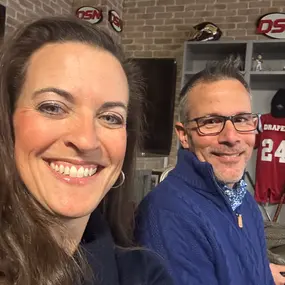
Co-Founders
Marnie Stockman, Ed.D., and Nick Coniglio are EdTech entrepreneurs and learning leaders who believe the most important project you’ll ever work on is you.
Marnie started as a high school math teacher, earned her doctorate in Educational Leadership, and went on to lead learning and customer success teams in the EdTech space. Nick brings 30+ years in tech, leading teams through four successful exits and building platforms that help people grow. Together, they co-founded and scaled a software company that sold for eight figures in just three years.
Now, they’re focused on helping students, educators, and professionals run their lives like a business with The Business of You—a new book and soon-to-launch personal development app that puts leadership in learners’ hands.
They co-host two leadership podcasts where they mix real-world experience with practical insights for anyone looking to level up. Marnie’s in Maryland learning pickleball, Nick’s in Georgia chasing a golf handicap, but their work always comes back to one thing: helping people lead themselves first.