
 Apple Podcasts

 Spotify

 Amazon Music

 iHeartRadio

 Pandora

 Castro

 RSS Feed

 Audible
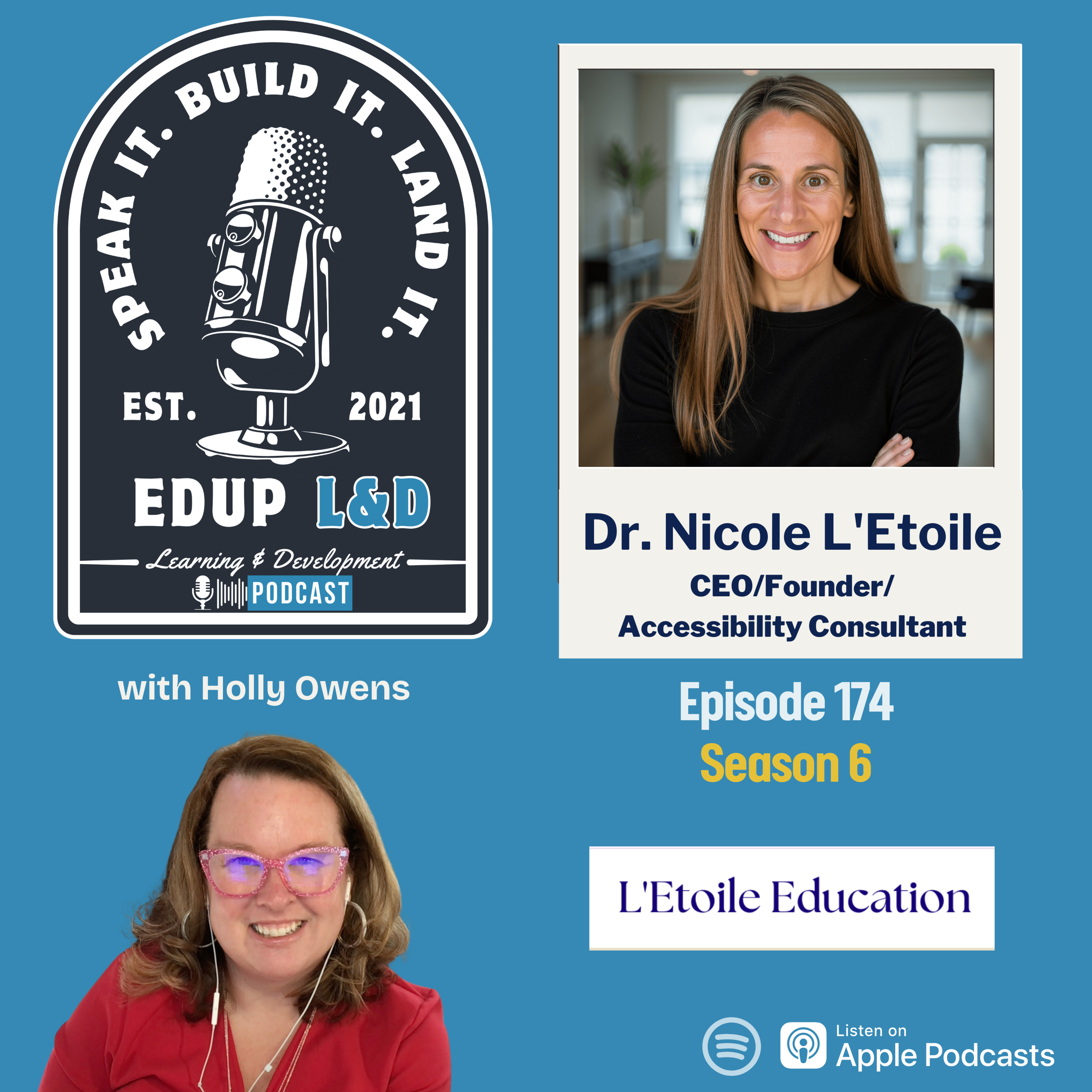
In this episode, Holly Owens and Nicole L'Etoile discuss the critical importance of accessibility in education and corporate environments. They explore the need for proactive approaches to accessibility, the challenges faced by organizations, and the upcoming federal regulations that will impact compliance. Nicole shares insights from her accessibility cohorts and community initiatives, emphasizing the importance of networking and continuous learning for educators transitioning into accessibility roles. The conversation highlights the resources available for those looking to enhance their knowledge and skills in accessibility, as well as the significance of maintaining one's teaching experience in the professional journey.
Resources mentioned in this episode:
Guest Contact Information:
___________________________________
Episode Sponsor: iSpring Solutions
🎙️ Huge thanks to our friends at iSpring Solutions for sponsoring this episode of the EdUp L&D podcast! 🙌
If you haven’t already, be sure to check out the iSpring Learning Exchange Community — a vibrant space for creators, educators, and L&D pros to connect and grow.
Grateful for the support and excited to see what our community creates 💡
Thanks for tuning in! 🎧
0:00 Hi friends. It's Holly Owens and welcome to another fabulous and proactive episode of End Up L&D. And I say proactive with purpose today because we are diving in deep into accessibility with none other than Nicole Latrois. Yes, she's back. If you missed her the first time, go ahead and hit rewind after this because Nicole is the accessibility expert you need in your network and possibly in your LMS. Since our last chat, she's been on a mission, running accessibility cohorts, repping the world for WUKAG 2.1 compliance, and launching A widely popular LD Slack community that's become the space for accessibility pros and newbies alike.
0:51 In this episode, we're covering what's coming in 2026 with the new federal ADA Title 2 regulations. Spoiler alert, it's a big deal. Why accessibility needs to be baked in, not bolted on. When new IDs and corporate teams. What new IDs and corporate teams get wrong and how to fix it. How to get involved in her thriving community of accessibility advocates. Whether you're brand new to digital accessibility or you're the designated can you check this contrast person on your team, Nicole drops knowledge you can use right now, and with her usual mix of insight, practicality, and passion, it's time for you to grab your coffee or matcha and let's dive in.
1:39 Hi, we're Ice Spring, an international team of e-learning enthusiasts who help more than 60,000 clients across the globe succeed with better online learning. Our two flagship solutions are ispring Suite and ispring Learn LMS. Ispring Suite is an intuitive, all in one authoring tool for creating engaging elearning content, and ispringlearn is an innovative online training platform for onboarding, upskilling, and certifying your teams. We also provide tons of free resources for aspiring and experienced e-learning professionals, conduct weekly webinars with top industry experts, and organize annual e-learning conferences, challenges, and championships. We'd be happy to get to know you and pick a solution that fits your needs best.
2:30 Go to www.icepringsolutions.com to learn more about us, download our resources, and connect. Hello everyone, and welcome to another fantastic fabulous. I'm going to stay proactive because we're talking about accessibility today episode of Ed up L and DI am happy, grateful, pumped. We're pumped to welcome back my friend Nicole, who is going to tell us all about accessibility. But first, Nicole, tell people who you are, what you do. You've been on a previous episode. They need to go back and listen to it. But tell us all about you for those in the audience who have not met you yet.
3:11 All right. Hey, everyone. Hi, I'm Nicole Latwal. It is great to, you know, be back here with you, Holly. I'm just so excited. We have so much to catch up on. It's been just over a year and a lot has happened. I'll, you know, say that it's been busy in a good way. I can't complain with my company Latwal Education just growing the course, making online content accessible for all. We're now heading into, we're in the third cohort, kind of the 4th. We had a side one happen and we can talk about that a little bit that just popped up. And so we're we're coming into the 4th cohort this October and just really excited. And with that, I've had a few clients along the way doing audits for learning management systems and courses, getting ready for the new ADA title to ruling, getting clients for that. If you don't know people, something federal's coming out that's going to impact you, pay attention. Big deal.
4:07 So anyway, yeah, so, so it's been good supporting some clients around different spaces, you know, coming out of education this past year, the last six months and and working with organizations at local and state agencies and governments too. So a little bit of everything. Yeah, I've been watching you. I've been in all the stuff that you've been doing. And I'm like, like, where first of all, where does she find all the time to do that? And second of all, I'm like, this is such an important topic around accessibility because people are still Nicole, and I know this bothers you just just as much as it bothers me, are taking accessibility and they are not putting it as more of a proactive approach in their organizations or institutions.
4:48 They're more reactive to it. I feel like what's coming down the line with the federal regulations will hopefully get people to have a proactive approach. But before we dive into all the stuff you've been doing, can you tell to us a little bit about why it's important for accessibility to be something that's proactive in a company rather something rather than something that's reactive? Well, it's less painful. We'll just start there, right? Yeah, it'll be a whole lot it. It doesn't seem to be that it's a whole lot easier. It's a it's a lot less painful in terms of, yes, learning is hard. We have to learn how to build accessibility, but it's harder when we have to go back and and retrofit and rethink and rework because we know. It's time.
5:35 It's time, but it's also like you put your effort, you know, you put your heart and soul into something you could find. You create it. It's your baby. You've you've put all this energy and to have it feel as if like there's something wrong with it when there's not. It's nothing that is wrong with it. We're just out, you know, looking for ways to improve it so that all can use your beautiful, amazing content. But it's harder when it's already done and designed to then look back. Especially folks who've been in this for a while where they have catalogs of courses and it's overwhelming to think, you know, where do I start? Do I go back and fix all this? Most people get overwhelmed with it because they want it to be good. That's because they do care. So when they retrofit and they come back after, they think I got to go back and fix everything now, yeah. So once you see it, you can't Unsee it, I promise. So yeah, so I think that's why it gets harder. Yeah, yeah, I definitely agree with you too. And just, you know, I just want to start off with that question right off the bat because I feel like it's, it just bothers me that it's still not a thing to people. It's still just like this, this checklist item that we'll worry about later.
6:43 And I really feel like people shouldn't, accessibility shouldn't be an afterthought. Like you said, it makes things easier. It, it really helps everyone. It's just not with people with disabilities. It's people who, you know, like color contrast. Oh my gosh, that's the one that bugs me the most. So I'm being honest when I see things out on LinkedIn or I see, you know, I am judging you. If you're using like yellow backgrounds and you're using like low contrast the colors, it just that kind of stuff is just so easy to fix. It's. You know, like kind of look and, and think I don't have time to learn it. So I, you know, we've got new designers, we will get it.
7:23 I know we're going to get into this, but I have a new Finder right now who's fantastic putting in all this work into the course that we're teaching and making accessible. But they're also trying to learn the tool at the same time while learning to be a designer. And I give them kudos for saying I'm going to learn it from the start, But you can see the learning curve there. And they're just said to me, it was almost like I just wanted to reach across the, the zoom and be like, no comment, I'll help you, You know, like maybe I should just build it and then I can go back and worry. I was like, no, no, no, we're not doing that. We're not doing that. We're not doing that. So I can see if you're not, you know, if you don't have the guidance which we can get into, like I have this big grand idea for a mentoring program next year, whatever. Like, I just feel like we need to, you know, do something because we can't keep doing what we're doing.
8:07 Well, tell us about all you've been doing because you've been doing a lot. You've had a lot of great initiatives that's happened in the past year, including your accessibility cohorts, working with Luke Hopson in the Instructional Design Institute. So tell us what you've been off to. What have you been doing this past 365 days? You asked me where you getting all this time? I remember sitting here a year ago too, talking to Doctor Luke Hopson going how do you do all this? Where do you? Right. And now I'm going, oh, I kind of get it now because. I understand. Drive and yeah, so, yeah, so the the course launched as part of Instructional Design Institute as part of Idi and it was kind of a branch off of that. And we had our first cohort in January of this year 2025 almost said January 2020.
8:53 Five. I know it's so close. It's like. 2025 and we've had a mix of folks coming in from higher Ed we've had some K12 more of the virtual online space K12 but higher Ed K12 but also corporate nonprofit folks who are consultants themselves who want to increase their knowledge so they can offer this to as a service to their clients. We've had folks who are overseeing as a director of curriculum that are working on new launches of Ed tech programs that are trying to up, you know, upskill and accessibility. So we've just had so many different folks and and new designers is what I'm really excited to see.
9:33 I love hearing that, by the way. Me too. That's. Great. Yeah. Me too. Yeah, it's great to have a one. Yeah. So like what are you seeing? Like what are some of the things that you're seeing with these cohorts or people coming in where, where are they kind of lacking in the, the knowledge of accessibility or what are some of the things like they're just, I wanna know about blank here because it's probably a question that a lot of our audience members have too. When they don't follow you on LinkedIn, they need to follow you because you give accessibility tips as well. But where do you kind of see where it's common across that everybody's asking about this or that? As we know everything varies so and as the cohort has gone on, we, you know, we started out with I think I had 10 people, the 1st 113, the second one we got up to, you know, 15.
10:21 This one it's growing and the levels as it goes on have I've, I've gotten more advanced and newer. So we are seeing an increased level of folks who have been doing this on their own right, self teaching, working through it and folks that are just new to it. So what I see is someone who hasn't explored the web accessibility guidelines at all. As soon as I start using Wu CAG and putting out the numbers and we start saying Wu CAG 2.21, you know, like sometimes it's like that is I don't want to know that just yet. We get a, a glimpse of there's a lot to learn here. And then I have someone in my cohort who's Wukag specialist, that's in their title, who's just like, give me your process. How are you auditing?
11:09 And I need to do this for my job and I'd like to learn from you at the same time. Yeah. So yeah, it's we're, we're really divided in. Skill levels are like and knowledge levels are really across the board. We. Have a big gap right now and it's like closing that and trying to get people to and meeting them where they are. And I do love that this is facilitated. I don't think I could ever teach or just create the self-paced and send people on their way because you to meet them where they are. I mean, we, we pivot, we're, we're using UDL universal time for learning in practice in this moment and being responsive. And I meet typically by Week 2, I can get a sense of where you are. So then I can start to target and kind of create a pathway that supports you while others are being supported in their pathway and hopefully they can work together.
11:56 And that's the beauty of a cohort, right? So, so it's just kind of like trying to figure out. So we've just got different, different levels all over the place We've got. Yeah, I I can see that. And I think it's, I think it's interesting too that you're getting people who have that actually in their title and that's their, their role in like you say, we don't know everything. We know a lot in terms of you're an accessibility expert. I know a lot about LND jobs. I don't know everything. So it's important to remain open to learn from those people as well, see what they're doing, ask them questions. Because while we remain an expert, we still have things to learn. One of the things I want you to mention is when's your next cohort coming? Because we're gonna, we're gonna include everything in the show notes for that.
12:38 Yeah, October 1st and this one is an 830 early AM Eastern Time. We've been that helps anyone in the because the EAA, the European Accessibility Act is also driving some of folks to the course and driving some of the work which has been helpful for us here in the States as well. And if you're out there listening, we're meeting 8:30 to accommodate the European schedule nice and early. Wednesday to me, 830. I'm about 90 minutes into my work day because I'm an early bird. Yeah, for some people, yeah. I was like, so I don't know how that works for your W coaster. If you want to get up at 5:30 and join us, we'd love to grab your coffee, grab your tea, whatever it may be. You could always go back to sleep. I don't know. Or maybe just start your day. Yeah, you become up at 5:00 AM or. Sounds good.
13:22 So we'll have everything in the show notes on how to sign up for that. What else are you doing? What else are there? Exciting initiatives are happening. Yeah, I feel again, there's a lot in terms of well, since we, you know, we started this accessibility LED slack and I say we because like I. Well, let's try. And I forgot about the Slack channel too. Oh, and there's 812 people in there as of this morning, and we just launched to. Get in there. And so, you know, one of the, it was one of those things, I was in a live session, I was in a webinar and I got to give a shout out to Lewis and the TLDC group over there because it was one of those sessions. I don't remember exactly what conference it was and I was watching someone or listening to someone present.
14:04 Again, not being an expert, I still go to everything to see what other people do, to see if I've missed anything, make some connections. And I was in someone's presentation, a little newer to accessibility and I was listening and I was like, we need a place for all of us to go regularly. Yes, I know these groups exist, but we haven't talked all about accessibility, access, you know, 24/7. We we need that. So I sent a message to, to two other people on LinkedIn. I was like, I'm going to do this. Do you want in? And they were like, yeah, what are you thinking? I'm like, I don't know, a couple of days maybe I'll post it. Not even you know this is how Nicole works Within 5 minutes Post it because I had the thought and I was like. Yeah, we're the same, yeah.
14:47 Here it's now it's fresh, get it out there and it apparent people says this is what a viral post is. I didn't know what that was at the time because I'd never had anything more than a 500, you know, whatever impressions. And so it grew and it got a lot of notice and a lot of people joined and we have some great questions in there, great conversations, sharing of resources. People are doing coffee chats. We started the Summer of Access webinar series, free series this summer with everybody there, you know, stepped up, took a session and yeah, we could talk about that too. So that's a new initiative that branched off of that. And we, we had three sessions in June, 3 or 4 in July, and we've got four more coming up.
15:31 So by the, I think by the time this comes out though, it'll have completed. But it was called the Summer of Access webinar series and we had a everyone doing things from, you know, audio descriptions to how to how to blind learners use the screen reader, navigating a course with MBDA, I don't know, we did keyboard navigation, all free, you know, anywhere from 45 to an hour sessions. And those are just people in the Slack group that said I'll do something, I'll do something. So I've just kind of put it all together and got it out there. And it's like your own little, it's your own little workshop series happening and the Slack channel generated that.
16:12 So networking is important, everyone. Networking is very, very. Important. Important. Will those recordings, will we be able to share those or did you? They're OK. So we did as a you know. OK, five groups with a slack. But to the they're cuz they're they're unlisted on YouTube and so if you get into the. Understood. Yeah, Yeah. So we'll get everybody into that. Slack groups, right? Every the thing I love about this most is and all they're doing the cohort and things like that is that most of it's free. It's like people don't understand that the resources that you need in order to become a quote UN quote expert and accessibility are free. It's not like you need to pay for something if you want more of like what you're doing with the cohort, you want more of that. Like the we're going through this at a certain pace and we're breaking it out and scaffolding into certain topics. And you know that that is something that takes a little bit longer to kind of organize.
17:05 So obviously that's paper, but most of the stuff it's like free that's out there. Yeah, there's a lot of free right now and you can get in there and be part of it. And then, yeah. And so the, the paid option, it's it's I'm, I'm coaching, I'm giving feedback, you know where we're taking your project and we're we're fixing it along the way. It's just, it's a, it's, it's a support, you know, an additional support. So yeah, the Slack group's completely free and so is the series. And then people share so many other free resources and support in the group as well. And every, you know, the L&D community. So giving, I mean, yourself, right? You give up, you give up so much. I well, you know, you have all these offerings, you do this podcast, you give up all your time to work with new instruction designers and support everyone.
17:51 So. So where do you find the time? Yeah, I have to, you know, actually I learned from Luke how to kind of manage everything when he was doing some of those virtual working sessions, like we were recording himself like with music and stuff and kind of doing Pomodoro technique. I kind of took that as I needed to change my how I'm focusing myself every time that I'm working. So I've consistently been using Pomodoro and doing tasks, and I keep 1 task per 25 minutes. That's it. If I finish early, then I can start on the other task, but otherwise it's 25 minutes. I give myself at the beginning of the day, I do a brain dump, which is something that's recommended by Mel Robbins, and then I spend the 1st 25 minutes of the day going through emails and organizing myself.
18:39 And then it's off to like my top task. I just start checking them off the list. Is it rewarding you just like you said? Then you get to do another path. Like do you feel good when you complete the first one? And then you're like, yes. Do the next one. I'm the, I'm that type of person. And I was like, oh, I, I have a checklist. And when I talked about this with Ben Irwin too, because he's a checklist person, I crossed off the list as just some sort of motivation there and some sort of serotonin or something that's really kind of like when you go shopping for something, the dopamine of completing something is really something that motivates me. And I think if it's something that I'm passionate about, especially the the idealist that I share with all the different books and job boards, it's it's double dopamine because I'm at the same time, I love doing this stuff.
19:27 It's like a game to me. I don't know what it is. And then I also love the fact that I'm supporting other people and their journeys and helping. Like that's the second piece of it is like I like if you have a child or you have from having students in K12, you don't want them to make the same mistakes you did in life. You want them to have the nice laid out path so that they can move to something faster than you did or avoid this or avoid that. So that is the motivation behind everything that I do. Yeah, that's neat. I mean, there's something about getting to the certain like illicit level, right. So there's the gaming of like I got this thing, I'm checking it off, I'm getting to the next level. But there the reward is that, you know, we were helping other help others advantage. Yeah, which is?
20:10 Getting those messages and LinkedIn, I'm sure you get them too when people just take time out of their day. I'm not going to talk about the other messages I get because those are the ones that make me mad. But the people that take time in their day just simply say like, thank you Nicole. Thank you, Holly, probably you do for the community that just that just reinvigorates me to do even more and want to want to give back more because that's telling me we can't see how impactful our work is from this side. I mean, we know we're we're aware of it, but I can't see what it's really doing in the community. Like, I don't know, every time my name is brought up or, you know, somebody shared the resource, I can track with analytics, but I don't know every time that that's happening.
20:52 I hope it's happening, right? But when somebody says that, just that's just, you know, recognition, that reassurance that that is in fact happening. Yeah, and it no matter, it doesn't matter how many times it happens, but even someone just posting and saying thank you for sharing this resource, I saved it or any acknowledgement to something that you put out there, it kind of gives you a little boost of we'll keep putting it out there. Maybe someone doesn't say thank you for it that day, but someone saw it, probably saved it, maybe they used it. And so that's what keeps you going, you know, the consistency. So you kind of just keep showing up and it's just being passionate. I think you said that too. You know, if you really passionate about your work and you want to do it even no matter if there's a like or a kudos at the end, it doesn't, it doesn't stop matter.
21:36 It doesn't matter because you're like, I'd do this anyway, right? Like I'm going to work really hard to make something accessible and include people. And if you're not, if you don't like it or not, it doesn't matter. I'm still going to work really, really hard to include everyone as much as I can. And I mess, you know, and I mess up often like in just regular day, like who we are when we're not on LinkedIn, Like I mess up like I could, there could be someone here who's listening, being like, well, I don't feel like you included me. And, and they're upset with something I did along the way. And I, and if I did, I, you know, I don't know that and I'm sorry. And we could talk about, you know, those things, but we're behind the LinkedIn profile. We're human. And, and I can sit on my soapbox and say, you know, make it accessible and, and do these things and, and then still make mistakes along the way and, and need to be able to like, own those like. Yeah.
22:24 Yeah. And it's OK to make a mistake because we don't, like I said, we don't know everything. And I feel like the audience really needs to hear that too, because they're like you and I, they're transition teachers or they're going to be transition teachers. And they, we've talked about this before, I've experienced a lot of trauma coming out of the classroom, but I feel like knowing accessibility gives you a level up on other people, especially in the corporate industry, because this is not something that corporate, I'm not saying everybody not necessarily sees as a priority in their workflows. So I mean. Yeah, first for job hunting, you know, I am noticing and people are asking, it is coming up and they're saying I'm seeing more and more that it says WCAG 2.1 or two point O needs to be listed in there or you know, ABA 508. And what does that mean?
23:12 What kind of level, what should I know? It's being listed more and more. And the certifications, like since we talked, I got this, the CPAC, the core professional accessibility certification. And people ask, well, why did you do that? Should I go get certifications around accessibility? And it's like, it can be helpful if you're job hunting, if you're, and not only that, just studying for the exam and getting ready for it. You get a whole new set of knowledge that some someone else puts you at an advantage for a job and and just knowing how to approach it. Yeah. That's a great point. Yeah. So I'm assuming that things are happening around and being presented in job responsibilities because of what's coming in 2026, right? Yeah. Can you, can you for the audience and for myself, because as much as I have to go back and read it all the time, can you tell us a little bit what's going to be coming down federally regulated in 2026 around WIC?
24:01 I call it Wiccag. I know you call it Wiccag. Yeah. It's WCAB. It's all it's. All the same, yeah. Motto. Right. Yeah, yeah. So tell us what's happening. Give us the like. I need the layman's terms. Sure, sure. Well, you know so ADA has always been there's always been a roll around accessibility. They decided in 2026, April 2026, there's a compliance date set that all, all state and local agencies and that includes higher Ed and schools, all public, state and local agencies have to meet a technical standard now around accessible digital accessibility. So they chose the WUCAG 2.1 AA.
24:42 So they're saying in order to be compliant that you have to meet those standards and that would include certain things around color contrast, certain things around video description and transcripts. And so all the things that we talk about have a number attached to it and they have a level attached to it. And so you would have to include those things. So if you're in 2026, if your organization supports a population of 50,000 or more, you know you have your compliance date. If you have less than that in your population that you serve, it's 2027. So I did post about this recently, like an example of if you're a government agency and you support the city of Stillwater, OK, and there's, you know, 48,000 people in that community, your compliance date is April 2027. But if you're the state of Oklahoma University and you have the whole state, right, that's more than 50,000, you should be compliant.
25:42 Your organization needs to be compliant by April 2026, so there's certain dates that were set for compliance and to meet that technical standard. Yeah. So what is that technical standard? I'm sure people don't know what it is. Yeah. Well, so that's where, and that's what I, so I do notice that's, you know, folks that come into the course who have a good understanding of I'm, I know that I need a, a color contrast. And so I can go really technical in this conversation and some people will be right there with you and go, Oh yeah, 4 to 1 contrast. I'll use my web aim contrast color checker. And I and then some will say, well, I know there needs to be contrast, but I don't have a specific tool to do that. I don't know the number.
26:23 You know that it is 1.4 point, you know, one under distinguishable principle and that that's a level A. So that's what we, you know, that's what I try to teach in the trainings and the course that it's good to know how to check color. This is the level, this is what you're trying to reach. And then it give the tools to how to do it. So that takes, it takes, it takes learning, it takes work. Someone recently posted and shared with me, it's like learning a new language. You know, I, I'm, we're, I'm trying to learn French. So I took Italian in high school. And college because her name is French. Yeah, so I, I wanted to learn French. I'm like, oh, this. What's it feel like to learn Mookag without knowing OK, right language?
27:09 And it's overwhelming because when you first open up that quick reference, whatever, wherever you go in the documentation, there's just a lot of words. It's a lot of text, so. I also it's a lot of stuff people don't understand. There's a lot of jargon in it. There's the jargon. So I, so I do get the feeling of like sometimes I want to push people away from the jargon and give you the plain language. But then I also don't want you to shy away from some of the jargon. Some of the jargon is the the back end to why the screen reader is able to do what it does. And if I don't talk about the technical, if I don't talk about the jargon, then, you know, if you're truly going to design for a screen reader user, there's certain things you should know about HTML and semantic coding that you need to kind of have some knowledge of. You don't have to go code it.
28:04 So, you know, that's, that's where we have the levels of folks that are coming in and saying, OK, great. What kind of contrast should I have? What, what would I use to check? And then there's someone telling me like, tell me the exact level. Tell me you know what, what's the number? Is it a level A, is it a level AA things like that. So, so there's the technical standards are are deep and there's 86 success criteria. So. That's a lot. It's a lot. Yeah. Well, it's good to spread the awareness that that's coming. And I, I can see where people would be intimidated by that, but obviously people like you can help mitigate and help get prepared for this.
28:46 Well, well, in advanced of all those regulations coming down, one of the things I was going to ask you about, and hopefully it didn't slip my brain too much is, oh gosh, what was I asking about? I completely slipped my brain. It's totally. Yeah, no. So getting ready for that was the question. Is there some sort of like checklist? That's what I was asking. Is there some sort of like checklist somewhere that the government is offering? I didn't really see one. Or is there something? They put out a road map they put out, but it's not it's I don't, I, I don't, I wouldn't say to an instruction designer go go look at that. So I mean, I do blog about it. Do you try to put out little mini things every day?
29:29 A little tip, especially Accessibility Monday of like things you can look for. We look for the checklist. I don't know if you can hear that noise in the background, but it's 4:00 and my husband's making an espresso. Oh, got it, got it. No, it'll be edit that part out. We were fine with. We're all at home, we're all doing our own things. We probably should have said, can you not do that while we were doing that? So anyway, yeah, so so there's, there's not necessarily the, the checklist. We, we know that those checklist exists and you can start with those. But in order to get to that level of compliance, I would, I would, maybe we could post some, some free courses in here, you know, for folks to, to go through to help them get started in some, some checklist we can provide because there's nothing really from the government's perspective right now.
30:24 Yeah, yeah. So we're gonna just have to cuz it's, I think they put this out there and then it's it's interpreted by each state like that kind of like with the how the states will interpret it. You know, there's the, the requirements of like 50,000 and then below 50,000. So it's open to interpretation, but it's not open to not acknowledging it. You must acknowledge it and put these things in the play. Well, yeah. And I don't know if I would say it's necessarily open to interpretation what your client's date is. I think, I think people confuse it so when so I guess that is the open. So someone will confuse that and say it incorrectly and say, oh, you know the number incorrectly, right. So I guess that was an interpretation. I, I guess the big worry or the big concern is that no, you know, is the DOJ going to enforce this is. And how?
31:17 About it and how especially with all the cuts. So we the accessibility community expects there to be more of more of like the private levels of of like the private of the businesses taking a bulk of this work, freelancers like myself and other people doing a bulk of this work or consultants and business owners trying to help people get ready. But like any anything ADA is going to we see lawsuits. So if we have lawsuits we've had in the past, we may just have more lawsuits with the standard attached to the lawsuit the EAA is taking a little bit more seriously. France has started to sue private businesses because it doesn't just apply to their government agencies.
32:00 So. Right. We're seeing it there, yeah. Yeah, I'm sure you can get a whole conversation about that, too. It's almost been. It's almost been 30 minutes. Do you believe it? No. We're at 29. Well, we can talk about something more exciting. No, no, I, no, no. I think that the listeners need to be aware of this is what's happening. I know people are talking about it like something's coming, something's coming, but they need to have more of an awareness. And we'll obviously include in the show notes what that information is. The one thing that I like to leave the listeners with and we don't, we don't necessarily have to end it. There is, you know, my community has a lot of transition teachers.
32:42 So you were in education for quite a while, different, different roles. What are the top three pieces of advice you could give those people who are thinking about jumping into something like being having your own business or becoming an accessibility specialist or you know, jumping into instructional design or something like that? What are the top three pieces of advice you give them? It's, I don't know it's this advice. It's not as easy as it looks. That's great advice. Just scanning, so when you see profiles on LinkedIn of people that are, you know, hey, they're having success, it's not that easy. And you know, this is my 24th year in my career. And I'd say it took seven years of real networking, contracting and consulting outside when I left my principal job for me to then walk away and be able to do this fully. So, and there were a lot of different stops and starts along the way.
33:43 So it wasn't as if, you know, I had 12 years in classroom, I had five years in administration. And when I've always been part of adult learning at some point of that, even as a teacher, right? So whatever teachers that steps up, if you're a teacher out there that steps up and does PD in your school, does PD at your district, right? You start there, you start going to conferences, you start presenting. So you know, if you're in year 345 and you're like, I'm not in this for the long haul, right? So you could start to dip your toes in the PD space without jumping to freelance and and write to this consulting business. And get the school district to support you in those efforts. Yes, and pay for some of your learning. I had the ability during Race to the Top in 2012, 2014, you know, we here, we had and we had money to release 30 of us in the classroom where we went.
34:38 I was in the whole state for two full years getting training, how to develop professional development, how to facilitate, how to coach from an organization out of California, came to Rhode Island and trained us. So I, I got out, I got this amazing professional development experience. I was released. I didn't go to my classroom. I got in my car. It was so cool at that time, right? I'd go from school to school state, you know, from city to city, all across the, the, the state K12, I got a new network, I got out of my building new network. So that was one step. Then administration, I started networking in different spaces as, as a principal in leadership spaces. And so then there's leadership outside of education, which then led to becoming a professional development director in the education space.
35:24 So my L&D work has always kind of been adjacent education, adjacent, right, an element administrator. So if you're out there thinking about how do I, you can mute, leverage education and leverage what you do to look for that kind of work to get that kind of experience to build up a network. So when you do make the leap and you start dropping seeds and posting that you're doing this work, there's people that know you that you already have credibility. That's how it worked for me. I started posting and people from other different walks of life where like we just bought an LMS Nicole and we need to. So we didn't even talk about the LMS thing. Jesus, we forgot about that. But so piece of advice is not is not the misconception that it's easy, Not just just know that we do over it kind of like professional athletes do they do a really good job of making like it looks easy, but it's not really that easy. So be cognizant of that or two is networking. Yes, network.
36:26 Yes, build up your skill set. I don't know. So network we said, we said networking, we said build up skill set. What other advice there's? There's gotta be a third one. I can come up with one if you. Want. Yeah, go for it. Yeah, I would say that for transitioning teachers is to mine is always honor your teaching experience when you're transitioning. Because I know a lot of teachers talk to different types of consultants or professional resume writers that tell them to Nix that out of their resume. And I don't like that. I don't think that's fair because if you came to me, Nicole, and you've had about 17, almost 2 decades in education and we nixed 20 years of your professional career. Why?
37:06 Why? Yeah, why do why do we do that? You know, because they're saying like people, some companies specifically say, and I've seen this in a couple job posts that they don't hire transitioning teachers. No, no, no, no, no. You want to go to a company that honors that experience and you want to know what level you're coming in at. So if you have like 4 to 5, you're probably coming in at an entry to mid level position when you're thinking about LD shift. Beyond that, it's mid and then it goes to senior and you have the transferable skills. So my advice is honor that teaching experience and do not ever Nix that from your resume until it becomes, you know, 10 or 15 years old. And then you, you're already well on your way into transitioning to different L&B roles at that point. I.
37:47 Think that's really strong advice. I think you're, you know, you're giving them strong advice around not letting go of, of what created right. They have this amazing skill set. What created their background? Like why would you let that go? Right. And why would it? You know, the other reason why you won't let it go is like teaching taught you some taught you something like what you what did you enjoy most about the classroom? Maybe you can bring that with you and the other aspects of a different role like instructional designer e-learning development. And then what you did like maybe some of the classroom management stuff. Maybe you don't want to deal so much on the front end with people or parents or communication and stuff. And then you can find roles that you know really suit your personality and fit with what you really want to do.
38:31 Yeah. And that makes sense. And I know a lot of folks out there that are trying to get into teaching that. I've had years of, you know, that I was like that There's folks out there that want to go the other way. Surprisingly that I think this is what the LinkedIn. We don't talk about that. We also, this is what the LinkedIn world is doing. I think, you know, the, the social media or the LinkedIn space is everyone's leaving, everyone wants to get an LND. But I have a very good friend of mine who is, has a science background, has been a pharmacist who wants to go into teaching like, and so I think there's, you know, there's nothing, there's nothing wrong with being an educator. It's a strong profession and they've, you've been trained to, to help folks learn. You have been trained to help kids and adults go from, you know, 1 spectrum to the other spectrum of learning. You understand designing learning. So don't.
39:26 Don't. In a way that other people do not. Yes, so it's a strength and and your your skill set is, is always there. So continue to honor it. I need to know more about you, so can we OK? What do you want to know? We'll take the last three minutes. What do you want to know? I want to know what's up in your world, what's up in your space, What new, new things are happening. Yeah. Love to know. Well, obviously it's, it's probably pretty obvious that I'm trying to grow this podcast. It's at, it's at a point where it needs to expand. So I'm having experts like yourself on. We're releasing 2 episodes per week now. We want sponsors. We want, we want to feature people on here that are transitioning out and they need, they need a space to have a voice and to reach the masses.
40:13 So that's one thing that's happening. I'm doing more consulting work. I'm going to be shifting some things. And by the time this episode comes out, so I can say it, I'll be leaving Yellow Dig full time. I've decided that L&D is where it's at for me. I want to be in that space with people. So I have a couple contracts, things going on, brand ambassadorships, kind of all that keeping me busy. But also too, I'm gonna, I'm gonna, I'm writing a book. Yeah. I'm writing a book about shifting into the space. And I've interviewed. At this point, we're almost near 200 episodes. The people in LND or LND adjacent. So I have beyond my own experience. I have all this research that I can tap into and use that in my book to kind of give people the real talk behind transitioning out LND. Like there are steps and the steps are not linear, but what worked best for me or what worked best for other people based off of what I heard.
41:06 So that's coming out and hopefully in November of this year, yeah. You were putting out, you were putting out the seat. I've been wondering because we were like you were getting a little bit like the books coming. You were dropping some hints along the way, you know, things, you know took a slight little turn for you for a little while and. Yeah, I started that yellow dig. That's what the turn was. And. Wasted, right? You probably walk away with some. Really, you know, you get to take some things with you because then. But yeah, your heart's been. I was like, I hope that book's still getting written. That's good. Yeah, it is. I have the 1st, I have the first little part done, like the, I guess you call it the preface, yeah, preface or whatever. And then chapter 1 is done and I'm doing chapter 2 and 3 next week. So it's going to be probably 13 chapters because I love Taylor Swift.
41:50 So it's the Easter egg. 13 chapters and favorite number is 13. Are you self-publishing? Are you working with someone? I'm. Self-publishing it at this point, Yeah, I don't, you know, I'm open to help, but I know Luke. Luke's like my idol, you know, I'm going to name drop him all the time. He's self published and looking for his book is gone. So I'm following his lead and I'm definitely going to do some self-publishing. But if a publisher reaches out and they're like we want to get you on board, you know, I just reached 48,000 followers as of today, which is July 28th. So I'm so excited about all the things to come, but mostly I'm excited about giving back to the community. This is me giving back, and that's what I love to do. Yeah, and we need you on big stages. Yes.
42:36 Just given those big keynotes, that's where we want to see Holly. I don't know if that's on my bingo card for 2025, but it might be for 2026. I appreciate you. I appreciate. You get the book out right. And then when we want to see the big stages, yeah. Sounds good. Hoping. Well Nicole, where can everybody chat with you or find you? Where's the best places for them to look? Certainly LinkedIn big big place. I spent a lot of time on there. But reach out to me by e-mail or or direct message me, send my get over to my website and I'll spell that out for you. LETOILE, Hi. Show notes to. Education.com and don't hesitate to join that L&D Slack group.
43:16 There's a, there's a join on the website. So you don't even have to reach out to me to do that. It's free. Just Join Now and we'll see you in the Slack group and and that's a great place to talk. Awesome. Well, thank you so much for coming on again and sharing in less than 45 minutes all the things you've been doing in a year. Oh gosh. Yeah, I appreciate that. It's been a wonderful year and I just thank you and thanks to Doctor Luke Hobson. Thank to you. You know, I mean, a whole year has gone by and I really appreciated everyone's support as I was getting started and so, so thank you. Thanks for spending a few minutes with Holly. She knows your podcast queue is packed. If today's episode sparked an idea or gave you that extra nudge of confidence, tap, follow or subscribe in your favorite app so you never miss an episode of Ed Up L&D. Dropping a quick rating or review helps more educators and learning pros discover the show, too. Want to keep the conversation going? Connect with Holly on LinkedIn and share your biggest take away.
44:16 She reads every message. Until next time, keep learning, keep leading, and keep believing in your own story. Talk soon. Hi, we're ispring, an international team of e-learning enthusiasts who help more than 60,000 clients across the globe succeed with better online learning. Our two flagship solutions are ispring Suite and ispring Learn LMS. Ispring Suite is an intuitive all in one authoring tool for creating engaging e-learning content, while ispringlearn is an innovative online training platform for onboarding, upskilling, and certifying your teams. We'd be happy to get to know you and pick a solution that fits your needs best. Go to www.icepringsolutions.com to learn more about us and connect.
CEO / Accessibility Consultant
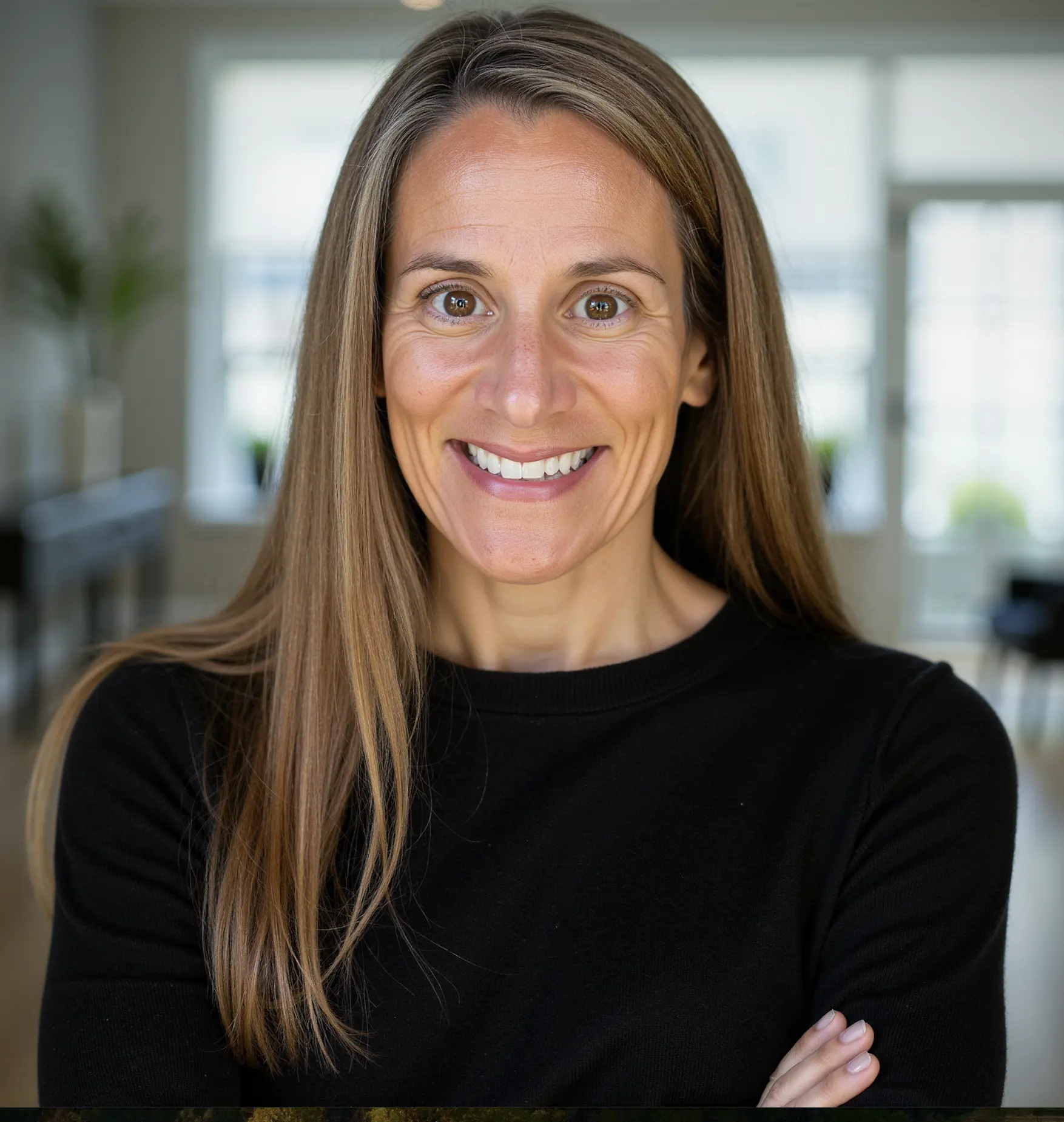
Dr. Nicole L’Etoile, CPACC designs and delivers inclusive learning experiences that meet Web Content Accessibility Guidelines (WCAG) and Universal Design for Learning (UDL) principles. With a background in instructional design and accessibility, she trains educators and organizations to create content that works for all learners.,